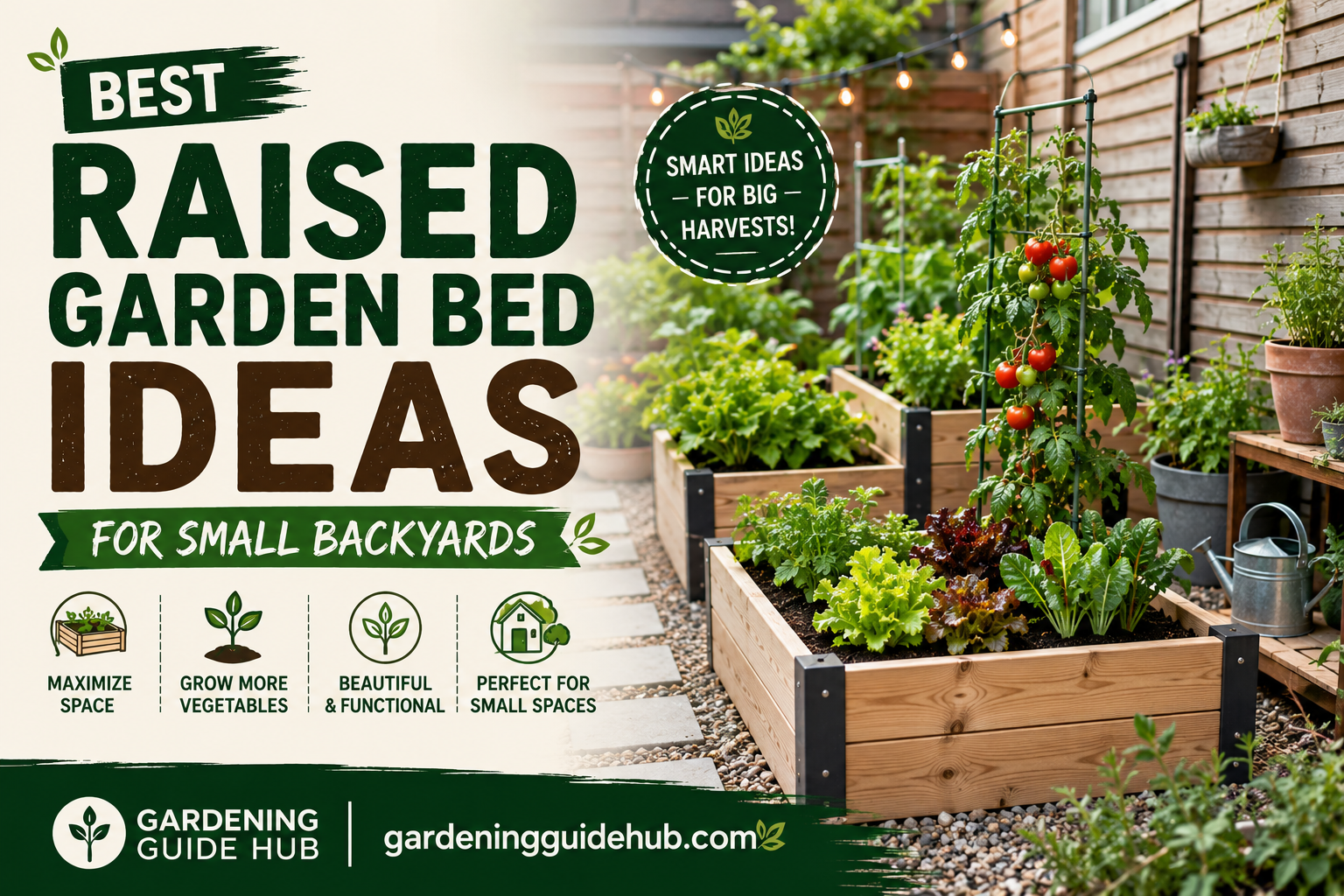
Just because your backyard is small does not mean your garden dreams have to be. Some of the most productive and beautiful gardens in the world exist in tight urban lots, narrow side yards, and cozy suburban patios. The secret is choosing the right raised garden bed design for your space instead of trying to force a large scale layout into a small area.
In this guide, you will discover the best raised garden bed ideas specifically suited for small backyards, along with practical tips to help you maximize every square foot. Whether you have a tiny patio, a narrow side strip, or a compact yard, there is a raised bed idea here that will fit perfectly.
Let’s turn that small space into a thriving little garden. 🌻
📐 Why Small Backyards Actually Work Well With Raised Beds
It might seem counterintuitive, but small yards are often ideal for raised bed gardening. Here is why.
- 🌍 Controlled soil in a compact footprint: You do not need acres of land to grow a serious amount of food
- 🧭 Easier to plan layout: Smaller spaces force smart, efficient design choices
- 💧 Simpler watering system: Fewer beds mean less time spent watering
- 🎨 More visual impact: A well designed raised bed becomes a striking feature rather than getting lost in a large yard
- 🪴 Great for vertical growing: Small spaces naturally encourage upward growth, which increases your total yield
Now let’s look at specific ideas you can use to make the most of your small backyard.
🧱 Idea 1: Vertical Raised Beds
When floor space is limited, growing upward is one of the smartest strategies available.
Vertical raised beds use tiered shelves or stacked planting boxes to grow multiple layers of vegetables and herbs in a small footprint. A three tier vertical bed can hold as many plants as a much larger flat bed while taking up only a fraction of the ground space.
Best plants for vertical raised beds:
- 🍓 Strawberries
- 🌿 Herbs like basil, thyme, and mint
- 🥬 Lettuce and other leafy greens
- 🌶️ Compact pepper varieties
Tip: Place taller tiers toward the back or center so shorter plants below still receive plenty of sunlight. ☀️
🧱 Idea 2: L Shaped or Corner Raised Beds
Small backyards often have awkward corners that go completely unused. An L shaped raised bed is a fantastic way to reclaim that wasted space.
This design wraps around a corner of your yard, fence line, or patio, making use of space that a rectangular bed simply could not fill efficiently.
Benefits of corner raised beds:
- Maximizes otherwise unused space
- Creates a natural boundary or border for your yard
- Works beautifully along fences or walls
- Adds a custom, tailored look to your garden
🧱 Idea 3: Narrow Side Yard Beds
If you have a slim strip of land along the side of your house, do not let it go to waste. Narrow raised beds, typically about two feet wide, fit perfectly into these tight spaces.
Since side yards often get partial sun, these beds work especially well for shade tolerant vegetables and herbs such as lettuce, spinach, chives, and parsley.
Best Plants for Narrow Side Yard Beds
| Plant | Sunlight Needed | Notes |
|---|---|---|
| 🥬 Lettuce | Partial sun | Fast growing and easy for beginners |
| 🌿 Chives | Partial sun | Compact and low maintenance |
| 🍃 Spinach | Partial sun | Thrives in cooler temperatures |
| 🌿 Parsley | Partial to full sun | Great for narrow, tight spaces |
🧱 Idea 4: Raised Beds on Legs for Patios and Decks
If your small backyard is mostly patio or deck space with no exposed soil, an elevated raised bed with legs is your best friend.
These beds sit at waist height, which means no bending at all, and they can be placed directly on concrete, pavers, or decking without damaging the surface underneath. They also tend to have excellent drainage since airflow moves freely beneath the bed.
Elevated raised beds are especially great for:
- Renters who cannot dig into the ground
- People with mobility challenges who struggle to bend down
- Patios and balconies with limited ground access
- Quick, low commitment gardening setups
🧱 Idea 5: Modular Raised Bed Systems
Modular raised beds are individual sections that can be arranged, expanded, or rearranged depending on your available space and needs. This flexibility makes them incredibly popular for small backyards where space constraints might change over time.
You might start with two small modular boxes this year and add a third next season once you see how much room you actually have to work with.
🧱 Idea 6: Circular or Keyhole Raised Beds
Traditional rectangular beds are not the only option. A circular or keyhole shaped raised bed can fit nicely into an oddly shaped yard corner or serve as a charming centerpiece in a small garden.
Keyhole beds include a small notch or pathway that allows you to reach the center of the bed easily, which is especially useful for composting directly in the middle of your growing space.
📊 Small Backyard Raised Bed Comparison Table
Here is a quick comparison to help you decide which style suits your space and lifestyle best.
| Idea | Best For | Space Needed | Maintenance Level |
|---|---|---|---|
| 🪜 Vertical bed | Maximizing yield in tiny spaces | Very small footprint | Moderate |
| 📐 L shaped or corner bed | Awkward unused corners | Medium | Moderate |
| 🚧 Narrow side yard bed | Slim strips along the house | Small | Low |
| 🦵 Elevated bed on legs | Patios, decks, and renters | Small | Low |
| 🧩 Modular system | Flexible or changing spaces | Adjustable | Low |
| ⭕ Circular or keyhole bed | Charming centerpiece designs | Small to medium | Moderate |
🌸 Combining Beauty and Function in Small Spaces
One of the best parts about designing a raised bed for a small backyard is that it does not have to sacrifice style for productivity. In fact, small gardens often look more polished and intentional than large sprawling ones.
A few design touches to consider:
- 🎨 Paint or stain your raised bed frame to match your home’s exterior
- 🪴 Add a mix of vegetables and flowers for color and pollinator support
- 🧺 Use a trellis attached to the back of the bed for climbing plants like peas or cucumbers
- 💡 Add solar garden lights along the edges for a cozy evening glow
- 🪑 Include a small bench or stool nearby for comfortable tending
🧰 Materials Table for Small Backyard Beds
| Material | Best Use Case | Pros |
|---|---|---|
| 🌲 Cedar | Ground level beds | Naturally rot resistant, attractive finish |
| 🥫 Galvanized metal | Modern patio designs | Sleek look, very durable |
| 🧱 Composite boards | Long term installations | Extremely long lasting, low maintenance |
| 🪨 Concrete blocks | No tools required builds | Simple to assemble, very sturdy |
| 🪵 Reclaimed wood | Budget friendly, rustic style | Affordable and eco friendly |
🌱 Choosing the Right Plants for a Small Space
Since square footage is limited, choosing high yield, compact vegetables and herbs makes a huge difference in how satisfying your small garden feels.
Great choices for small backyard raised beds include:
- 🍅 Cherry or patio tomatoes
- 🥒 Compact bush cucumbers
- 🫑 Mini bell peppers
- 🌿 A variety of herbs like basil, oregano, and thyme
- 🥬 Loose leaf lettuce for continuous harvesting
- 🍓 Everbearing strawberries
Avoid space hungry plants like full size pumpkins or sprawling melons unless you have a trellis system to train them vertically.
📏 Planning Your Layout Before You Build
Before you buy a single board, it helps to sketch out your small backyard and think through how sunlight, foot traffic, and existing structures will interact with your new raised bed.
Steps for smart layout planning:
- Walk your yard at different times of day and note where sunlight lands the longest.
- Measure the available space carefully, including any walkways you want to preserve.
- Consider how you will access the bed for watering and harvesting from all sides.
- Think about proximity to a water source, since dragging a hose across a small yard repeatedly gets old fast.
- Leave at least eighteen inches of clearance around each bed for comfortable movement.
Sketching your layout on paper, even a rough one, helps you avoid costly mistakes like building a bed that blocks a walkway or shades another part of your garden.
🛠️ DIY Build vs Ready Made Kits
When space is limited, some gardeners prefer building a custom bed to fit an exact corner or awkward space, while others prefer the convenience of a ready made kit. Here is how the two options compare.
| Factor | DIY Build | Ready Made Kit |
|---|---|---|
| 🎯 Customization | Full control over size and shape | Limited to preset dimensions |
| ⏱️ Time investment | Higher, requires cutting and assembly | Lower, often just requires clipping pieces together |
| 💰 Cost | Can be cheaper with careful sourcing | Often more expensive per square foot |
| 🧠 Skill required | Basic carpentry helpful | Minimal skill needed |
| 🧩 Best for | Odd shaped or tightly sized spaces | Standard rectangular spaces |
If your backyard has an unusual shape, a custom DIY build is often worth the extra effort since it lets you use every inch of available space efficiently. If you want a fast, no fuss setup, a kit might be the better choice.
💰 Budgeting for a Small Backyard Raised Bed
Small space gardens are often more affordable than people expect, especially since smaller beds require less lumber and less soil overall.
| Bed Type | Estimated Material Cost | Estimated Soil Cost | Total Estimate |
|---|---|---|---|
| Small vertical bed | 40 to 70 dollars | 15 to 30 dollars | 55 to 100 dollars |
| Narrow side yard bed | 30 to 60 dollars | 15 to 25 dollars | 45 to 85 dollars |
| Elevated bed on legs | 60 to 120 dollars | 20 to 35 dollars | 80 to 155 dollars |
| Modular system (two boxes) | 80 to 150 dollars | 30 to 50 dollars | 110 to 200 dollars |
Buying soil in smaller bags actually makes more sense for compact beds since you likely will not need enough volume to justify a bulk delivery, which is typically reserved for larger installations.
🐝 Companion Planting Ideas for Compact Spaces
Even in a small raised bed, companion planting can help you get more out of every square foot by pairing plants that support each other’s growth or naturally deter pests.
| Plant | Good Companion | Why It Works |
|---|---|---|
| 🍅 Cherry tomatoes | Basil | Basil may enhance flavor and repel certain pests |
| 🥬 Lettuce | Chives | Chives help deter aphids nearby |
| 🥒 Compact cucumbers | Marigolds | Marigolds naturally repel beetles |
| 🌿 Herbs | Strawberries | Both enjoy similar sun and soil conditions |
In a small space, every plant needs to earn its spot, so choosing companions wisely helps you avoid wasted space and reduces the need for chemical pest control.
🧺 Making the Most of Vertical and Overhead Space
Small backyards benefit enormously from thinking beyond the ground level. Trellises, wall mounted planters, and hanging baskets can dramatically increase your total growing area without requiring any additional floor space.
Ideas to try:
- Attach a simple trellis to the back of a raised bed for climbing peas or beans
- Mount small planters on a fence for extra herb space
- Hang a strawberry planter from a patio overhang
- Use a tiered plant stand near your raised bed for additional pots
These small additions can turn even the tightest backyard into a surprisingly abundant growing space.
⚠️ Common Mistakes in Small Backyard Gardens
- 🚫 Overcrowding plants because the space feels precious and every inch seems valuable
- 🚫 Choosing sprawling vegetables that quickly outgrow a small bed
- 🚫 Ignoring vertical space, which is often the most underused resource in a small yard
- 🚫 Placing beds in partial shade without choosing shade tolerant plants
- 🚫 Skipping proper drainage, especially in elevated or container style beds
- 🚫 Forgetting to leave a walking path, making harvesting awkward
🍂 Seasonal Tips for Small Space Gardening
Spring: Start with cool season crops like lettuce and peas, which do not need much room to produce a satisfying harvest.
Summer: Use trellises and vertical supports heavily during summer to keep vining plants like cucumbers and beans from taking over your limited space.
Fall: Replace spent summer crops with a second round of quick growing greens and root vegetables.
Winter: In small backyards, consider moving to container gardening indoors or using a cold frame to protect your raised bed through colder months.
❓ Frequently Asked Questions
| Question | Answer |
|---|---|
| What is the best raised bed size for a small backyard? | A 3×4 foot bed is a great starting point for most small spaces |
| Can I grow a full vegetable garden in a tiny yard? | Yes, especially with vertical growing and compact plant varieties |
| Do elevated raised beds need less soil? | Yes, since they are typically shallower than ground level beds |
| Are modular raised beds a good investment? | Yes, they offer flexibility as your space or needs change over time |
| What is the easiest raised bed idea for beginners? | A simple rectangular bed on legs is often the easiest starting point |
🌟 Final Thoughts
A small backyard is not a limitation, it is an invitation to get creative. With the right raised garden bed idea, even the tiniest outdoor space can become a productive, beautiful growing area that provides fresh vegetables, herbs, and flowers all season long.
Start small, choose a design that fits your lifestyle, and do not be afraid to experiment with vertical growing, modular systems, or corner beds. Every thriving garden, no matter how big or small, started with someone willing to try.
Your small backyard garden adventure starts now. 🌱🍅🌿
Happy gardening! 🌻