Meta description: Learn how to plan a vegetable garden layout for maximum harvest with simple spacing charts, companion planting tips, and a sample bed any beginner can copy.
There is nothing quite like walking out your back door and picking dinner. 🍅 The first warm tomato you eat straight from the vine ruins store bought ones forever. But nobody mentions this when you buy your first seed packets: the size of your harvest depends far more on your plan than on your luck.
A smart vegetable garden layout can double the food you grow in the same patch of soil. It helps you catch every hour of sunshine, water less, fight fewer pests, and keep your beds producing from spring until the first frost. A messy layout does the opposite. Tall plants shade short ones, thirsty crops crowd each other, and half your seedlings never reach their potential.
The good news is that garden planning is not complicated. It is a series of small, sensible decisions. In this guide I will walk you through each one, with tables, real spacing numbers, and a sample layout you can copy this weekend. Grab a notebook and a cup of coffee ☕ and let’s design your most productive garden yet.
☀️ Step 1: Study Your Sunlight First
Before you draw a single line, spend a day watching your yard. Sunlight is the fuel for every vegetable you will grow, so it decides where everything goes.
Fruiting crops like tomatoes, peppers, squash, and cucumbers need 6 to 8 hours of direct sun. Leafy greens and many root crops can get by with 4 to 6 hours. If a spot gets less than 4 hours, save it for herbs or a path.
Check the same area at 9 a.m., noon, and 4 p.m. and note where shadows from fences, trees, and your house fall. Do this in the season you plan to grow, because the sun sits lower in spring and fall and shade patterns shift.
| Sun Level ☀️ | Hours of Direct Light | Best Vegetables |
|---|---|---|
| Full sun | 6 to 8 or more | Tomatoes, peppers, eggplant, squash, corn, beans |
| Partial sun | 4 to 6 | Carrots, beets, broccoli, cabbage, peas |
| Partial shade | 2 to 4 | Lettuce, spinach, kale, arugula, herbs |
💡 Quick tip: Snap a photo of your yard every two hours on a sunny day. Comparing the pictures side by side shows your sunniest zones at a glance.
📏 Step 2: Measure and Map Your Space
Grab a tape measure and sketch your space on graph paper, letting each square equal one foot. Mark the permanent things first: the house, fences, trees, the water tap, and your compost bin. Then shade in the areas that get the most sun. A pencil sketch is all you need.
A few rules of thumb will save you headaches later:
🌱 Start small. A 4 by 8 foot bed (32 square feet) can feed a family a surprising amount of salad and vegetables. Many first year gardeners take on too much and feel worn out by midsummer.
🙌 Keep beds narrow. Beds no wider than 4 feet let you reach the middle from either side without stepping on the soil. Compacted soil is the enemy of healthy roots.
🚪 Stay close to home. Put your garden near the kitchen door and the water source. A garden you see every day gets tended. A garden at the far end of the yard gets forgotten.
🏡 Step 3: Choose Your Garden Style
The style of garden you choose shapes your whole layout. Here is how the three most popular options compare.
| Garden Style | Best For | Pros | Cons |
|---|---|---|---|
| In ground rows | Large yards | Cheap, plenty of room for sprawling crops | More weeding and soil work |
| Raised beds 🪵 | Most beginners | Better drainage, warmer soil, fewer weeds, easier on the back | Upfront cost for lumber and soil |
| Containers 🪴 | Patios and balconies | Flexible, moves with the sun | Dries out fast, limited root space |
For maximum harvest, I lean toward raised beds. You can fill them with rich, loose soil and plant closely, and because you never walk on the growing area, the roots stay happy. If you do garden in rows, run them north to south when you can, so plants on both sides of a row get equal sun through the day.
🥬 Step 4: Choose Crops Based on Yield and Space
The golden rule is simple: grow what you actually love to eat. There is no point in filling a bed with beets if your family will not touch them.
Once you have your favorites, think about how much food each plant gives back for the space it takes. Some crops are champions of yield. Others, like corn and pumpkins, can swallow a small garden while giving little in return.
| Crop | Yield for Space 📈 | Sun Needs | Layout Note |
|---|---|---|---|
| Tomatoes 🍅 | Very high | Full sun | Grow up cages or stakes |
| Zucchini | Very high | Full sun | One or two plants is plenty |
| Pole beans 🫘 | High | Full sun | Climb a trellis and save ground |
| Lettuce and greens 🥬 | High | Partial sun | Cut and come again harvests |
| Peppers 🌶️ | Medium | Full sun | Compact and great for small beds |
| Carrots 🥕 | Medium | Full to partial | Need loose, deep soil |
| Radishes | Quick returns | Partial sun | Ready in 25 to 30 days |
| Corn 🌽 | Low in small plots | Full sun | Needs block planting and lots of room |
A balanced garden mixes fast crops (radishes, lettuce) with slow ones (tomatoes, peppers). That way, your beds are never sitting empty or overwhelmed.
🌱 Step 5: Get Plant Spacing Right
Spacing is where many gardeners either waste room or crowd their plants. Too far apart and weeds move in. Too close and plants compete for water, light, and nutrients, and disease spreads fast.
Square foot gardening offers a simple way to think about it. You divide a bed into 1 foot squares and plant a set number in each one, based on the mature size of the vegetable.
| Vegetable | Spacing Between Plants | Plants per Square Foot |
|---|---|---|
| Radishes | 3 inches | 16 |
| Carrots | 3 inches | 16 |
| Bush beans | 4 inches | 9 |
| Spinach | 4 inches | 9 |
| Lettuce | 6 inches | 4 |
| Peppers | 12 to 18 inches | 1 |
| Broccoli | 18 inches | 1 |
| Tomatoes | 24 inches | 1 per 4 square feet |
| Zucchini | 24 to 36 inches | 1 per 4 square feet or more |
Always read your seed packet too. Spacing changes a bit by variety, and your local climate matters. In hot, dry areas, slightly wider spacing helps plants cope with heat.
🧭 Step 6: Pick a Layout Method That Fits You
Once you know your crops and spacing, choose a method for arranging them. Each has a place, and you can mix them.
🟩 Square foot gardening. Best for small beds and beginners. The grid keeps everything tidy, and intensive spacing means fewer weeds and less watering.
🌾 Wide row planting. Instead of a single line of seeds, you sow a band about 12 to 18 inches wide. This works well for carrots, beets, onions, and peas, and it produces more food per foot than a single row.
🧗 Vertical gardening. Trellises, cages, and stakes let cucumbers, pole beans, peas, and small squash grow upward. This frees up ground, improves airflow, and makes picking easier. It is one of the fastest ways to raise your harvest without adding a single square foot.
🔀 Interplanting. Tuck quick growing crops between slow ones. Radishes fill the space around young tomatoes and are gone before the tomatoes need the room.
One more layout rule matters a lot: put tall plants where they will not shade short ones. In the northern hemisphere, that means tall crops like tomatoes, corn, and trellised beans go on the north side of the bed, with medium plants in the middle and low growers like lettuce and carrots at the front.
🐝 Step 7: Use Companion Planting to Boost Your Harvest
Companion planting is the art of putting plants together that help each other. Some pairings are backed by solid experience, while others are more folklore. Treat these as helpful nudges rather than strict laws.
| Good Pairing 🤝 | Why It Works |
|---|---|
| Tomatoes and basil 🌿 | Basil pairs well with tomato flavor and may help deter some pests |
| Carrots and onions | Onion scent can confuse carrot flies |
| Lettuce beneath tall crops | Light shade keeps lettuce sweet through warm weather |
| Corn, beans, and squash | The classic “three sisters” combo shares space and support |
| Marigolds along bed edges 🌼 | Attract pollinators and may discourage some insects |
| Nasturtiums near squash | Can act as a trap crop that draws aphids away |
Some plants make poor neighbors. Keep fennel away from most vegetables, since it can stunt nearby growth. Do not plant beans right next to onions or garlic. Avoid putting potatoes beside tomatoes, because both are prone to the same blight.
🔄 Step 8: Plan Succession Planting and Crop Rotation
This is the secret weapon of high yield gardens. Succession planting means never letting your soil sit empty.
⏱️ Sow in waves. Instead of planting a whole packet of lettuce at once, sow a small batch every 2 to 3 weeks. You will get a steady supply instead of a giant pile that bolts all at the same time.
🔁 Replace finished crops. When your spring peas fade, slide in bush beans or cucumbers. When early lettuce is done, plant carrots or a fall crop of kale.
🌦️ Match crops to the season. Cool season vegetables like spinach, peas, and broccoli love spring and fall. Warm season crops like tomatoes, peppers, and squash want summer heat.
Crop rotation is the other half of the plan. Try not to grow the same plant family in the same spot two years in a row. Rotating leafy crops, fruiting crops, root crops, and legumes across your beds on a 3 or 4 year cycle keeps soil pests down and helps nutrients stay balanced. Beans and peas even add nitrogen to the soil, which the next crop will happily use. Keep a simple notebook or phone note of what grew where. Future you will be grateful. 📓
💧 Step 9: Design Paths, Water, and Access
A layout is only as good as your ability to work in it. Do not squeeze every inch into planting space and leave no room to move.
🚶 Paths: Aim for 18 to 24 inches between beds, and closer to 3 feet on your main path if you need a wheelbarrow. Cover paths with wood chips, straw, or gravel to control weeds and mud.
🚿 Watering: Group plants with similar water needs together. Thirsty crops like cucumbers and lettuce belong in one zone, while drought tolerant herbs go in another. A drip line or soaker hose delivers water straight to the roots, saves time, and keeps leaves dry, which reduces disease.
🍂 Mulch: A 2 to 3 inch layer of straw, leaves, or grass clippings holds moisture, blocks weeds, and feeds your soil as it breaks down.
🪱 Soil: Great layouts still need great soil. Mix in a few inches of compost before every season. Healthy soil is the invisible foundation of every big harvest.
🧺 A Sample 4 by 8 Foot Bed You Can Copy
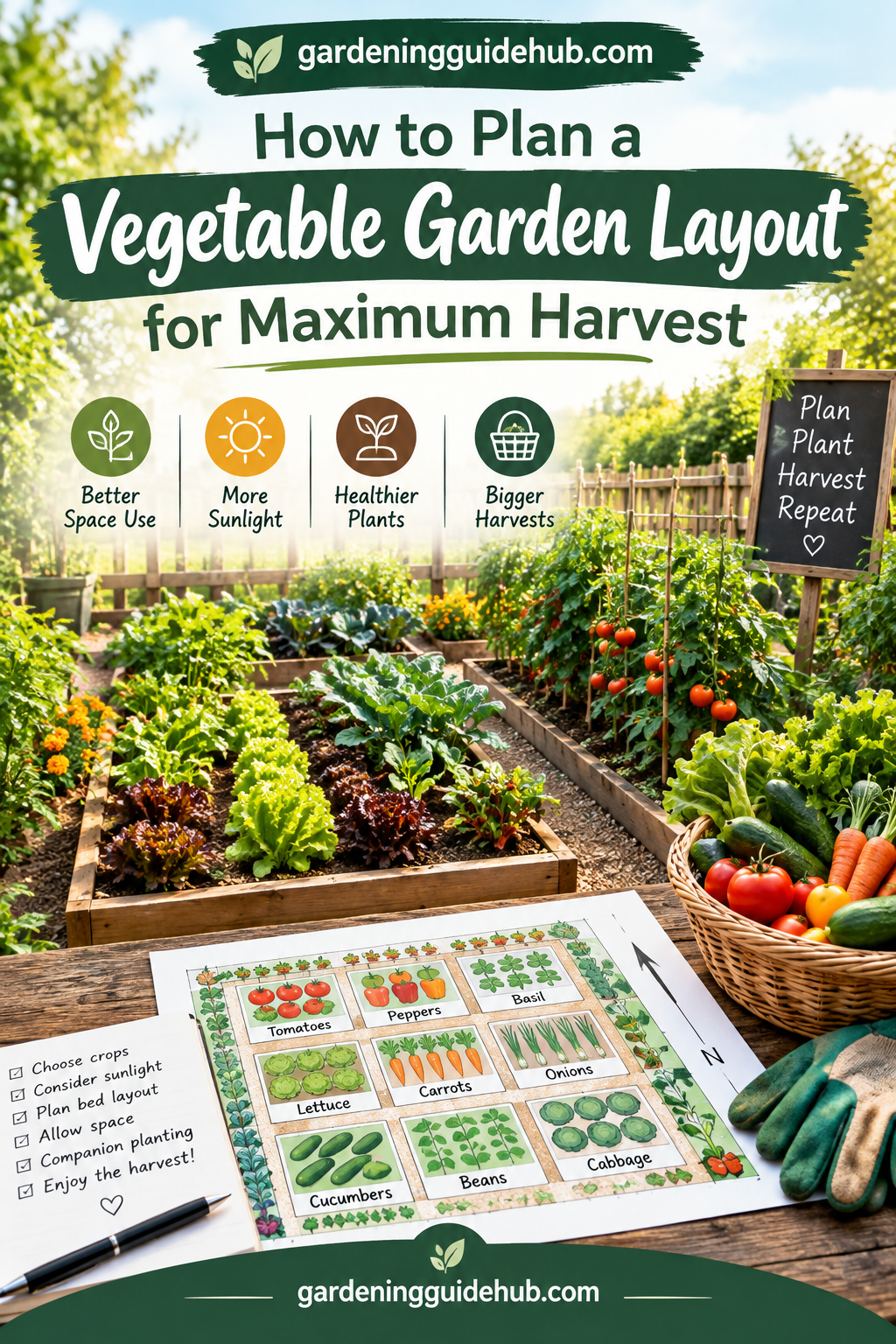
Here is a simple layout that puts everything above into practice. Think of the bed as running north to south, with the back (north) end holding the tallest plants.
| Zone | Size | What to Plant |
|---|---|---|
| Back (tall) 🍅 | 4 by 2 feet | 2 tomatoes in cages, with basil planted between |
| Second row 🌶️ | 4 by 1 foot | 4 peppers, with marigolds at each end |
| Third row 🫘 | 4 by 1 foot | Bush beans in a tight grid |
| Fourth zone 🥕 | 4 by 2 feet | Carrots in one half, onions in the other |
| Front (low) 🥬 | 4 by 2 feet | Lettuce, spinach, and radishes |
Add a small trellis on the far side of the bed for cucumbers if you like, and replant the front zone every few weeks as you harvest greens. This one bed can keep a small household in fresh vegetables for months.
⚠️ Common Layout Mistakes to Avoid
Even experienced gardeners slip up now and then. Watch for these:
❌ Crowding plants. Tiny seedlings look lonely, so it is tempting to squeeze in extras. Trust the mature size on the seed packet.
❌ Ignoring shade. A gorgeous row of tomatoes on the wrong side of the bed can leave your peppers in darkness.
❌ Planting everything at once. Twenty heads of lettuce ready in the same week is more stress than joy.
❌ Skipping paths. No access means stepping on soil, which means compacted roots and smaller harvests.
❌ Forgetting notes. Without a record, you will not remember what worked, and rotation becomes guesswork.
❌ Growing too much of one thing. Diversity protects you. If one crop struggles, another will carry the season.
📅 A Simple Seasonal Planting Guide
Exact dates depend on your climate and your last frost date, so treat this as a general rhythm and adjust locally.
| Season 🗓️ | What to Plant | What You Will Harvest |
|---|---|---|
| Early spring | Peas, spinach, lettuce, radishes, broccoli | Fresh greens and early crunch |
| Late spring | Tomatoes, peppers, beans, cucumbers, squash | Summer favorites |
| Midsummer | Second sowing of beans, carrots, beets | Late summer and fall roots |
| Early fall | Kale, spinach, lettuce, garlic | Cool weather greens and next year’s garlic |
❓ Frequently Asked Questions
How much food can I grow in a 4 by 8 foot bed?
With good planning, succession planting, and vertical crops, a single 32 square foot bed can produce well over a hundred pounds of vegetables in a season. Results depend on your climate, soil, and crop choices.
What are the easiest vegetables for beginners?
Lettuce, radishes, bush beans, zucchini, cherry tomatoes, and herbs like basil are forgiving and productive, which makes them wonderful confidence builders.
Should I plant in rows or blocks?
For most home gardens, blocks and grids give higher yields in less space. Rows are still fine for large plots where you want to use a tiller or wheel hoe.
How do I keep my garden productive all season?
Use succession planting, replace crops as they finish, feed the soil with compost, and pick often. Regular harvesting encourages many plants to keep producing.
🌟 Final Thoughts
Planning a vegetable garden layout for maximum harvest comes down to a handful of smart habits. Study your sun. Measure your space. Pick crops you love and give them proper room. Grow up as well as out, put tall plants where they will not cast shade, pair helpful neighbors, and keep the soil busy from spring to fall.
Your first plan will not be perfect, and that is completely fine. Every garden teaches you something. Take notes, adjust next season, and watch your harvests grow bigger and tastier each year. Now go sketch that first bed, and get ready to eat the best vegetables of your life. 🥗🌻
Want me to put this article into a file you can download?