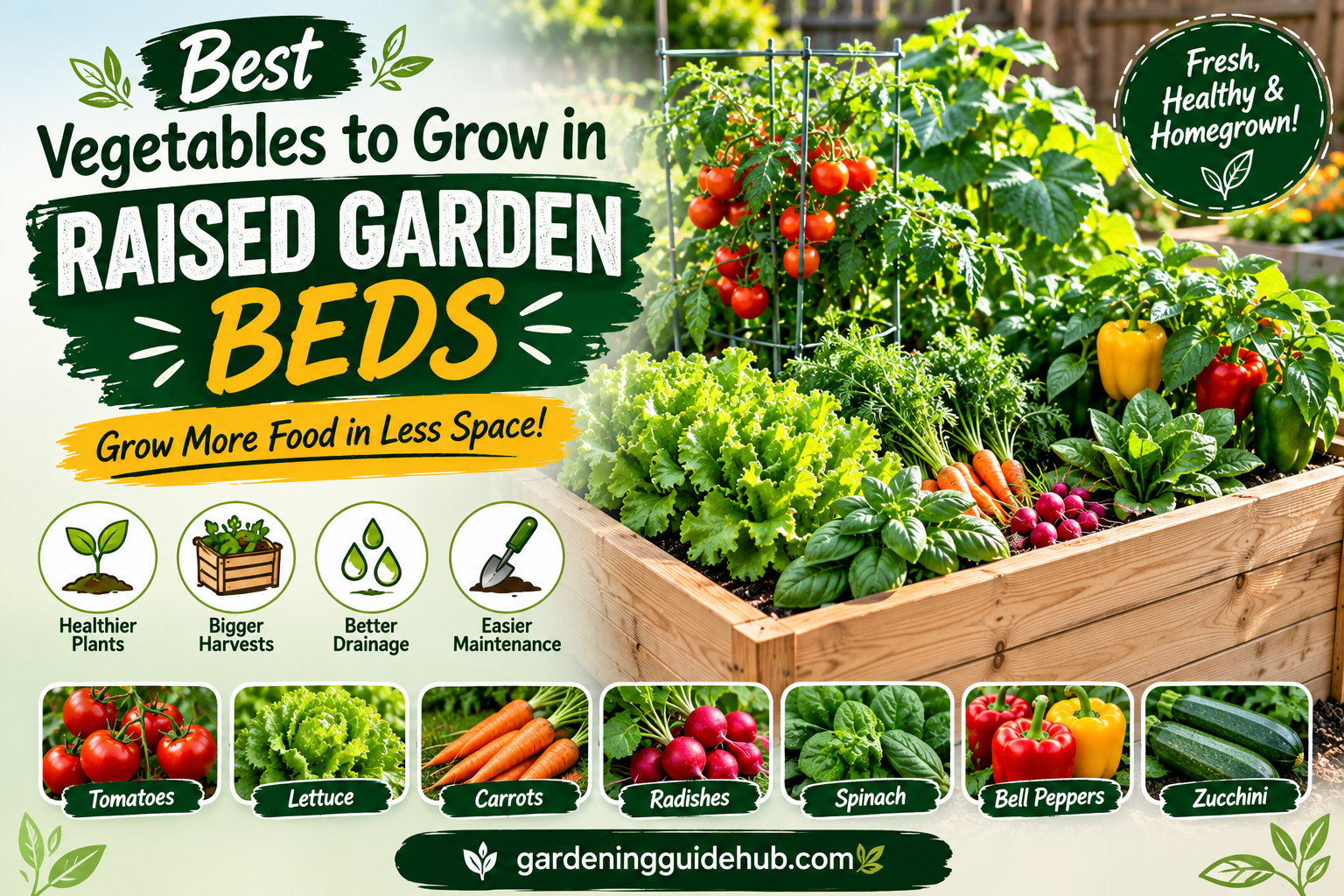
One of the best parts about owning a raised garden bed is the freedom it gives you to grow almost anything you want. With controlled soil, better drainage, and warmer growing conditions, raised beds create the perfect environment for vegetables to truly thrive. But with so many options out there, which vegetables actually make the most sense for your raised bed?
In this guide, you will discover the best vegetables to grow in raised garden beds, why they thrive in this type of setup, and practical tips to help you get the most out of every square foot. Whether you are a total beginner or looking to fine tune an existing bed, this list will help you plan a productive and satisfying harvest.
Let’s dig into the best picks for your raised bed. 🌱
🌾 Why Raised Beds Are Ideal for Vegetables
Before jumping into specific vegetables, it helps to understand why raised beds work so well for growing food in general.
- 🌍 Loose, nutrient rich soil: Vegetables develop stronger roots in soil that is not compacted
- 💧 Superior drainage: Prevents soggy roots and reduces disease risk
- 🌡️ Faster soil warming: Lets you plant earlier in spring and extend your growing season
- 🐛 Fewer weeds and pests: Fresh soil means less competition for nutrients
- 📏 Efficient spacing: Raised beds encourage intensive planting methods that maximize yield
Now let’s explore the vegetables that make the absolute most of these advantages.
🍅 Tomatoes
Tomatoes are practically the unofficial mascot of raised bed gardening, and for good reason. They love warm soil, consistent moisture, and the excellent drainage that raised beds naturally provide.
Quick growing tips:
- Choose determinate varieties for smaller beds and indeterminate varieties if you have vertical support like a cage or trellis
- Space plants roughly 18 to 24 inches apart
- Stake or cage plants early to prevent sprawling
- Water consistently to prevent cracking and blossom end rot
🥬 Lettuce
Lettuce is one of the easiest and fastest growing vegetables for beginners, making it a perfect choice for a raised bed.
Since lettuce has shallow roots, it thrives in the loose topsoil found in most raised beds. It also tolerates partial shade, which makes it flexible for beds that do not get full sun all day.
Quick growing tips:
- Plant in succession every two weeks for a continuous harvest
- Harvest outer leaves first to keep the plant producing longer
- Provide afternoon shade in hot climates to prevent bolting
🥕 Carrots
Carrots absolutely love the loose, rock free soil that raised beds provide. In compacted ground soil, carrots often grow stunted or forked, but raised beds give their roots plenty of room to grow long and straight.
Quick growing tips:
- Choose a bed with at least 12 to 14 inches of soil depth
- Thin seedlings early to avoid overcrowding
- Keep soil consistently moist during germination
🫑 Peppers
Peppers, whether sweet or spicy, thrive in the warm soil and excellent drainage of a raised bed.
Quick growing tips:
- Wait until soil temperatures are reliably warm before transplanting
- Space plants about 18 inches apart
- Add a layer of mulch to retain consistent soil moisture
🥒 Cucumbers
Cucumbers grow quickly and produce heavily, making them a rewarding addition to any raised bed. Their vining growth habit pairs beautifully with a trellis, which also helps save space.
Quick growing tips:
- Train vines vertically to save room and improve airflow
- Water consistently, since inconsistent watering often causes bitter fruit
- Harvest frequently to encourage continued production
🫘 Beans
Beans are a fantastic vegetable for raised beds because they are low maintenance and actually improve your soil over time by adding nitrogen.
Quick growing tips:
- Bush beans work well in smaller beds, while pole beans need a trellis
- Sow seeds directly into the soil once the danger of frost has passed
- Harvest regularly to encourage continuous production
🧅 Onions and Garlic
Both onions and garlic appreciate the loose, well draining soil that raised beds provide, allowing bulbs to expand without obstruction.
Quick growing tips:
- Plant garlic in fall for a summer harvest in most climates
- Keep beds weed free, since onions and garlic dislike competition
- Avoid overwatering once bulbs begin to mature
🥦 Broccoli and Cauliflower
These cool season vegetables benefit from the improved drainage and nutrient rich soil found in raised beds, and the contained space makes it easier to manage pests like cabbage worms.
Quick growing tips:
- Plant in early spring or fall for the best results
- Space plants about 18 to 24 inches apart
- Cover with netting to prevent pest damage
🌿 Herbs (Basil, Thyme, Parsley, and More)
While technically not vegetables, herbs deserve a spot on this list because they thrive so beautifully in raised beds and pair perfectly with vegetable companions.
Quick growing tips:
- Plant basil near tomatoes for potential pest deterrence and flavor benefits
- Choose a sunny corner of your bed for Mediterranean herbs like thyme and rosemary
- Harvest regularly to encourage bushier growth
📊 Vegetable Comparison Table
Here is a simple table to help you compare growing needs at a glance.
| Vegetable | Sunlight Needed | Soil Depth Needed | Difficulty Level |
|---|---|---|---|
| 🍅 Tomatoes | Full sun | 12 to 15 inches | Moderate |
| 🥬 Lettuce | Partial to full sun | 8 to 10 inches | Easy |
| 🥕 Carrots | Full sun | 14 to 18 inches | Moderate |
| 🫑 Peppers | Full sun | 12 to 15 inches | Moderate |
| 🥒 Cucumbers | Full sun | 12 to 15 inches | Easy to moderate |
| 🫘 Beans | Full sun | 8 to 10 inches | Easy |
| 🧅 Onions and garlic | Full sun | 10 to 12 inches | Easy |
| 🥦 Broccoli | Full sun | 12 to 15 inches | Moderate |
| 🌿 Herbs | Full to partial sun | 8 to 10 inches | Easy |
🐝 Companion Planting for a Healthier Harvest
Pairing certain vegetables together can improve growth, deter pests, and make the most of your raised bed space.
| Vegetable | Good Companion | Why It Works |
|---|---|---|
| 🍅 Tomatoes | Basil | May improve flavor and repel certain pests |
| 🥕 Carrots | Onions | Onions help mask scents that attract carrot flies |
| 🥒 Cucumbers | Beans | Beans add nitrogen that benefits cucumbers |
| 🥦 Broccoli | Dill | Dill attracts beneficial insects that prey on pests |
| 🫘 Beans | Corn | Corn provides natural support for climbing beans |
Avoid planting onions near beans, since they can actually stunt each other’s growth. A little research before planting saves you a lot of trial and error later.
🍂 Planning by Season
Not every vegetable grows well at the same time of year, so understanding seasonal timing helps you get the most out of your raised bed throughout the year.
Spring: Lettuce, spinach, peas, carrots, and broccoli thrive in the cooler temperatures of early spring.
Summer: Tomatoes, peppers, cucumbers, and beans love the heat and long sunny days of summer.
Fall: A second round of lettuce, spinach, radishes, and kale can extend your harvest well into autumn.
Winter: In milder climates, garlic and certain hardy greens can continue growing with light protection through winter months.
📏 Spacing and Layout Tips for Maximum Yield
Raised beds allow for intensive planting methods that are not always practical in traditional row gardens. Using square foot gardening principles, you can plant vegetables closer together than typical seed packet instructions suggest, since raised bed soil is richer and more consistent.
A few layout tips:
- Place taller vegetables like tomatoes and pole beans on the north side of the bed so they do not shade shorter plants
- Group vegetables with similar watering needs together to simplify care
- Leave small access points if your bed is wide, so you can reach the center without stepping on soil
- Rotate crop families each season to maintain healthy, balanced soil
🚫 Vegetables That Are Trickier for Raised Beds
While raised beds work wonderfully for most vegetables, a few crops are better suited to traditional ground gardens or require extra planning if you want to grow them in a bed.
- 🎃 Pumpkins and large squash: These sprawling vines need significant space and can quickly overtake a small bed unless trained vertically
- 🌽 Corn: Corn needs to be planted in blocks for proper pollination, which is difficult in a narrow raised bed
- 🍉 Watermelon: Similar to pumpkins, watermelon vines spread aggressively and need substantial room
- 🥔 Potatoes: While potatoes can technically grow in a deep raised bed, they often do better in dedicated grow bags or containers where soil can be mounded easily
None of these vegetables are impossible in a raised bed, but they often require extra planning, trellising, or a dedicated larger bed to truly thrive.
🌾 Understanding Heavy Feeders vs Light Feeders
Not all vegetables pull the same amount of nutrients from your soil. Knowing the difference helps you plan fertilizing schedules and crop rotation more effectively.
| Feeder Type | Examples | Soil Needs |
|---|---|---|
| 🍅 Heavy feeders | Tomatoes, peppers, broccoli, cucumbers | Require rich compost and regular feeding |
| 🥬 Light feeders | Lettuce, herbs, radishes | Need less fertilizer, grow well in average soil |
| 🫘 Soil builders | Beans, peas | Actually add nitrogen back into the soil |
A smart approach is to plant heavy feeders in the sections of your bed with the freshest compost, while light feeders and soil builders can go in areas that have already been used for a season or two.
🔁 Succession Planting for a Longer Harvest
One of the biggest advantages of raised beds is how easily they support succession planting, which means replanting a section as soon as one crop finishes producing. This keeps your garden productive from early spring all the way through fall instead of producing one single harvest and then sitting empty.
Simple succession planting ideas:
- Follow an early lettuce harvest with a heat loving crop like beans once the weather warms up
- Replace spent pea plants with a second round of carrots or beets in early summer
- Plant fast growing radishes in gaps between slower growing vegetables like tomatoes
- Start fall greens as soon as summer vegetables are pulled in late summer
This approach maximizes the productivity of every raised bed you own, especially valuable if you are working with limited space.
💧 Watering Needs by Vegetable Type
Different vegetables have different watering preferences, and understanding these needs helps prevent both overwatering and underwatering.
| Vegetable | Watering Frequency | Notes |
|---|---|---|
| 🍅 Tomatoes | Deep watering 2 to 3 times weekly | Inconsistent watering causes cracking |
| 🥬 Lettuce | Frequent light watering | Shallow roots dry out quickly |
| 🥕 Carrots | Consistent moisture during germination | Reduce watering slightly once established |
| 🥒 Cucumbers | Frequent deep watering | Inconsistent watering leads to bitter fruit |
| 🫘 Beans | Moderate, regular watering | Fairly drought tolerant once established |
Grouping vegetables with similar watering needs together in your raised bed makes irrigation far simpler and helps prevent both root rot and drought stress.
⚠️ Common Mistakes When Choosing Vegetables
- 🚫 Planting vegetables that need deep soil in a shallow bed
- 🚫 Ignoring sunlight requirements and placing sun loving plants in shade
- 🚫 Overcrowding fast growing vegetables like zucchini or squash
- 🚫 Mixing incompatible companion plants that hinder each other’s growth
- 🚫 Forgetting to rotate crops, which can deplete specific nutrients over time
- 🚫 Choosing vegetables that are out of season for your climate
💰 Budgeting for Seeds and Seedlings
Vegetable gardening does not have to be expensive, especially if you plan ahead and buy in the right quantities.
| Item | Estimated Cost | Notes |
|---|---|---|
| 🌱 Seed packets | 2 to 5 dollars each | Most cheaply cover multiple seasons |
| 🌿 Seedlings or transplants | 3 to 6 dollars each | Great for slow growing vegetables like tomatoes |
| 🍂 Compost or fertilizer | 10 to 20 dollars per bag | Keeps soil nutrient rich throughout the season |
| 🪴 Mulch | 5 to 15 dollars per bag | Helps retain moisture and suppress weeds |
Starting vegetables from seed is almost always cheaper than buying seedlings, though slower growing crops like tomatoes and peppers often benefit from a head start indoors or purchased transplants.
❓ Frequently Asked Questions
| Question | Answer |
|---|---|
| What vegetables grow best in a beginner raised bed? | Lettuce, beans, and cherry tomatoes are excellent beginner choices |
| Can I grow root vegetables in a shallow raised bed? | It is best to have at least 12 inches of soil depth for most root vegetables |
| How many vegetables can I grow in a small raised bed? | A 4×4 foot bed can typically support 8 to 16 plants depending on spacing |
| Do all vegetables need full sun in a raised bed? | No, some like lettuce and spinach tolerate partial shade |
| Is it better to plant seeds or seedlings in a raised bed? | Both work well, though seedlings offer a faster head start for slow growers |
🌟 Final Thoughts
Choosing the right vegetables for your raised garden bed can make the difference between a mediocre harvest and an abundant one. By understanding sunlight needs, soil depth requirements, and smart companion pairings, you set yourself up for a garden that is both productive and enjoyable to tend.
Start with a few easy, reliable vegetables like lettuce, beans, and tomatoes, then expand your variety as you gain confidence. Every experienced gardener began with a simple list of favorites and grew their skills one season at a time.
Your raised bed is ready. Now it is time to fill it with vegetables that will reward you all season long. 🍅🥕🥬
Happy growing! 🌱