
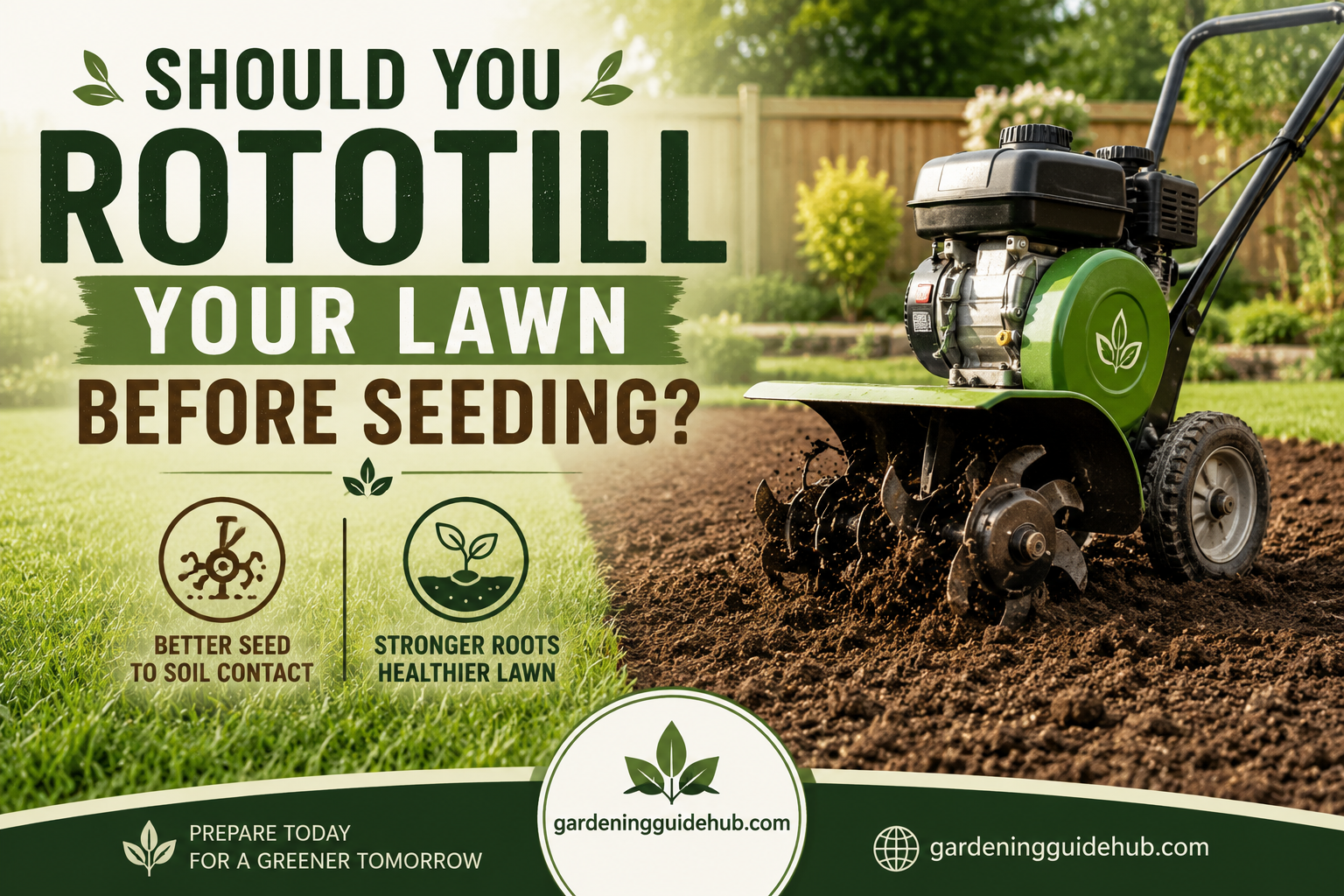
If you’re planning to seed a new lawn or overhaul a tired, patchy one, you’ve probably run into the great rototilling debate. Ask five different gardeners whether you should till before seeding and you’ll likely get five different answers. Some swear by it, insisting it’s the only way to give grass seed a real shot at success. Others warn that tilling can do more harm than good, leaving you with a bumpy, weedy mess instead of the lush lawn you were hoping for.
So who’s right? The truth, as with most things in gardening, is that it depends. Your soil type, your yard’s current condition, and how well the tilling job is done all play a role in whether this step helps or hurts your project. Let’s break down everything you need to know so you can make the right call for your own yard. 🏡
🧰 What Rototilling Actually Does to Your Soil
Rototilling is a long standing method of preparing ground for planting. A rototiller uses rotating blades, called tines, to churn up the top layer of soil, typically to a depth of several inches. This process loosens compacted dirt, mixes in air, and creates a looser bed for seeds or roots to settle into.
The main case for tilling before seeding comes down to root development. Grass seedlings need loose, aerated soil so their roots can push down and spread out. In compacted soil, especially heavy clay, roots struggle to penetrate more than an inch or two below the surface. That shallow root system leaves your lawn vulnerable to drought stress, disease, and general weakness since the grass simply can’t reach the water and nutrients stored deeper in the ground.
By breaking up that compacted layer, tilling opens the door for:
🌬️ Better airflow reaching the root zone 💧 Improved drainage so water doesn’t pool on the surface 🌾 Deeper root growth as seedlings establish themselves 🍽️ Easier penetration of fertilizer and compost into the soil profile
When done correctly, all of this adds up to stronger germination rates and a more resilient lawn once the grass matures. But the phrase “when done correctly” is doing a lot of heavy lifting here, and that’s where a lot of the controversy comes from.
🛠️ Choosing the Right Rototiller for the Job
Not all rototillers are created equal, and using the wrong type for your project is one of the most common reasons people end up unhappy with their results. Broadly speaking, tillers fall into a few categories.
| Tiller Type 🔧 | Best For 🎯 | Power Level ⚡ | Good for Lawn Seeding? ✅❌ |
|---|---|---|---|
| Front tine tiller | Small garden beds, seedling prep | Low to moderate | Generally not ideal, better suited for planting beds |
| Rear tine tiller | Larger areas, compacted or untilled soil | High | Yes, the preferred choice for lawn projects |
| Mid tine tiller | Medium sized areas needing balance and control | Moderate | Workable, though less common and often pricier |
| Electric tiller | Small to medium yards, lighter soil | Low to moderate | Fine for easier ground, may struggle with dense clay |
| Gas powered tiller | Larger yards, tougher or clay heavy soil | High | Yes, generally the better option for serious lawn prep |
Front tine tillers tend to have narrow blades mounted at the front of the machine. They’re handy for small planting beds but often lack the muscle needed to handle a whole lawn, especially if the ground is compacted. Because they’re lighter, the blades can bounce around on tough soil, resulting in an inconsistent tilling depth.
Rear tine tillers, on the other hand, are usually the better pick for lawn projects. Their blades sit at the back, connected to a sturdy rotating shaft, and the machines themselves tend to be heavier and more powerful. Many rear tine models offer adjustable depth settings and some even feature counter rotating tines, which give you more control when working through dense or previously untouched soil. They also tend to produce less vibration, making for a smoother, more even till.
Mid tine tillers are less common but worth mentioning. On these machines, the engine sits above the blades, which helps distribute weight and improve control. They’re generally not as powerful as rear tine models though, and pricing is often similar despite the reduced capability.
As for gas versus electric, it really comes down to your soil and the size of the job. Electric tillers are usually cheaper and quieter, but they lack the raw power of gas models. If you’re dealing with compacted clay or a large area, a gas powered rear tine tiller is typically going to save you time and frustration.
📋 How to Till a Lawn Properly Before Seeding
If you’ve decided tilling is the right move for your yard, doing it properly makes all the difference between a healthy new lawn and a lumpy, uneven one. Here’s a simple step by step approach. 👇
1️⃣ Test your soil first. Before you do anything else, get a sense of what you’re working with. A basic soil test will tell you the pH level and nutrient makeup, which helps you figure out what amendments you’ll need afterward.
2️⃣ Clear the area. Walk the yard and remove rocks, sticks, roots, and any other debris that could get caught in the tines or fly out during tilling.
3️⃣ Check the soil temperature. Ideally, you want the soil to be around 60 degrees Fahrenheit before tilling. Tilling ground that’s too cold or too wet can lead to clumping and uneven results.
4️⃣ Set your tilling depth. For most lawns, a depth of four to six inches is ideal. If your yard has any slope, you’ll need to make adjustments as you go rather than sticking to one fixed depth throughout.
5️⃣ Work in straight, even passes. Till in rows along the longest stretch of your yard, overlapping slightly with each pass to avoid missed patches.
6️⃣ Grade the soil if needed. On sloped ground, especially where the slope runs toward your house, you’ll want to till a bit deeper near the top of the slope and shallower near the bottom, then rake to even things out. This helps ensure water drains away from your foundation instead of toward it.
7️⃣ Add your amendments. Once tilling is done, this is the time to mix in compost, topsoil, or fertilizer so those nutrients get worked into the loosened soil rather than just sitting on top.
8️⃣ Rake and level before seeding. A final rake smooths out the surface and removes any large clumps, giving your grass seed good, even contact with the soil.
⚠️ Why Some Gardeners Avoid Rototilling Entirely
Not everyone is a fan of tilling before seeding, and their objections are worth taking seriously. Here are the three most common arguments made against it.
🌊 It Can Leave You With an Uneven Lawn
Tilling is, at its core, a farming technique built for loosening large plots of ground, not necessarily for producing a perfectly flat surface. If the ground is difficult and the tiller isn’t powerful enough, the blades can bounce, creating inconsistent depths across the yard.
Once that loosened soil settles over time, it tends to follow the uneven profile of the compacted layer underneath, and the surface can end up bumpy and irregular, sometimes taking a couple of years to fully reveal itself as the ground continues to settle.
🌿 It Can Wake Up Dormant Weed Seeds
Soil often holds a bank of dormant weed seeds sitting well below the surface where they can’t germinate. Tilling brings a lot of that buried soil upward, exposing old weed seeds to light and air, which can trigger a fresh wave of weed growth right alongside your new grass.
Timing can help offset this. Weed seeds generally struggle to germinate in cooler late season conditions, so tilling and seeding in early fall, particularly for cool season grasses, can give your new lawn a head start before weeds have much of a chance to compete.
🪱 It Can Disrupt Soil Health
Healthy soil is full of microscopic life, fungi, bacteria, and organisms that support plant growth. Tilling disturbs that ecosystem and can also increase the risk of erosion, since freshly turned soil has more surface area exposed to wind and water.
That said, these effects are usually less dramatic than the concerns about unevenness or weeds, and they can typically be managed with the right soil amendments or by choosing a gentler seeding method like hydroseeding, which lays down a protective mulch layer along with the seed and fertilizer.
🤔 Do You Actually Need to Till at All?
Here’s the question worth asking before you even rent a machine: does your soil actually need it? Not every yard requires tilling, and figuring this out upfront can save you a lot of time, money, and physical effort.
If your soil is sandy, loamy, or chalky, it’s naturally less prone to compaction, and tilling may offer little real benefit. In these cases, simply clearing existing vegetation, adding a layer of compost or topsoil, and seeding directly over the surface can work perfectly well, since grass roots won’t have much trouble pushing through looser ground on their own.
Clay heavy or seriously compacted soil is a different story. That dense structure genuinely blocks root growth and airflow, and tilling is often the most effective way to break through it before planting.
A soil test is really the best starting point here. It’ll tell you not just the nutrient content but give you a sense of texture and drainage, both of which point toward whether tilling makes sense for your specific yard.
🌾 A Gentler Alternative Worth Considering
If you’re on the fence about tilling because of the weed and unevenness concerns, there’s a middle ground some gardeners use with good results. Instead of tilling first, they seed directly over the existing lawn, then apply a weed killer afterward to eliminate the old grass and weeds.
Since the herbicide targets the plants rather than the seeds sitting in the soil, the new grass seed remains unaffected and continues germinating. As it grows, the new grass can actually use the decaying root channels left behind by the old vegetation to establish itself, while the dead plant material on the surface acts as a natural mulch that breaks down over time.
This approach sidesteps a lot of the surface unevenness that comes with tilling, though it works best when the underlying soil isn’t severely compacted to begin with.
✅ So, Should You Till Before Seeding?
At the end of the day, the decision comes down to a handful of key factors, and there’s no single right answer that applies to every yard.
🔹 If your soil is sandy, loamy, or chalky and drains well, you likely don’t need to till at all. 🔹 If your soil is clay heavy or noticeably compacted, tilling is probably worth the effort. 🔹 If you do till, use a machine powerful enough to handle the job evenly, a rear tine tiller is usually the safer bet over a front tine model. 🔹 Time your project around the season, particularly if weed competition is a concern. 🔹 Always follow up tilling with proper grading, raking, and soil amendments to set your new grass up for success.
Tilling isn’t inherently good or bad. It’s a tool, and like any tool, its value depends entirely on whether it’s the right one for the job in front of you. Done thoughtfully, on the right soil, with the right equipment, it can genuinely transform a struggling patch of dirt into a thriving lawn. Done carelessly, or on soil that didn’t need it in the first place, it can create more problems than it solves.
❓ Common Questions About Tilling Before Seeding
How long should I wait to seed after tilling? ⏳ Most gardeners till and seed within the same day or two, since freshly tilled soil is loose and ready to accept seed right away. Waiting too long risks the ground settling again or a fresh crop of weeds sprouting before your grass seed gets a chance to establish.
Can I till a lawn that already has grass growing on it? 🌾 Yes, though you’ll want to kill off the existing grass and weeds first, either by smothering them or applying an appropriate herbicide, so the tiller isn’t just churning living turf into clumps. Skipping this step often leads to patches of old grass competing with your new seedlings.
Is it better to till in spring or fall? 🍂🌸 It depends on the grass type you’re planting. Cool season grasses generally do best with a fall tilling and seeding schedule, since cooler temperatures favor germination and discourage weed competition. Warm season grasses tend to prefer spring or early summer, once the soil has warmed sufficiently.
Do I need to till the whole yard or just bare patches? 🩹 If you’re only repairing small bare spots, a full till usually isn’t necessary. Loosening the soil with a hand rake or small cultivator in just the affected areas is often enough to give patch seed good contact with the ground.
Will renting a tiller be enough, or should I hire someone? 💰 For most homeowners, renting a rear tine tiller for a day is plenty, especially for an average sized yard. Larger properties or particularly stubborn, rocky, or heavily compacted soil might be worth handing off to a landscaping professional with commercial grade equipment.
🏁 Final Thoughts
Rototilling before seeding a lawn is a classic gardening debate for good reason, both sides have legitimate points. If your ground is compacted, heavy with clay, or has never supported healthy grass before, tilling with the right equipment can genuinely set your new lawn up for stronger roots and better long term health. If your soil is already loose and workable, you might be better off skipping the tiller altogether and putting that energy into proper seeding technique and aftercare instead.
Whichever path you choose, take the time to test your soil, choose your approach deliberately, and follow through with good grading, raking, and feeding once the ground work is done. That’s really what separates a lawn that thrives from one that struggles, not the tiller itself, but the care that goes into using it well. 🌞🌿