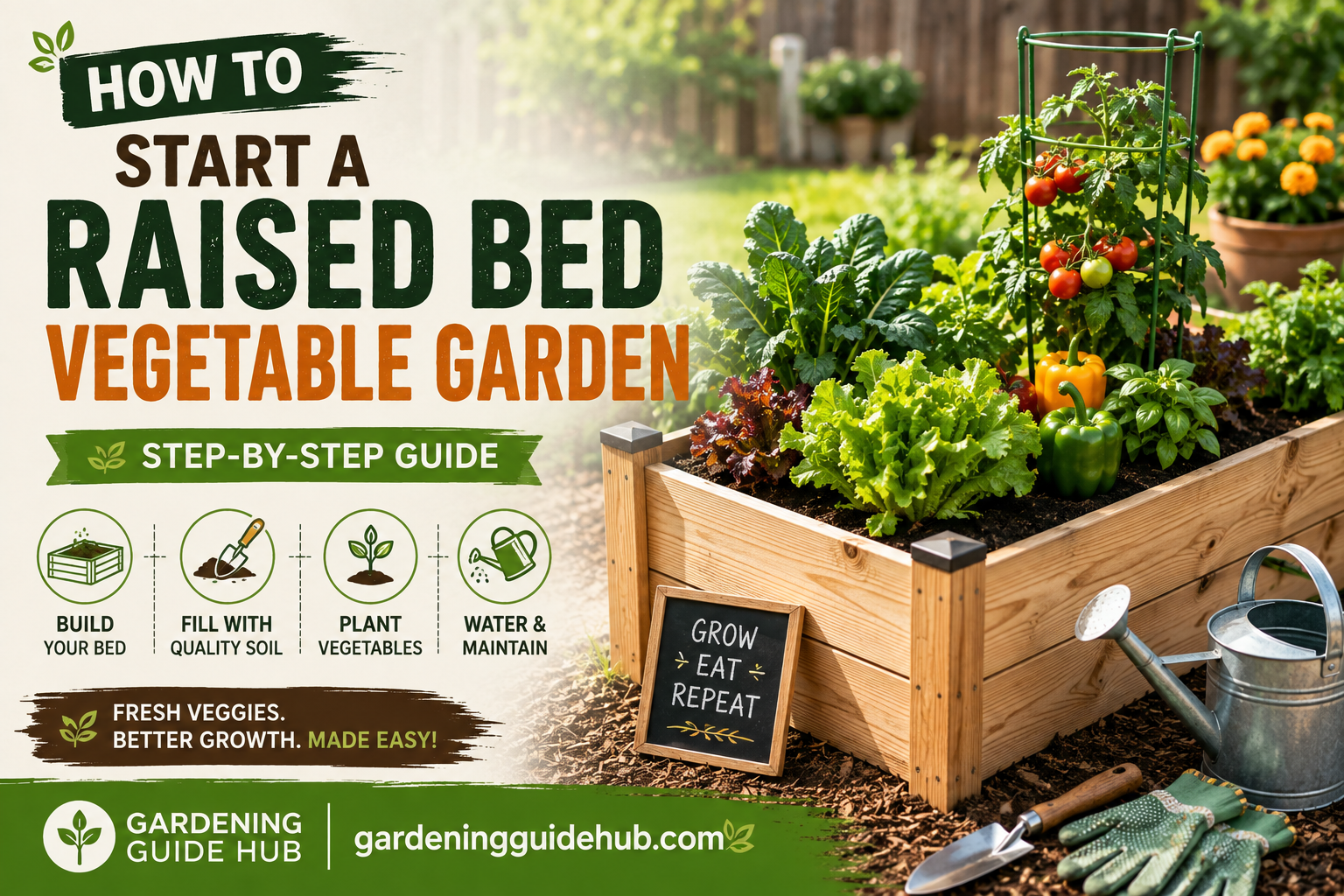
There is something magical about walking into your backyard and picking a fresh tomato or a handful of crisp lettuce for dinner. If that sounds like a dream you would love to turn into reality, a raised bed vegetable garden is one of the easiest and most beginner friendly ways to get started.
Unlike traditional in ground gardens, raised beds give you complete control over your soil, better drainage, fewer weeds, and a much more organized growing space. Whether you have a huge backyard or a small patio, this guide will walk you through everything you need to know to start your very own raised bed vegetable garden, even if you have zero gardening experience.
Grab your gloves 🧤, and let’s dig in.
🌱 Why Raised Beds Are Perfect for Vegetable Gardening
Before jumping into the steps, let’s talk about why raised beds have become the go to choice for so many home gardeners.
- 🌾 Total soil control: You decide exactly what nutrients and texture your vegetables grow in
- 💧 Better drainage: Raised soil drains faster, reducing the risk of root rot
- 🐛 Fewer weeds: Fresh soil means fewer weed seeds compared to native ground soil
- 🌡️ Warmer soil in spring: Raised beds heat up faster, letting you plant earlier
- 🦴 Easier on your body: Less bending and kneeling means gardening feels more comfortable
- 🐰 Simpler pest management: It is easier to fence off or net a contained bed
- 🎨 A tidy, organized garden: Vegetables grow in clean rows instead of a scattered mess
Vegetables especially benefit from raised beds because most of them need loose, nutrient rich soil and consistent moisture, both of which are much easier to manage in a contained space.
🧰 What You Will Need to Get Started
Here is a simple table listing everything you should gather before you begin.
| Category | Item | Purpose |
|---|---|---|
| 🪵 Frame material | Cedar, pine, or composite boards | Forms the walls of your raised bed |
| 🔩 Fasteners | Exterior grade screws | Holds the frame securely together |
| 🔨 Tools | Drill, tape measure, saw | Needed for assembly and measuring |
| 🧱 Support | Corner brackets or stakes | Adds strength and stability |
| 🟫 Weed barrier | Landscape fabric or cardboard | Prevents weeds from growing upward |
| 🌍 Soil | Topsoil, compost, and aeration material | Provides nutrients and healthy structure |
| 🌱 Seeds or seedlings | Vegetables of your choice | The stars of the show |
| 💧 Watering tool | Hose or watering can | Keeps your vegetables hydrated |
You do not need to buy everything brand new. Many beginner gardeners reuse scrap wood, borrow tools from friends, or buy secondhand materials to save money.
☀️ Step 1: Pick the Right Spot
Vegetables are sun lovers, so choosing the right location is one of the most important decisions you will make.
Look for a spot that receives at least six to eight hours of direct sunlight each day. Leafy greens can tolerate a bit of shade, but fruiting vegetables like tomatoes, peppers, and cucumbers need full sun to truly thrive.
Other things to consider when picking your location:
- Easy access to a water source
- Flat, stable ground
- Good airflow to prevent fungal disease
- Distance from large trees that compete for nutrients and water
Tip: Spend a day observing your yard and tracking sunlight patterns before committing to a spot. This small step can make a huge difference in your harvest later. 🌞
📏 Step 2: Plan Your Bed Size
Getting the size right makes a big difference in how enjoyable your gardening experience will be.
A width of three to four feet is ideal because it allows you to reach the center of the bed from either side without stepping into the soil. As for length, six to eight feet is common, though this really depends on the space you have available.
Vegetable Bed Size Guide
| Vegetable Type | Recommended Width | Recommended Soil Depth |
|---|---|---|
| 🥬 Leafy greens (lettuce, spinach) | 3 feet | 8 to 10 inches |
| 🥕 Root vegetables (carrots, beets) | 3 feet | 14 to 18 inches |
| 🍅 Tomatoes and peppers | 4 feet | 12 to 15 inches |
| 🥒 Cucumbers and squash | 4 feet | 12 to 15 inches |
| 🌿 Herbs (basil, thyme, parsley) | 2 to 3 feet | 8 to 10 inches |
If this is your very first raised bed, starting with one medium sized bed rather than several large ones is a smart way to build confidence without feeling overwhelmed.
🪚 Step 3: Build or Assemble Your Frame
Once you know your dimensions, it is time to bring your raised bed to life.
- Measure and cut your boards to match your chosen size, or ask your hardware store to cut them for you.
- Lay the boards out in a rectangle shape on a flat surface.
- Drill pilot holes at each corner to prevent the wood from splitting.
- Screw the boards together securely, checking that the corners are square.
- Add a center support beam if your bed is longer than six feet to prevent the sides from bulging once filled with soil.
If building from scratch feels intimidating, many garden centers sell ready made raised bed kits that only require simple assembly, sometimes without tools at all.
🌍 Step 4: Prepare the Ground and Fill With Soil
Before placing your frame in its final spot, clear the area of grass and weeds, then level the ground with a rake.
Lay down landscape fabric or a few layers of cardboard underneath the frame. This blocks weeds and grass from pushing up into your fresh soil.
Once your frame is positioned and level, it is time to fill it with a quality soil mix.
Ideal Soil Mix for Vegetables
| Ingredient | Purpose | Suggested Ratio |
|---|---|---|
| 🍂 Compost | Adds nutrients and organic matter | 40 percent |
| 🌍 Topsoil | Provides structure and minerals | 40 percent |
| 🪨 Perlite or coarse sand | Improves drainage and aeration | 20 percent |
Fill the bed almost to the top, leaving about an inch of space below the rim. Soil naturally settles over the first couple of weeks, so a slightly overfilled bed at the start is completely normal.
🌻 Step 5: Choose Beginner Friendly Vegetables
Not all vegetables are created equal when it comes to ease of growing. Starting with forgiving plants builds your confidence and sets you up for early success.
Great vegetables for beginners include:
- 🍅 Cherry tomatoes
- 🥬 Lettuce and spinach
- 🥒 Cucumbers
- 🫘 Green beans
- 🌶️ Peppers
- 🥕 Carrots
- 🧄 Garlic
Avoid starting with finicky vegetables like cauliflower or artichokes until you have a season or two of experience under your belt.
🌱 Step 6: Planting Your Vegetables
Now comes the exciting part. Once your soil has settled, you are ready to plant.
Follow the spacing guidelines on your seed packets or seedling tags closely. Overcrowding is one of the most common beginner mistakes, and it often leads to smaller harvests and increased disease risk due to poor airflow.
A simple planting approach for beginners:
- Start with a mix of direct sown seeds (like carrots and beans) and transplanted seedlings (like tomatoes and peppers).
- Plant taller vegetables on the north side of the bed so they do not shade shorter plants.
- Group vegetables with similar watering needs together.
- Leave a small gap between rows for easy access during watering and harvesting.
💧 Step 7: Watering and Ongoing Care
Raised beds dry out faster than traditional garden soil, so consistent watering is essential for healthy vegetables.
Simple care checklist:
- Water deeply early in the morning to reduce evaporation
- Add mulch around plants to retain moisture and suppress weeds
- Check soil moisture by pressing your finger an inch into the soil
- Feed your vegetables with compost or organic fertilizer every few weeks
- Watch for pests and remove them by hand or with organic pest control methods
- Prune and stake taller plants like tomatoes as they grow
🐝 Companion Planting for a Healthier Garden
Companion planting is the practice of placing certain vegetables near each other because they support one another’s growth or naturally repel pests.
| Vegetable | Good Companion | Why It Works |
|---|---|---|
| 🍅 Tomatoes | Basil | Basil may improve flavor and repel certain insects |
| 🥕 Carrots | Onions | Onions help mask scents that attract carrot flies |
| 🥒 Cucumbers | Marigolds | Marigolds naturally repel beetles |
| 🫘 Beans | Corn | Beans add nitrogen to the soil, benefiting corn |
| 🥬 Lettuce | Chives | Chives help deter aphids from nearby lettuce |
Adding a few flowers like marigolds or nasturtiums along the edges of your bed also attracts pollinators such as bees and butterflies, which can significantly improve the yield of fruiting vegetables.
💰 Budgeting for Your First Raised Bed Garden
Cost is often one of the biggest hesitations for beginners, so let’s break down what you can realistically expect to spend depending on the size of your garden.
| Bed Size | Frame Cost | Soil Cost | Seeds or Seedlings | Total Estimate |
|---|---|---|---|---|
| Small (3×3 feet) | 30 to 50 dollars | 20 to 40 dollars | 10 to 20 dollars | 60 to 110 dollars |
| Medium (4×6 feet) | 60 to 100 dollars | 50 to 80 dollars | 15 to 30 dollars | 125 to 210 dollars |
| Large (4×8 feet) | 90 to 150 dollars | 80 to 120 dollars | 20 to 40 dollars | 190 to 310 dollars |
While the upfront cost may seem like a lot, keep in mind that a well built raised bed can last several years, and the vegetables you harvest each season help offset grocery costs over time. Buying soil in bulk from a local supplier instead of small bags is one of the easiest ways to cut costs significantly.
🪴 Raised Beds vs Containers vs Traditional Gardens
If you are still on the fence about whether a raised bed is right for you, this comparison table might help clear things up.
| Feature | Raised Bed | Container Garden | Traditional Ground Garden |
|---|---|---|---|
| 🌍 Soil control | Excellent | Excellent | Limited by native soil |
| 💧 Drainage | Very good | Good, but can dry out fast | Depends on soil type |
| 💪 Physical effort | Moderate, less bending | Low effort | High, more bending required |
| 💰 Startup cost | Moderate | Low to moderate | Low |
| 🌱 Best for | Vegetables, herbs, flowers | Small spaces, patios | Large scale planting |
| ⏳ Longevity | Several years | Several years | Permanent |
Raised beds strike a nice balance between the flexibility of containers and the scale of a traditional garden, which is exactly why they are so popular among beginners who want a serious vegetable harvest without a serious commitment.
🔄 Understanding Crop Rotation in a Raised Bed
Crop rotation might sound like an advanced gardening technique, but it is actually simple once you understand the basic idea. Different vegetables draw different nutrients from the soil, and planting the same crop in the same spot year after year can deplete those nutrients and increase the risk of disease.
A simple beginner friendly rotation plan groups vegetables into four categories and rotates them through different sections of your bed each year.
| Group | Examples | Soil Impact |
|---|---|---|
| 🥬 Leafy greens | Lettuce, spinach, kale | Light feeders, easy on soil |
| 🍅 Fruiting vegetables | Tomatoes, peppers, cucumbers | Heavy feeders, need rich soil |
| 🫘 Legumes | Beans, peas | Add nitrogen back into soil |
| 🥕 Root vegetables | Carrots, beets, radishes | Loosen and aerate soil naturally |
By rotating these groups through different sections of your raised bed each season, you naturally maintain healthier soil without needing to buy expensive fertilizers every year.
⚠️ Common Mistakes New Vegetable Gardeners Make
Avoiding these common errors will save you time, money, and frustration.
- 🚫 Overwatering or underwatering, both of which stress plants
- 🚫 Planting too early before the last frost date in your region
- 🚫 Ignoring soil quality and using cheap, nutrient poor fill dirt
- 🚫 Overcrowding plants, leading to competition for light and nutrients
- 🚫 Forgetting to rotate crops each season, which depletes specific nutrients
- 🚫 Skipping mulch, resulting in faster soil drying and more weed growth
- 🚫 Not checking sunlight hours before choosing a location
🍂 Seasonal Vegetable Garden Tips
Spring: Raised bed soil warms up quickly, allowing you to plant cool season crops like lettuce, peas, and spinach earlier than a traditional garden.
Summer: Heat and quick drainage mean your bed may need daily watering during peak summer months. Mulch heavily to help retain moisture.
Fall: This is a great time to plant a second round of cool weather vegetables such as kale, broccoli, and radishes.
Winter: In cold climates, add a thick layer of mulch or compost to protect the soil structure until spring. In milder climates, certain vegetables can continue growing through winter with light protection.
❓ Frequently Asked Questions
| Question | Answer |
|---|---|
| How soon can I plant after filling my raised bed? | You can usually plant right away once your soil is settled and moist |
| Do raised beds need more watering than ground gardens? | Yes, because they drain faster and dry out more quickly |
| Can I grow vegetables in a raised bed year round? | In many climates yes, especially with seasonal crop rotation |
| What is the best soil depth for most vegetables? | Around 12 inches works well for the majority of vegetables |
| Do I need to fertilize a raised bed regularly? | Yes, adding compost or organic fertilizer every few weeks keeps plants healthy |
🌟 Final Thoughts
Starting a raised bed vegetable garden is one of the most rewarding projects you can take on, both for your kitchen table and your overall wellbeing. There is nothing quite like stepping outside, snipping fresh herbs, or pulling a ripe tomato straight from a plant you grew yourself.
Remember that gardening is a learning process. You will make mistakes, some plants will thrive while others struggle, and that is perfectly normal. Every experienced vegetable gardener started exactly where you are now, filled with curiosity and a willingness to get their hands a little dirty.
So pick your sunniest spot, gather your materials, and start building. Your future harvest of homegrown vegetables is closer than you think. 🍅🥕🥬
Happy gardening! 🌱