
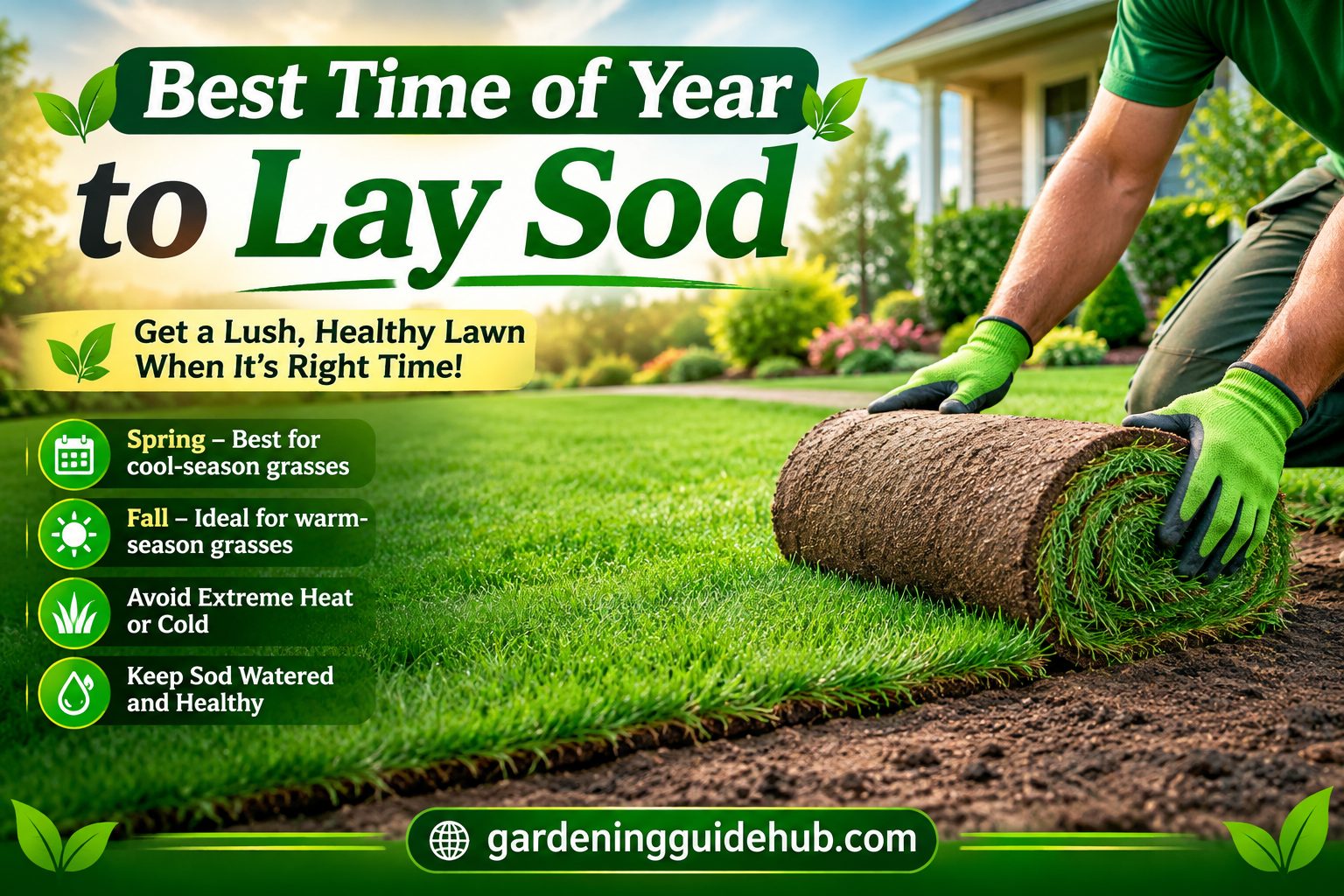
You’ve picked out your sod, prepped your budget, and you’re ready to transform your yard into a lush green space almost overnight. But before a single roll touches the ground, there’s one question that matters more than almost anything else: what time of year should you actually do this?
Timing isn’t just a minor detail with sod. Lay it during the wrong season, and even perfectly healthy grass can struggle to root, turn yellow, or die off completely within weeks. Lay it at the right time, and that same sod will knit into your soil quickly, root deeply, and bounce back from foot traffic before you know it.
This guide walks through exactly when to lay sod based on your climate, grass type, and goals, so your investment actually pays off. 🌿
📅 Quick Overview: Best Seasons for Sod
Here’s a simple snapshot before we dig into the details.
| Season 🌦️ | Cool Season Grass | Warm Season Grass | Overall Rating |
|---|---|---|---|
| Early Spring | Good | Fair | ⭐⭐⭐⭐ |
| Late Spring | Fair | Good | ⭐⭐⭐ |
| Summer | Poor | Fair | ⭐⭐ |
| Early Fall | Excellent | Fair | ⭐⭐⭐⭐⭐ |
| Late Fall | Poor | Poor | ⭐ |
| Winter | Not Recommended | Not Recommended | ⭐ |
Now let’s break down why each season behaves the way it does.
🍂 Fall: The Gold Standard Season
For most regions, especially those with cool season grasses like fescue, bluegrass, and ryegrass, early fall is widely considered the single best time to lay sod.
Here’s why it works so well. Soil temperatures are still warm from summer, which encourages fast root development, while cooler air temperatures reduce heat stress on the fresh grass above ground. Rainfall also tends to increase in many regions during this period, naturally supporting the heavy watering new sod needs without you having to do all the work yourself. Weed pressure drops significantly too, since most weed seeds germinate in spring and summer, giving your new sod time to establish without much competition.
Aim to lay sod at least six weeks before your area’s first expected frost, giving roots enough time to establish before winter dormancy sets in.
🌸 Spring: A Strong Second Choice
Spring is the next best window, particularly for regions with harsher winters where fall installation timing gets tight.
Warming soil temperatures in spring support decent root growth, and there’s typically enough rainfall to reduce how often you’ll need to water manually. The tradeoff is that spring also brings weed seeds to life right alongside your new sod, meaning you’ll likely need to stay on top of weed control more aggressively during the first growing season.
For warm season grasses like bermuda, zoysia, and centipede, late spring into early summer is actually the preferred window, since these varieties need consistently warm soil to root and thrive.
☀️ Summer: Possible, But Risky
Laying sod in the middle of summer isn’t impossible, but it comes with real challenges that make it the least forgiving option for most homeowners.
High temperatures cause new sod to dry out incredibly fast, sometimes requiring watering multiple times a day just to keep it alive. Heat stress can also shock the grass before its root system has a chance to establish, leading to yellowing, browning, or patchy dieback.
If summer installation is your only option, plan to water diligently, ideally with an automatic irrigation system, and consider laying sod in the early morning or evening to reduce transplant shock from direct afternoon sun.
❄️ Winter: Best Avoided in Most Climates
In regions that experience freezing temperatures, winter is generally not a good time to lay sod. Dormant, frozen soil doesn’t allow roots to establish, and the sod essentially sits in limbo until spring, during which time it’s vulnerable to drying out, frost heave, or simply never rooting properly at all.
In warmer climates without hard freezes, sod can sometimes be laid year round with reasonable success, though growth will still be noticeably slower during the coolest months.
🌡️ Cool Season vs Warm Season Grass Timing
Your ideal sod laying window depends heavily on which type of grass you’re working with.
| Grass Type 🌾 | Best Season | Ideal Soil Temperature |
|---|---|---|
| Tall Fescue | Early Fall | 60 to 75°F |
| Kentucky Bluegrass | Early Fall | 55 to 65°F |
| Perennial Ryegrass | Early Fall or Spring | 50 to 65°F |
| Bermuda Grass | Late Spring to Early Summer | 65 to 80°F |
| Zoysia Grass | Late Spring to Early Summer | 70 to 80°F |
| St. Augustine Grass | Late Spring to Summer | 70 to 90°F |
If you’re unsure which category your grass falls into, check the label from your sod supplier or ask them directly, since regional sod farms typically only grow varieties suited to the local climate.
🗺️ Regional Considerations
Climate zones play a huge role in fine tuning your timing beyond just the general season.
In northern and colder regions, early fall offers the widest and safest window, while spring works as a solid backup if fall planting gets missed. In transition zones, where both cool and warm season grasses can technically grow, both early fall and late spring can work well, though fall tends to have a slight edge due to lower heat stress. In southern and warmer regions, late spring through summer suits warm season grasses best, while mild winters may even allow limited installation outside the typical peak windows.
Checking your local frost dates and average soil temperatures through a regional extension office can help you fine tune the exact best week for your specific area.
🧪 Preparing for Your Sod Delivery Regardless of Season
No matter what time of year you’re laying sod, a few preparation steps stay consistent.
- Test and prepare your soil at least a week or two before your planned installation date.
- Schedule your sod delivery for the same day as installation whenever possible, since sod is a perishable product.
- Check the extended weather forecast, avoiding installation right before a heat wave, hard freeze, or heavy storm.
- Have your irrigation setup ready to go before the sod arrives, since watering needs to begin almost immediately after laying.
🚫 Common Timing Mistakes to Avoid
😬 Laying sod in the peak heat of summer without a reliable watering plan in place.
😬 Waiting too long into fall, leaving roots without enough time to establish before frost.
😬 Installing warm season grass too early in spring, before soil temperatures are warm enough.
😬 Ignoring regional climate differences and following generic advice that doesn’t fit the local growing zone.
😬 Letting sod sit rolled up for days while waiting for the weather to feel just right.
❓ Frequently Asked Questions
Can I lay sod in the winter? In most climates with freezing temperatures, it’s best to avoid winter installation, since dormant soil prevents proper rooting. Mild, frost free regions may have more flexibility.
What’s the absolute best month to lay sod? For most cool season grasses, September tends to be the sweet spot in many regions, offering warm soil and cooler air together.
Is it okay to lay sod in extreme heat if I water constantly? It’s possible, but risky. Even with diligent watering, new sod under extreme heat stress is more prone to shock, browning, and uneven establishment.
How long before the first frost should I lay sod? Aim for at least six weeks before your area’s typical first frost date, giving roots enough time to establish before winter dormancy.
Does the best time to lay sod depend on my grass type? Yes, significantly. Cool season grasses generally prefer early fall, while warm season grasses root best in late spring through early summer.
🌟 Final Thoughts
The single biggest factor separating a thriving new lawn from a struggling, patchy one often isn’t technique at all, it’s timing. Lay your sod during the right window for your specific grass type and climate, and roots will establish quickly with minimal stress. Rush it during extreme heat or cold, and you’ll be fighting an uphill battle no matter how carefully you handle everything else.
Match your installation to the season your grass actually wants, and you’ll set your new lawn up to thrive from the very first day. 🏆🌱