
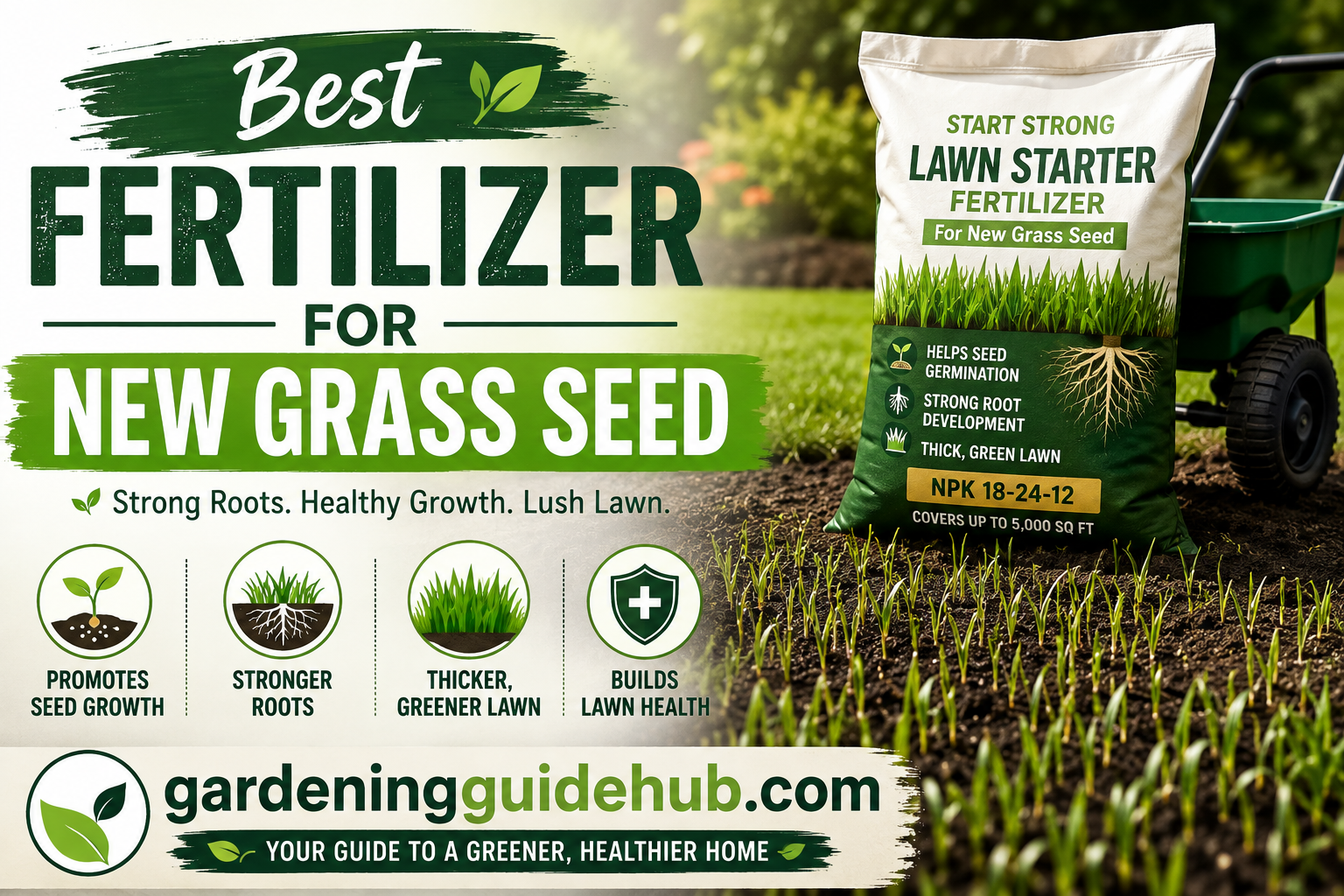
You’ve done the hard part. You tested your soil, raked it smooth, and spread your seed evenly across the yard. Now comes a question that trips up even experienced gardeners: what’s the right fertilizer to feed those tiny seedlings without burning them or wasting your money?
New grass seed has completely different nutritional needs than an established lawn. Feed it the wrong way, and you’ll either scorch fragile roots or leave your seedlings starving for the nutrients they need to root deeply. Feed it the right way, and you’ll speed up germination, build stronger roots, and end up with a thicker, greener lawn in less time.
This guide breaks down exactly what to look for in a starter fertilizer, when to apply it, and how to avoid the mistakes that hold new lawns back. 🌿
🧪 Why New Grass Needs a Different Fertilizer
Established lawns need a steady diet of nitrogen to stay green and lush. New seedlings, on the other hand, are focused on a completely different job: building roots. That means the fertilizer you use for seeding should look nothing like the bag you’d grab for your neighbor’s already thick lawn.
| Nutrient 🧬 | Symbol | Role in New Grass |
|---|---|---|
| Nitrogen | N | Supports leaf growth, needed in smaller amounts early on |
| Phosphorus | P | Builds strong root systems, critical during germination |
| Potassium | K | Improves stress tolerance and disease resistance |
Most standard lawn fertilizers are heavy on nitrogen and light on phosphorus. Starter fertilizers flip that ratio, giving young seedlings the phosphorus boost they need to root quickly and reliably.
🔢 Understanding the Numbers on the Bag
Every fertilizer bag displays three numbers, something like 18 24 12. These represent the percentage of nitrogen, phosphorus, and potassium in that order, often called the NPK ratio.
For new grass seed, look for a starter fertilizer with a higher middle number, meaning more phosphorus relative to nitrogen. A ratio like 5 10 5 or 18 24 6 works well for most seeding projects, giving roots the boost they need without pushing excessive leaf growth too early.
⚠️ One important note: some regions and states restrict or ban phosphorus fertilizers due to water runoff concerns. Always check your local regulations before buying, and choose a phosphorus free starter formula if required in your area.
🏆 Top Fertilizer Options for New Grass Seed
Here’s a breakdown of the main categories of starter fertilizer, along with when each one makes the most sense.
| Fertilizer Type 🌾 | Best For | Pros | Cons |
|---|---|---|---|
| Synthetic starter fertilizer | Fast, reliable results | Quick nutrient release, precise NPK ratio | Can burn seedlings if overapplied |
| Organic starter fertilizer | Eco conscious gardeners | Gentle release, improves soil health long term | Slower acting, often pricier |
| Slow release granular | Low maintenance lawns | Feeds over several weeks, less risk of burn | Higher upfront cost |
| Phosphorus free starter | Areas with phosphorus restrictions | Meets local regulations, still supports growth | May be less effective in phosphorus deficient soil |
| Seed and fertilizer combo products | Beginners wanting simplicity | Convenient, evenly distributed | Less control over individual application rates |
🕐 When to Apply Fertilizer for New Grass Seed
Timing matters just as much as choosing the right product. Here’s the typical schedule professionals follow.
- Before seeding: Work a starter fertilizer into the top few inches of soil right before you spread your seed. This gets nutrients positioned exactly where new roots will grow.
- At seeding: Some combo products let you apply seed and fertilizer together in one pass, which works well for smaller lawns or touch up areas.
- Four to six weeks after germination: Apply a second, lighter feeding once seedlings have grown their first few blades and roots are becoming established.
- Ongoing seasonal feeding: Once your lawn is fully established, usually around eight weeks, transition to a regular lawn fertilizer schedule based on your grass type and climate.
💧 How Fertilizer and Watering Work Together
Fertilizer alone won’t do much good without the right watering routine to help nutrients reach the roots.
| Growth Stage 🌱 | Watering Guidance 💦 | Fertilizer Timing |
|---|---|---|
| Before seeding | Moisten soil lightly | Apply starter fertilizer, then water in gently |
| Days 1 to 14 | Light, frequent watering | No additional fertilizer needed yet |
| Weeks 4 to 6 | Reduce frequency, water deeper | Apply light second feeding |
| Weeks 8 and beyond | Normal established lawn schedule | Shift to seasonal fertilizer program |
Always water lightly right after applying fertilizer. This helps nutrients soak into the soil rather than sitting on top, where they can wash away or burn tender grass blades.
🚫 Common Fertilizing Mistakes to Avoid
Even well meaning homeowners run into the same handful of issues when feeding new grass.
😬 Using a regular high nitrogen lawn fertilizer instead of a proper starter blend.
😬 Applying too much fertilizer at once, which can chemically burn delicate seedlings.
😬 Skipping fertilizer entirely and hoping seed will root well on its own.
😬 Fertilizing during periods of drought or extreme heat stress.
😬 Ignoring local phosphorus restrictions and accidentally violating regulations.
😬 Forgetting to water in fertilizer after application, leaving nutrients sitting on the surface.
🌾 Organic vs Synthetic Starter Fertilizer
Both options can work well, but they suit slightly different priorities.
Synthetic starter fertilizers release nutrients quickly, giving seedlings an immediate boost, which makes them a popular choice when you want fast, visible results. Organic options, often made from ingredients like bone meal, feather meal, or composted manure, release nutrients more slowly and gradually build healthier soil biology over time, making them appealing for gardeners focused on long term soil health and sustainability.
If you’re unsure which to choose, a slow release granular synthetic fertilizer offers a nice middle ground, providing steady nutrition without the intensity of a fast release formula.
🌤️ Signs Your Fertilizer Is Working
Within the first couple of weeks, you should start to see clear signs of healthy establishment. Seedlings should emerge evenly across the yard rather than in scattered clumps. New grass blades should look a healthy green rather than pale yellow, which often signals a nitrogen deficiency. Roots should feel firmly anchored when you gently tug at a seedling after about two to three weeks.
If growth looks weak, patchy, or discolored, it may be worth retesting your soil to check for nutrient gaps your starter fertilizer alone didn’t fully address.
❓ Frequently Asked Questions
Can I use regular lawn fertilizer on new grass seed? It’s not recommended. Regular fertilizer is usually too high in nitrogen for young seedlings and lacks the phosphorus levels new roots need to establish properly.
How soon after seeding should I fertilize? Ideally, work starter fertilizer into the soil before or during seeding, then wait until four to six weeks after germination before applying again.
Is organic fertilizer strong enough for new grass? Yes, though it works more slowly than synthetic options. Many gardeners find it effective, especially when paired with good soil preparation beforehand.
What happens if I use too much fertilizer on new seed? Overapplication can chemically burn young seedlings, causing yellowing or dieback. Always follow the application rate listed on the product label.
Do I need a different fertilizer for warm season versus cool season grass? The starter fertilizer principles are the same for both, though ongoing seasonal fertilizer schedules will differ based on your grass type and regional climate.
🌟 Final Thoughts
Choosing the right fertilizer for new grass seed comes down to one key idea: young seedlings need phosphorus rich support to build strong roots, not a heavy dose of nitrogen meant for mature lawns. Look for a proper starter formula, apply it at the right time, water it in gently, and follow up with a lighter feeding once your grass is a few weeks old.
Get this step right, and you’ll give your new lawn the strongest possible foundation, one that pays off with thicker, greener grass for years to come. 🏆🌱