
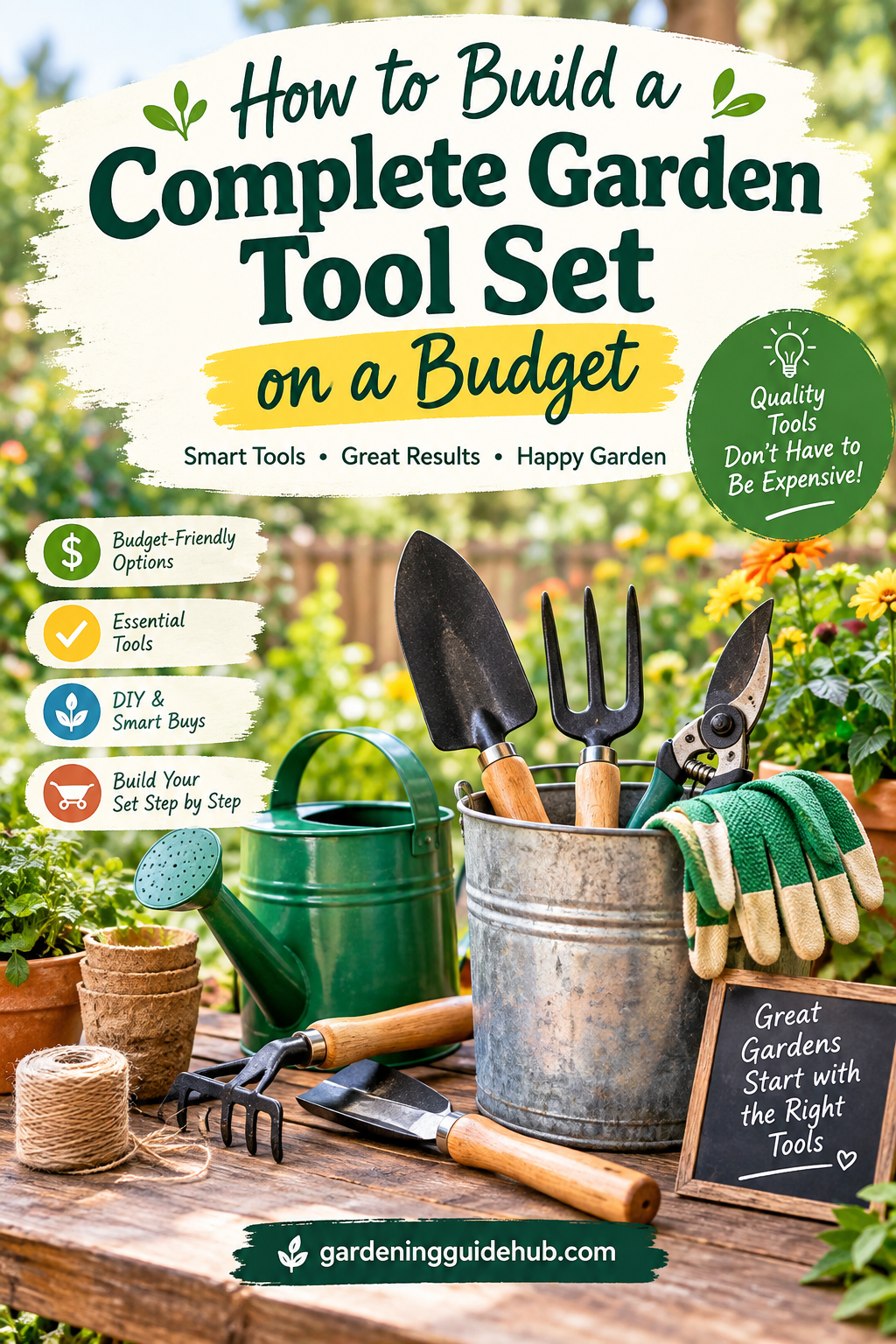
If you have ever walked into a garden center and stared at a wall of shiny tools, you already know the problem. A single trowel can cost fifteen dollars. A decent pair of pruners can run you forty. By the time you add a shovel, a rake, gloves, and a hose, you have spent more than a hundred dollars before you have planted a single seed.
Here is the good news. You do not need to buy everything at once, and you definitely do not need the most expensive version of every tool. With a little patience and a smart shopping strategy, you can build a complete, reliable garden tool set for a fraction of the retail price.
This guide walks you through exactly which tools you actually need, where to find them cheap, how to prioritize your purchases, and how to make budget tools last for years. Let’s dig in. 🪴
Why a Budget Garden Tool Set Actually Works Better 💡
There is a common myth that cheap tools mean cheap results. That is not really true. What actually matters is having the right tools for your garden size and soil type, keeping them clean and sharp, and storing them properly. A twelve dollar secondhand trowel that is oiled and sharpened will outperform a thirty dollar new one that gets left out in the rain.
Building your set slowly and intentionally also has a hidden benefit. You learn what you actually use. Many new gardeners buy a full matching set on day one, only to discover that half of it sits untouched in the shed for years. When you build up piece by piece, every tool in your collection earns its place.
The Core Tools Every Gardener Needs 🧰
Before you spend a single dollar, it helps to know what belongs in a complete set. Below is a breakdown of the essentials, split into three tiers based on how often you will actually reach for them.
| Tier | Tool | What It Is For | Typical New Price | Typical Budget Price |
|---|---|---|---|---|
| Must Have ⭐ | Hand trowel | Digging small holes, transplanting | $12 to $20 | $2 to $6 secondhand |
| Must Have ⭐ | Pruning shears | Trimming stems, deadheading, light branches | $20 to $40 | $5 to $15 secondhand |
| Must Have ⭐ | Garden gloves | Hand protection | $8 to $15 | $3 to $6 |
| Must Have ⭐ | Digging spade or shovel | Turning soil, digging beds | $25 to $50 | $8 to $20 secondhand |
| Must Have ⭐ | Garden rake | Leveling soil, clearing debris | $20 to $35 | $6 to $15 secondhand |
| Very Useful ✅ | Garden hoe | Weeding, shaping rows | $18 to $30 | $5 to $12 secondhand |
| Very Useful ✅ | Watering can or hose | Watering plants | $15 to $60 | $5 to $20 |
| Very Useful ✅ | Wheelbarrow or garden cart | Hauling soil, mulch, plants | $60 to $150 | $20 to $50 secondhand |
| Nice to Have 🌟 | Hand cultivator or hand fork | Loosening soil around plants | $10 to $18 | $2 to $5 |
| Nice to Have 🌟 | Loppers | Cutting thicker branches | $25 to $45 | $8 to $18 secondhand |
| Nice to Have 🌟 | Kneeling pad | Comfort while working close to the ground | $10 to $20 | $3 to $8 |
Notice the pattern. Almost every single item on this list is cheaper secondhand than new, often by seventy percent or more. That is the single biggest lever you can pull when building a budget tool set.
Where to Find Cheap Garden Tools 🔍
1. Estate Sales and Garage Sales 🏡
Gardeners tend to accumulate tools over decades, and estate sales are one of the best places to find well made, older tools at a fraction of their original price. Older tools are often made from solid metal with wooden handles, which means they were built to last and can often outperform modern plastic versions once cleaned up.
2. Local Buy and Sell Groups 📱
Community marketplace apps and local classified groups are full of people clearing out garages and sheds. Search terms like “garden tool lot” or “yard tools bundle” often surface multiple tools bundled together for one low price.
3. Thrift Stores 🛍️
Thrift stores rotate stock constantly, so it pays to check back weekly. Hand tools, gloves, and even small wheelbarrows show up more often than you might expect, usually priced under ten dollars.
4. End of Season Clearance Sales 🍂
Garden centers and hardware stores slash prices on tools at the end of the growing season, often by forty to sixty percent. Late summer and early fall are the best windows to shop if you want new tools without paying full price.
5. Tool Libraries and Sharing Programs 🤝
Many towns and cities now run tool libraries, where you can borrow larger or less frequently used items like tillers, aerators, or hedge trimmers for free or for a small membership fee. This is especially smart for tools you might only use once or twice a year.
6. Family Hand Me Downs 👵👴
Never underestimate asking around. Parents, grandparents, neighbors, and friends often have tools sitting unused. A quick message asking if anyone has spare gardening tools can save you a surprising amount of money.
Building Your Set in the Right Order 📋
You do not need everything on day one. Here is a smart buying order based on what actually gets used first in a new garden.
| Stage | What to Buy | Why This Timing Makes Sense |
|---|---|---|
| Week 1 🌱 | Trowel, gloves, pruning shears | These handle almost all early tasks like planting and light trimming |
| Week 2 to 4 🌿 | Spade, rake | Needed once you start preparing larger beds or turning soil |
| Month 2 🌾 | Hoe, watering can or hose | Useful as your plants grow and need consistent care |
| Month 3 and beyond 🌳 | Wheelbarrow, loppers, kneeling pad | Add these once your garden expands or your tasks get heavier |
This staged approach spreads your spending out naturally and prevents impulse purchases of tools you may not need right away.
Budget Breakdown Example 💰
To show how affordable this can really be, here is a sample budget for a complete starter set sourced mostly secondhand.
| Tool | Source | Price |
|---|---|---|
| Hand trowel | Thrift store | $3 |
| Pruning shears | Estate sale | $8 |
| Garden gloves | New, clearance rack | $4 |
| Digging spade | Local marketplace | $12 |
| Garden rake | Local marketplace | $10 |
| Garden hoe | Thrift store | $6 |
| Watering can | New | $12 |
| Hand cultivator | Family hand me down | Free |
| Total | $55 |
Compare that to buying all of these items new at a big box store, where the same list could easily cost between $150 and $220. That is a savings of well over sixty percent for tools that, once cleaned and maintained, will perform just as well.
How to Make Budget Tools Last for Years 🛠️
Finding cheap tools is only half the equation. Taking care of them is what actually saves you money over the long run, since you will not need to replace them every season.
Clean After Every Use 🧼
Soil left on metal tools traps moisture and speeds up rust. A quick wipe with a rag, or a dunk in a bucket of sandy water followed by a towel dry, keeps blades and edges in good shape.
Sharpen Twice a Year ✂️
A dull trowel or pair of shears makes gardening harder and can damage plants by crushing stems instead of cutting them cleanly. A simple sharpening stone or file works well for most hand tools, and it takes less than five minutes per tool.
Oil the Metal Parts 🛢️
A light coat of household oil on metal blades prevents rust, especially if you store tools in a garage or shed that gets humid. Boiled linseed oil works well on wooden handles too, keeping them from cracking or splintering.
Store Tools Off the Ground 📦
Hanging tools on a wall rack or pegboard, rather than leaving them piled on the floor, prevents moisture buildup and makes them last significantly longer. It also makes them much easier to find when you need them.
Replace Only What Truly Breaks 🔧
Before tossing a tool, check if it can be repaired. A loose handle can often be tightened or reglued. A rusty blade can usually be restored with steel wool and oil. Repairing extends the life of a tool far longer than most people expect.
Common Mistakes to Avoid When Buying on a Budget ⚠️
Buying a matching set just because it looks nice. Matching sets often bundle tools you will rarely use alongside the ones you need constantly, and you end up paying for the whole bundle regardless.
Skipping quality checks on secondhand tools. Always check for cracked handles, heavily rusted blades, or loose joints before buying. A tool that looks cheap but needs immediate repair is not actually a bargain.
Overbuying specialty tools too early. Items like bulb planters, edging tools, or soil aerators are useful for specific tasks, but they are easy to skip until you know your garden actually needs them.
Ignoring proper storage. Even the best budget tools will not last if they sit outside exposed to rain and sun. A simple bucket, bin, or wall hook is often all it takes to protect your investment.
Frequently Asked Questions ❓
Can I really build a full garden tool set for under sixty dollars? Yes, especially if you combine secondhand shopping with clearance sales and a few family hand me downs. The budget breakdown table above shows a real example.
Are secondhand garden tools safe to use? In most cases, yes. As long as the metal is not deeply pitted with rust and handles are not cracked, older tools are often sturdier than modern budget versions sold new.
What is the single most important tool to buy first? A good pair of pruning shears and a sturdy hand trowel cover the widest range of early gardening tasks, so these are worth prioritizing even if you spend slightly more on them.
How often should I replace my garden tools? With proper cleaning, oiling, and storage, most hand tools can last ten years or more. Larger tools like wheelbarrows may need occasional part replacements, but the frame itself often lasts just as long.
Is it worth buying new tools at all? Absolutely, for a few items. Gloves and small items like plant labels are worth buying new for hygiene and fit. Everything else is usually just as good secondhand.
Final Thoughts 🌻
Building a complete garden tool set on a budget is not about cutting corners. It is about shopping smart, buying in the right order, and taking care of what you already own. Start with the essentials, source secondhand whenever you can, and add specialty tools only once you know your garden actually needs them.
A thriving garden does not require a shed full of expensive equipment. It just needs a handful of reliable tools, a bit of patience, and the willingness to get your hands a little dirty. Happy planting! 🌼