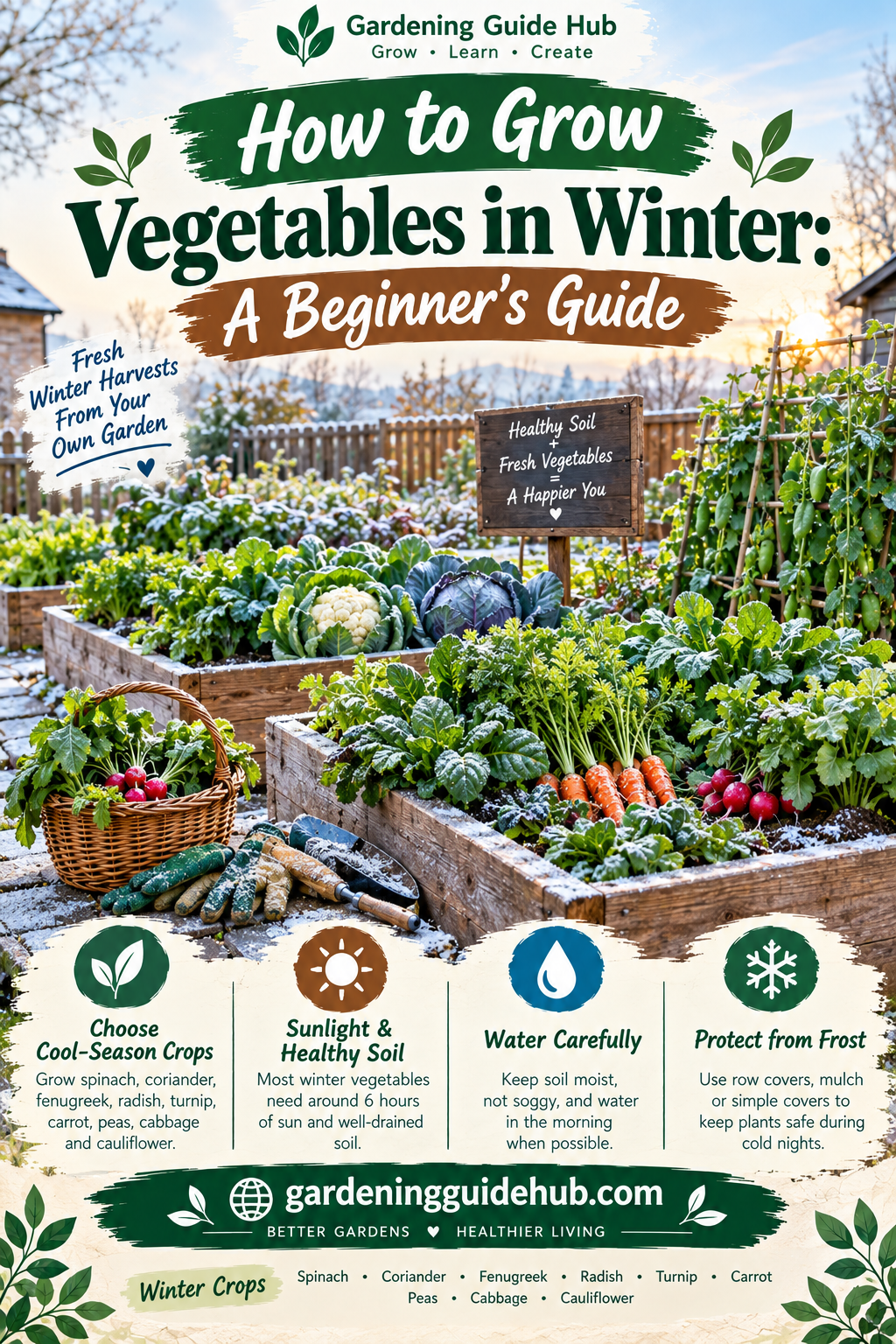
Most people hang up their gardening gloves the moment the first frost arrives. The tomato plants go limp, the beds get tucked in for the season, and the garden sits empty until spring. But here’s a little secret experienced gardeners love to share: winter doesn’t have to mean the end of fresh homegrown food.
With the right vegetables, a few simple protection tricks, and a realistic plan, you can keep harvesting crisp greens, sweet carrots, and hearty roots long after most gardens have gone to sleep. Even better, many winter crops taste noticeably better after a frost. Cold weather triggers them to turn starches into sugars, which gives you spinach, kale, and carrots with a sweetness you rarely get in summer. 🥕✨
This beginner’s guide walks you through everything you need to know: how winter growing actually works, which vegetables to plant, when to sow them, how to protect your plants, and how to avoid the mistakes that trip up most newcomers. No fancy greenhouse required.
Let’s get growing.
Why Grow Vegetables in Winter? 🌱
If you’ve never tried a cold season garden, you might wonder if it’s worth the effort. Here are a few good reasons to give it a go.
- Fresh food when you need it. Picking a handful of greens from your own garden in January beats anything at the grocery store. 🥗
- Better flavor. Frost sweetens many crops, giving them a richer, less bitter taste.
- Fewer pests. Slugs, aphids, and caterpillars mostly disappear in the cold, so you spend far less time fighting bugs.
- Less watering. Cool temperatures and lower evaporation mean your plants need much less water.
- Savings. Organic greens and fresh herbs are expensive in winter. A few packets of seeds can produce pounds of food.
- A gardening habit that lasts. Staying connected to your garden all year makes you a better grower come spring. 🌷
How Winter Gardening Really Works 🔬
Before you plant anything, it helps to understand two big ideas that shape every cold season garden.
Cold Isn’t the Only Challenge: Daylight Matters 🌞
The biggest limit in winter isn’t actually temperature, it’s daylight. When days get shorter than about 10 hours, most plants slow their growth dramatically. In many regions, this slowdown begins in late fall and lasts until early to mid February.
What this means in practice: winter vegetables aren’t really “growing” much in the darkest months. They’re mostly holding, like produce stored in a natural refrigerator. That’s why timing is everything. You plant in late summer or early fall so your crops reach almost full size before the light fades, and then you harvest from them gradually all winter.
Hardy vs Tender Plants 🧊
Some vegetables shrug off frost and even freezing temperatures. Others turn to mush at the first chill. Winter gardening is about choosing the tough ones and protecting them when conditions get extreme.
Know Your Climate: Frost Dates and Hardiness Zones 🗺️
Two numbers will guide almost every decision you make.
Your first average fall frost date. This is roughly when the first killing frost hits your area. You’ll count backward from this date when planting your crops.
Your USDA hardiness zone (or the equivalent in your country). This tells you the coldest temperatures your area typically sees, which helps you decide how much protection your plants need.
Search your zip code or town name online along with “first frost date” and you’ll find this information in seconds. Then write it on your calendar. It’s the most useful date in your garden year.
Best Vegetables for a Winter Garden 🥬
Not all crops are equal when temperatures drop. Here’s a beginner friendly lineup, grouped by how tough they are.
| Vegetable 🥬 | Cold Tolerance | Difficulty | Harvest Style | Notes |
|---|---|---|---|---|
| Kale | Very high | Easy | Pick leaves as needed | Sweeter after frost 🌟 |
| Spinach | Very high | Easy | Cut or pick leaves | Grows slowly but reliably |
| Mache (Corn Salad) | Very high | Easy | Cut whole rosettes | Extremely hardy salad green |
| Carrots | High | Easy | Pull as needed | Sweetest in cold soil 🥕 |
| Garlic | High | Very easy | Harvest next summer | Plant in fall, forget about it |
| Leeks | High | Medium | Dig as needed | Stand through hard freezes |
| Swiss Chard | Medium to high | Easy | Pick outer leaves | Colorful and productive |
| Arugula | Medium to high | Very easy | Cut leaves | Peppery, fast growing |
| Radishes | Medium | Very easy | Pull when ready | Quick and forgiving |
| Lettuce (hardy types) | Medium | Medium | Cut leaves | Needs some protection |
| Beets | Medium to high | Easy | Pull roots and greens | Both parts are edible |
| Cabbage | High | Medium | Cut whole heads | Needs a long growing window |
| Brussels Sprouts | Very high | Medium | Pick sprouts from stalk | Flavor improves after frost |
| Broccoli | Medium to high | Medium | Cut heads | Side shoots keep coming |
| Turnips | High | Easy | Pull roots and greens | Fast and reliable |
| Onions and Shallots | High | Easy | Harvest in summer | Fall planted, spring grown |
If you’re brand new, begin with kale, spinach, carrots, radishes, and garlic. These are the most forgiving plants, and they’ll give you early confidence.
When to Plant: A Simple Timeline 📅
Timing separates a thriving winter garden from a disappointing one. Because plants grow so slowly in cold, dark months, you need to get them started early. A good rule of thumb is to count backward from your first frost date.
| Crop Type 🌿 | When to Sow | Why |
|---|---|---|
| Brussels sprouts, cabbage, broccoli | 14 to 16 weeks before first frost | Need long time to mature |
| Carrots, beets, turnips | 8 to 10 weeks before first frost | Reach size before growth slows |
| Kale, chard | 8 to 10 weeks before first frost | Build leaves before winter |
| Spinach, lettuce, arugula | 6 to 8 weeks before first frost | Fast growers, then they hold |
| Radishes | 4 to 6 weeks before first frost | Very quick to mature |
| Mache | 4 to 6 weeks before first frost | Tough from the start |
| Garlic | 2 to 4 weeks after first frost | Roots in fall, grows in spring |
| Onion sets and shallots | Early to mid fall | Overwinter and grow in spring |
Don’t worry about hitting these dates perfectly. If you miss them by a couple of weeks, you will still get a harvest, just a smaller one.
Getting Your Soil Ready 🪴
Healthy soil is the foundation of any garden, and winter beds are no exception.
Clear out the old crops. Remove spent summer plants, weeds, and diseased material. Leaving them can invite pests and disease.
Add compost. Work in an inch or two of finished compost to restore nutrients that summer crops used up. Leafy greens especially love rich soil.
Check drainage. Cold, soggy soil is the enemy of winter plants. If your bed holds water, consider raising it or mixing in coarse material to improve drainage.
Water well before planting. Moist soil holds warmth better than dry soil, which helps young seedlings settle in.
Skip heavy fertilizer late in the season. Too much nitrogen pushes soft, tender growth that frost damages easily. Compost alone is usually enough.
Protecting Your Plants: Simple Cover Options 🛡️
This is where winter gardening gets fun. Even a modest layer of protection can make your garden feel like it’s one or two climate zones warmer.
| Protection Type 🏡 | Temperature Boost | Cost 💵 | Best For |
|---|---|---|---|
| Mulch (straw, leaves) | 2 to 5°F in soil | Very low | Root crops, garlic, all beds |
| Floating row cover | 4 to 8°F | Low | Quick, flexible frost protection |
| Low tunnel with hoops | 6 to 10°F | Low to medium | Whole beds of greens |
| Cold frame | 10 to 15°F | Low to medium | Lettuce, spinach, small greens |
| Cloche or milk jug | 3 to 6°F | Very low | Individual seedlings |
| Hoop house | 10 to 20°F | Medium to high | Serious winter growers |
| Greenhouse | 15°F or more | High | Year round growing |
Mulch 🍂
A thick layer of straw, shredded leaves, or wood chips insulates the soil, keeps roots from freezing hard, and protects carrots and beets so you can dig them through winter. Pile it on after the ground has cooled, about 4 to 6 inches deep.
Row Covers 🧣
Lightweight fabric draped over your plants traps a surprising amount of warmth. It’s cheap, easy to move, and works well for greens. Hold it down with rocks, bricks, or garden staples so wind doesn’t carry it away.
Low Tunnels 🌈
Bend flexible hoops over a bed and cover them with plastic or heavy row cover. This creates a miniature greenhouse that’s easy to open for ventilation and watering.
Cold Frames 🪟
Think of a cold frame as a bottomless box with a clear lid. You can build one from scrap wood and an old window. On sunny days, prop the lid open so plants don’t overheat, and close it again at night.
Cloches 🥛
For individual plants, a cut off plastic bottle or glass jar works just fine. It’s a cheap way to protect a few special seedlings.
Step by Step: Your First Winter Garden 👩🌾
Step 1: Pick Your Spot
Choose a place that gets as much winter sun as possible, ideally six hours or more. South facing locations close to a wall or fence stay warmer and more sheltered.
Step 2: Prepare the Bed
Clear, loosen, and enrich the soil with compost. Rake it smooth and make sure it drains well.
Step 3: Choose Your Crops
Start small. Pick three to five hardy vegetables rather than trying to grow everything at once.
Step 4: Sow or Transplant
Follow the timeline above. Direct sow root crops like carrots and radishes. For longer season crops like cabbage and broccoli, start seedlings early and transplant them into the bed.
Step 5: Water In and Mulch
Give everything a good drink, then add mulch around (not on top of) the plants to hold in warmth and moisture.
Step 6: Add Protection
Cover with row fabric or hoops before the first hard frost arrives. It’s easier to cover early than to rescue frozen plants later.
Step 7: Monitor and Maintain
Check your plants every week or two. Vent covers on warm days, remove fallen debris, and watch for slugs under the mulch.
Caring for Your Winter Garden 💧
Winter care is wonderfully low maintenance, but a few habits make a big difference.
Water sparingly. Plants use far less water in cold weather. Check the soil with your finger, and water only when it feels dry a couple of inches down. Water in the morning so leaves can dry before nightfall.
Ventilate on sunny days. Covered plants can overheat quickly, even in freezing weather. Open the ends of tunnels or prop up cold frame lids when the sun shines.
Don’t harvest frozen leaves. If your greens are stiff with frost, wait until they thaw. Handling or picking frozen leaves can damage them and make them turn slimy.
Harvest regularly, but lightly. Take outer leaves and leave the center so the plant keeps producing. Remember, regrowth is slow in deep winter, so be patient and take only what you need.
Check for pests. Slugs can still lurk under mulch and covers. A quick check keeps small problems from growing.
Feed lightly in late winter. As days lengthen in February, a light feeding of compost tea or diluted organic fertilizer helps plants wake up and grow again.
Growing Vegetables Indoors in Winter 🏠
No outdoor space? No problem. A sunny window or a simple grow light opens up even more options.
| Indoor Crop 🌿 | Light Needed | Time to Harvest | Difficulty |
|---|---|---|---|
| Microgreens | Moderate | 7 to 14 days | Very easy |
| Herbs (basil, parsley, chives) | Bright | 4 to 8 weeks | Easy |
| Lettuce | Bright | 4 to 6 weeks | Easy |
| Green onions | Moderate | 2 to 3 weeks | Very easy |
| Sprouts | None | 3 to 7 days | Very easy |
| Radishes | Bright | 4 to 5 weeks | Easy |
Microgreens are a wonderful beginner project. Scatter seeds on a tray of damp potting mix, keep it in a bright spot, and snip your first harvest in about two weeks. They pack concentrated flavor and nutrition, and they’re ready fast enough to keep you motivated through the dark months. 🌱
Green onions are another easy win. Place the root ends in a glass of water on a windowsill and they regrow again and again.
Common Beginner Mistakes to Avoid ⚠️
Planting too late. This is by far the most common mistake. Once daylight drops below about 10 hours, planting new seeds won’t produce much. Get things in the ground early.
Choosing tender crops. Tomatoes, peppers, cucumbers, and basil won’t survive winter outdoors. Stick to hardy varieties.
Overwatering. Soggy soil leads to rot and fungal problems. Cold plants drink very little.
Forgetting to vent covers. A sunny day can bake plants under plastic. Open covers when temperatures rise above 40°F.
Skipping the mulch. Without insulation, soil freezes harder, root crops get stuck in frozen ground, and plants struggle.
Expecting summer growth rates. Winter crops grow slowly. Expect patience, not speed.
Giving up after one setback. Maybe a hard freeze takes out a bed. It happens to every gardener. Note what went wrong, adjust, and try again.
A Sample Winter Harvest Calendar 🗓️
Here’s what a beginner’s winter garden might offer through the colder months in a moderately cold climate.
| Month 📆 | What You Can Harvest |
|---|---|
| October | Radishes, lettuce, arugula, chard, late broccoli |
| November | Kale, carrots, beets, spinach, Brussels sprouts |
| December | Kale, leeks, mache, carrots (under mulch), cabbage |
| January | Mache, kale, spinach (under cover), leeks |
| February | Hardy greens under cover, early spinach regrowth |
| March | Overwintered spinach, kale, radishes, garlic scapes later |
Your harvest will vary by climate, but this gives you an idea of what is possible when you plan ahead.
Frequently Asked Questions ❓
Can you really grow vegetables outside in winter? Yes, as long as you pick hardy crops and plant them on time. Kale, spinach, carrots, leeks, and garlic all handle cold weather well, and light protection like mulch or row covers extends what you can grow even further.
What is the easiest vegetable to grow in winter? Garlic and kale are two of the easiest. Garlic is planted in fall and needs almost no attention, while kale tolerates cold and keeps producing for months.
Do I need a greenhouse to grow vegetables in winter? No. Many hardy crops grow perfectly well outdoors with just mulch or a simple row cover. A cold frame or low tunnel adds even more protection for very little money.
When is it too late to plant a winter garden? It depends on your climate, but in most places planting later than about 6 to 8 weeks before your first frost gives poor results for most crops. Garlic and onion sets are the exceptions, since they are planted in fall for next year’s harvest.
Will vegetables survive snow? Often, yes. A layer of snow actually acts like a blanket, insulating plants from harsher air temperatures. Hardy crops like kale and leeks regularly survive under snow.
How cold is too cold for winter vegetables? Very hardy crops like kale, spinach, and mache can tolerate temperatures in the low teens or even lower with protection. Less hardy crops may suffer below about 25°F without covers.
Can I grow vegetables in containers in winter? Yes. Containers work well, but soil in pots freezes faster than ground soil, so choose larger containers and move them to a sheltered spot or wrap them for insulation.
Final Thoughts 🌅
Growing vegetables in winter isn’t about fighting nature. It’s about working with the seasons and giving hardy plants the little bit of help they need. Start small with a few easy crops, plant them early, cover them when the weather turns harsh, and enjoy the quiet satisfaction of harvesting something fresh while everyone else’s garden is bare.
Your first winter garden won’t be perfect, and that’s perfectly fine. Every season teaches you something new about your soil, your climate, and your plants. By next year, you’ll be planning your cold season beds before summer even ends. 🙌🥬
Here’s to frosty mornings, sweet carrots, and gardens that never really sleep. ❄️✨