
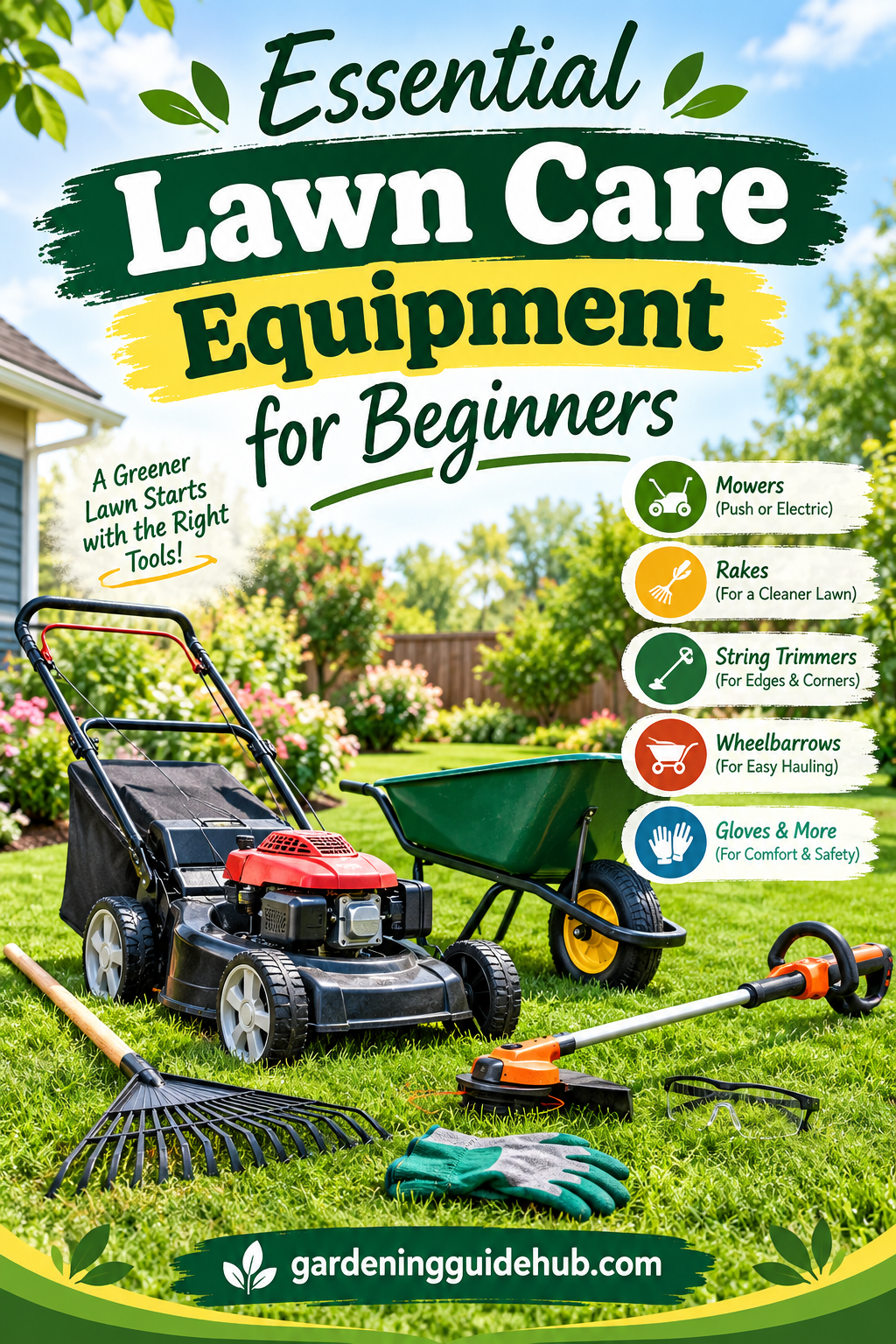
So you just moved into a house with an actual lawn, or maybe you finally decided it is time to stop ignoring the patchy grass in your backyard. Either way, welcome to lawn care. It can feel overwhelming at first. Walk into any hardware store and you will see rows of mowers, edgers, spreaders, and sprayers, all promising to be exactly what your lawn needs.
The truth is, you do not need every gadget on that shelf. Most healthy, good looking lawns are maintained with a small set of core tools used consistently and correctly. This guide breaks down exactly what a beginner actually needs, what can wait, and how to use each piece of equipment so your lawn looks its best without wasting money on things you will never touch again. Let’s get into it. 🌿
Why the Right Equipment Matters More Than You Think 💭
A lawn is a living thing made up of thousands of individual grass plants competing for sunlight, water, and nutrients. The equipment you use directly affects how healthy those plants stay. A dull mower blade tears grass instead of cutting it cleanly, which stresses the plant and opens the door to disease. A poor quality spreader distributes fertilizer unevenly, leaving some patches burned and others starved.
The good news is that quality does not always mean expensive. It means choosing tools that match the size and needs of your specific lawn, and using them properly and consistently. A small yard does not need a riding mower, and a beginner does not need a professional grade aerator on day one.
The Core Equipment Every Beginner Needs 🧰
Here is a breakdown of the essential tools, organized by how important they are for a beginner just starting out.
| Tier | Equipment | What It Does | Typical New Price | Beginner Friendly Option |
|---|---|---|---|---|
| Must Have ⭐ | Lawn mower | Cuts grass to a healthy, even height | $150 to $400 | Push reel mower or basic electric mower |
| Must Have ⭐ | Grass trimmer or edger | Trims grass along fences, walls, and beds | $40 to $100 | Cordless string trimmer |
| Must Have ⭐ | Rake | Clears leaves, thatch, and debris | $15 to $30 | Standard leaf rake |
| Must Have ⭐ | Garden hose and sprinkler | Waters the lawn evenly | $30 to $70 | Basic oscillating sprinkler |
| Very Useful ✅ | Broadcast or handheld spreader | Applies fertilizer and seed evenly | $20 to $60 | Handheld spreader for small lawns |
| Very Useful ✅ | Leaf blower | Clears clippings and leaves quickly | $50 to $120 | Corded electric blower |
| Nice to Have 🌟 | Lawn aerator | Loosens compacted soil for better root growth | $30 to $100 | Manual spike aerator |
| Nice to Have 🌟 | Dethatching rake | Removes buildup of dead grass and roots | $25 to $40 | Standard dethatching rake |
Notice that almost every must have item has a beginner friendly, lower cost version. You genuinely do not need the most powerful or expensive model to get great results on a typical residential lawn.
Breaking Down Each Tool in Detail 🔍
1. Lawn Mower 🌾
Your mower is the single most used piece of equipment you will own, so it deserves the most thought. For small to medium lawns under a quarter acre, a push reel mower or a basic electric mower is often more than enough. Reel mowers are quiet, require no gas or batteries, and give a clean cut, though they work best on flatter yards without a lot of debris.
Electric mowers, whether corded or battery powered, are a great middle ground. They start easily, require far less maintenance than gas mowers, and produce zero emissions while running. Gas mowers are still a solid choice for larger properties or thicker grass, but they come with more maintenance, including oil changes and spark plug replacement.
2. Grass Trimmer or Edger ✂️
A mower alone cannot get right up against fences, trees, or garden beds. This is where a trimmer comes in. Cordless string trimmers are ideal for beginners since they are lightweight, easy to start, and require no gas mixing. Look for one with an adjustable head so you can also use it as an edger along driveways and walkways.
3. Rake 🍂
A simple leaf rake handles far more than just autumn cleanup. It is essential for removing thatch buildup, clearing grass clippings after mowing, and preparing soil before overseeding. A sturdy metal or bamboo tine rake will last for years with minimal care.
4. Garden Hose and Sprinkler 💧
Consistent watering is one of the biggest factors in lawn health, and a basic hose with an oscillating or rotary sprinkler covers most residential lawns effectively. Look for a hose long enough to reach every corner of your yard without straining or kinking.
5. Spreader 🌰
If you plan to fertilize or overseed, a spreader ensures even coverage. For lawns under five thousand square feet, a handheld spreader works fine and costs a fraction of a broadcast spreader. Larger lawns benefit from a walk behind broadcast spreader, which covers more ground per pass.
6. Leaf Blower 🍃
While not strictly necessary, a leaf blower saves an enormous amount of time clearing clippings, leaves, and debris from walkways and driveways. A corded electric blower is affordable, lightweight, and plenty powerful for most home yards.
7. Aerator 🌱
Over time, soil becomes compacted, especially in high traffic areas, which makes it harder for water and nutrients to reach grass roots. A manual spike aerator, which you simply step on and push into the ground, is an affordable way to improve soil health without renting expensive equipment.
8. Dethatching Rake 🧹
Thatch is the layer of dead grass and roots that builds up between the soil and the living grass blades. A small amount is normal, but too much blocks water and nutrients. A dethatching rake, used once or twice a year, keeps this layer in check without needing a powered dethatcher.
What to Buy First: A Beginner Timeline 📅
Building your lawn care equipment collection does not need to happen all at once. Here is a sensible order based on what actually gets used right away.
| Stage | What to Buy | Why This Timing Makes Sense |
|---|---|---|
| Week 1 🌱 | Mower, rake | These two handle the most basic and frequent lawn tasks |
| Week 2 to 4 🌿 | Trimmer or edger, hose and sprinkler | Needed once you want clean edges and consistent watering |
| Month 2 🌾 | Spreader | Useful once you start fertilizing or overseeding |
| Month 3 and beyond 🌳 | Leaf blower, aerator, dethatching rake | Add these as your lawn care routine becomes more advanced |
This approach lets you spread out spending while still handling the basics of mowing, edging, and watering right from the start.
Sample Starter Budget 💰
Here is a realistic budget for a beginner setting up a small to medium residential lawn.
| Equipment | Type | Price |
|---|---|---|
| Push reel mower | New, basic model | $120 |
| Cordless string trimmer | New, basic model | $45 |
| Leaf rake | New | $15 |
| Garden hose and oscillating sprinkler | New | $35 |
| Handheld spreader | New | $18 |
| Total | $233 |
This covers every core need for a beginner lawn care setup, and each of these tools can realistically last five to ten years with basic maintenance.
How to Keep Your Equipment in Good Shape 🛠️
Clean After Every Use 🧼
Grass clippings and moisture buildup on mower decks and blades can cause rust and clogging. A quick wipe down or rinse after each use, once the mower is fully powered off, keeps everything running smoothly.
Sharpen Mower Blades Regularly ✂️
A dull mower blade tears grass rather than slicing it cleanly, leaving your lawn looking ragged and stressed. Most homeowners should sharpen their mower blade at least once per season, or twice if mowing frequently.
Store Equipment Somewhere Dry 📦
Moisture is the biggest enemy of lawn equipment. Store tools in a garage, shed, or covered area whenever possible, and avoid leaving hoses, spreaders, or rakes out in the rain.
Check Fluids and Batteries 🔋
For gas mowers, check oil levels regularly and change it as recommended by the manufacturer. For battery powered equipment, avoid letting batteries sit fully drained for long periods, since this shortens their lifespan.
Replace Only What Truly Wears Out 🔧
Many issues, like a loose handle or a bent tine on a rake, can be repaired rather than replaced. Repairing extends the life of your equipment and saves money over constantly buying new gear.
Common Mistakes Beginners Make ⚠️
Buying a mower that is too powerful for the lawn size. A large gas mower on a small lawn is harder to maneuver and more expensive to maintain than necessary.
Skipping blade sharpening. This is one of the most overlooked habits, yet it has one of the biggest impacts on how healthy your lawn looks.
Watering too often and too shallow. Frequent light watering encourages shallow roots. Deep, less frequent watering builds a stronger, more drought resistant lawn.
Ignoring soil compaction. Skipping aeration entirely can leave your lawn struggling even with proper mowing and watering, especially in yards with heavy foot traffic.
Overbuying specialty tools too early. Items like power dethatchers or professional grade spreaders are easy to skip until your lawn care routine actually calls for them.
Frequently Asked Questions ❓
What is the single most important piece of equipment for a beginner? A reliable mower matched to your lawn size is the foundation of every lawn care routine, since mowing frequency and quality affect grass health more than almost anything else.
Do I really need a leaf blower? Not strictly, but it saves significant time and effort compared to raking or sweeping clippings and debris by hand.
How often should I aerate my lawn? Most residential lawns benefit from aeration once a year, ideally in early fall or spring depending on your grass type.
Can I get away with a manual push mower for a beginner setup? Yes, especially for smaller, flatter lawns. Push reel mowers are quiet, low maintenance, and surprisingly effective for basic upkeep.
Is it worth buying used lawn equipment? Absolutely, particularly for mowers and spreaders. Just check that engines start easily, blades are not heavily rusted, and moving parts are not seized.
Final Thoughts 🌻
Getting started with lawn care does not require a garage full of expensive machinery. A mower, a trimmer, a rake, and a reliable way to water your lawn cover the vast majority of what a beginner actually needs. Everything else can be added gradually as your lawn and your routine develop.
Focus on using your equipment consistently and keeping it well maintained, and you will see a noticeable difference in how your lawn looks within just a few weeks. Here is to greener grass and a routine that actually sticks. 🌼