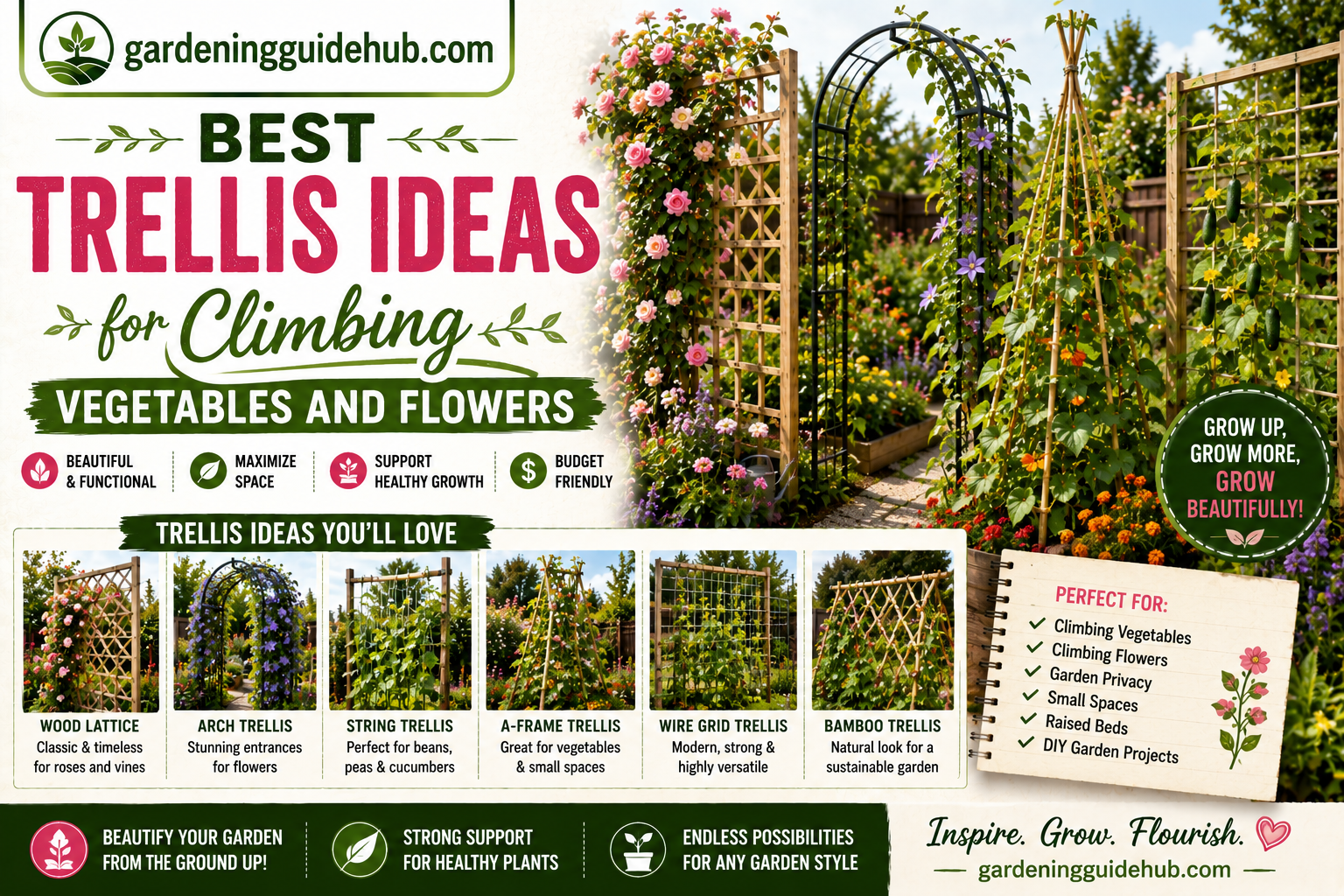
If your garden beds feel like they are bursting at the seams, the solution might not be more land, it might be more height. Trellises are one of the most underrated tools in a gardener’s arsenal, letting vining plants grow upward instead of sprawling across precious ground space. Beyond the practical benefits, a well chosen trellis adds genuine visual interest, turning a flat garden bed into a layered, dimensional space full of texture and movement.
Whether you are growing cucumbers and pole beans or training clematis and sweet peas up a garden wall, this guide will walk you through the best trellis ideas for both vegetables and flowers, along with practical tips to help each one thrive. Let us grow up instead of out. 🌿
Why Trellising Deserves a Spot in Every Garden 💛
Before diving into specific ideas, let us talk about why trellising has become such a beloved technique among both vegetable growers and flower gardeners alike.
Benefits of using a trellis:
- Maximizes growing space, especially valuable in small yards or raised beds
- Improves air circulation around plants, reducing disease and fungal issues
- Makes harvesting vegetables like cucumbers and beans significantly easier
- Keeps fruit and flowers cleaner by lifting them off the ground
- Adds vertical structure and visual interest to garden design
- Reduces pest pressure by keeping foliage away from ground dwelling insects
Once you start trellising, it is hard to imagine gardening without it, since the benefits extend well beyond just saving space.
Quick Comparison: Trellis Types and Best Uses 📊
Here is a simple table comparing popular trellis styles to help you choose the right one for your specific plants and garden layout.
| Trellis Type | Material | Best For | Approximate Cost |
|---|---|---|---|
| A frame trellis 🅰️ | Wood or metal | Cucumbers, squash, melons | $30 to $100 |
| Cattle panel trellis 🌾 | Galvanized metal | Heavy vining vegetables | $40 to $80 |
| Obelisk trellis 🗼 | Wood or metal | Sweet peas, clematis, morning glory | $30 to $90 |
| Wall mounted lattice 🔲 | Wood or vinyl | Climbing roses, ivy, small vines | $20 to $60 |
| String and stake trellis 🧵 | Twine and wooden stakes | Pole beans, peas | $10 to $25 |
| Tomato cage style 🍅 | Wire | Tomatoes, small vining plants | $5 to $15 each |
| Arched tunnel trellis 🌈 | Metal or PVC | Squash, gourds, decorative walkways | $60 to $200 |
Choosing the right trellis often comes down to matching the structure’s strength and shape to the specific weight and growth habit of your chosen plant.
Trellis Ideas for Climbing Vegetables 🥒
Vegetable gardens benefit enormously from trellising, both in terms of space savings and overall plant health. Let us look at the best options for common climbing vegetables.
1. A Frame Trellis for Cucumbers and Squash 🅰️
An A frame trellis, essentially two flat panels leaned together to form a peak, is one of the most popular choices for heavier vining vegetables.
Why it works so well:
- The sturdy triangular shape easily supports the weight of cucumbers, squash, and small melons
- Vegetables hang down through the trellis, making harvesting simple and keeping fruit off the ground
- Can be built from simple wood lattice panels or repurposed cattle panels
- Doubles as a shaded tunnel underneath if built wide enough, useful for shade loving plants below
Building tip: Position your A frame trellis running north to south to ensure even sunlight exposure on both sides throughout the day.
2. Cattle Panel Trellis for Heavy Vining Crops 🌾
For particularly vigorous growers like winter squash or large melon varieties, a cattle panel trellis offers exceptional strength and durability.
Why it works so well:
- Extremely sturdy, capable of supporting even heavy winter squash varieties
- Long lasting, often surviving many growing seasons without replacement
- Simple to install, either bent into an arch or left flat and propped at an angle
- Provides excellent airflow, reducing powdery mildew and other fungal issues
Building tip: For extra heavy fruit like large melons, create small fabric slings to support individual fruits as they grow, preventing the stem from snapping under the weight.
3. String and Stake Trellis for Peas and Beans 🧵
For lighter climbing vegetables like peas and pole beans, an elaborate structure is not always necessary. A simple string and stake system does the job beautifully.
Why it works so well:
- Extremely budget friendly, often costing just a few dollars in materials
- Quick to set up and take down at the end of the growing season
- Works well in tight spaces or along fence lines
- Easily adjustable in height and width to fit your specific garden bed
Building tip: Run horizontal string lines every six to eight inches up your stakes, giving tendrils plenty of places to grip as they climb.
4. Tomato Cage Style Trellis for Determinate Vines 🍅
While technically not always used for true climbing plants, cage style trellises work wonderfully for tomatoes and other semi vining vegetables that need gentle support rather than a full climbing structure.
Why it works so well:
- Provides all around support, preventing sprawling in multiple directions
- Simple to install with no building required, just push into the soil
- Reusable season after season with proper storage
- Available in various sizes to match different tomato varieties
Building tip: Choose a wider, sturdier cage for indeterminate tomato varieties, since standard cages often prove too small and flimsy for their vigorous growth.
Trellis Ideas for Climbing Flowers 🌸
Flowers bring a different kind of magic to trellising, adding color, fragrance, and softness to garden structures throughout the growing season.
1. Obelisk Trellis for Sweet Peas and Clematis 🗼
An obelisk, a tall, pyramid shaped freestanding trellis, makes a striking vertical accent in flower beds while giving climbing flowers plenty of room to spread.
Why it works so well:
- Creates an elegant focal point even before plants fully cover the structure
- Works beautifully as a centerpiece in a round or square garden bed
- Suits both delicate annual vines and more established perennial climbers
- Available in wood, metal, or a combination of both for different aesthetic styles
Styling tip: Paint or stain wooden obelisks in a color that complements your flower palette, such as soft sage green or classic black, for a more polished, designer look.
2. Wall Mounted Lattice for Roses and Ivy 🔲
For flowering vines that need a flatter, wall hugging structure, lattice panels mounted directly to a fence or exterior wall offer excellent support with a classic, decorative look.
Why it works so well:
- Maximizes vertical space without requiring additional floor footprint
- Creates a beautiful backdrop for climbing roses, clematis, or ivy
- Easily painted to match or contrast with existing exterior colors
- Provides ample gripping points for both twining and thorny climbers
Styling tip: Leave a small gap between the lattice and the wall itself, using spacers, to improve airflow and prevent moisture damage to your home’s exterior siding.
3. Arched Tunnel Trellis for a Dramatic Display 🌈
For a truly show stopping garden feature, an arched tunnel trellis creates a walkway completely enveloped in blooms, perfect for a dramatic entrance or garden pathway.
Why it works so well:
- Creates an unforgettable visual experience as you walk beneath cascading flowers
- Works beautifully with climbing roses, wisteria, or morning glory
- Adds significant vertical interest to an otherwise flat garden layout
- Doubles as a shaded walkway once fully established
Styling tip: Multiple arched sections placed several feet apart along a pathway create an even more dramatic, extended tunnel effect than a single arch alone.
4. Simple Twine Trellis for Annual Vines 🧵
For fast growing annual flowers like morning glory or black eyed Susan vine, a simple twine trellis offers an affordable, temporary solution that can be easily changed each season.
Why it works so well:
- Extremely budget friendly and quick to set up
- Perfect for renters or gardeners who like to change their layout yearly
- Biodegradable twine breaks down naturally at the end of the season
- Works well attached to an existing fence, railing, or simple wooden frame
Styling tip: Choose natural jute twine rather than synthetic string for a more polished, cohesive garden aesthetic that blends naturally into the landscape.
Matching Plants to the Right Trellis Type 🌿
Choosing a trellis that matches your plant’s specific growth habit ensures the best possible support and performance throughout the season.
| Plant | Growth Habit | Best Trellis Type |
|---|---|---|
| Cucumbers 🥒 | Tendrils, moderate weight | A frame, cattle panel |
| Pole beans 🫘 | Twining, light weight | String and stake |
| Winter squash 🎃 | Heavy, sprawling | Cattle panel, reinforced A frame |
| Sweet peas 🌷 | Tendrils, light weight | Obelisk, twine |
| Clematis 🌸 | Twining, moderate weight | Obelisk, lattice |
| Climbing roses 🌹 | Woody canes, heavy over time | Lattice, arched tunnel |
| Morning glory 🌅 | Twining, fast and light | Twine, PVC arch |
Matching growth habit to structure strength prevents disappointment later in the season when a flimsy trellis suddenly struggles under the weight of a thriving, mature plant.
Materials Breakdown: Pros and Cons 🧱
| Material | Pros | Cons |
|---|---|---|
| Wood 🪵 | Natural look, customizable | Requires periodic sealing or staining |
| Metal ⚙️ | Extremely durable, low maintenance | Can be more expensive upfront |
| Bamboo 🎋 | Lightweight, affordable, natural aesthetic | Shorter lifespan than wood or metal |
| PVC 🔧 | Budget friendly, easy to work with | Less visually appealing without paint |
| Twine or string 🧵 | Very cheap, biodegradable | Only suitable for lightweight plants |
Choosing the right material often comes down to balancing your budget, desired aesthetic, and how much weight your specific plants will eventually place on the structure.
Placement and Setup Tips for Success 📍
Beyond choosing the right trellis, a few placement considerations help ensure your climbing plants thrive.
Key placement tips:
- Position trellises to run north to south when possible, ensuring even sun exposure on both sides
- Leave adequate spacing between the trellis and other garden elements for airflow and access
- Anchor taller or heavier trellises securely, especially in windy locations
- Consider mature plant size when spacing multiple trellises within the same bed
- Water at the base rather than overhead to reduce fungal issues on climbing foliage
Taking a little extra time during initial placement prevents having to relocate a heavy, established trellis later in the season.
Common Mistakes to Avoid ⚠️
Even experienced gardeners can run into a few avoidable trellising issues.
- Choosing a trellis too flimsy for the eventual weight of a mature, heavily fruiting plant
- Placing trellises too close together, leading to overcrowding and poor airflow
- Forgetting to secure freestanding trellises properly, resulting in toppling during storms
- Ignoring your plant’s specific climbing style, such as using a lattice for a plant that needs twine to grip
- Waiting too long to train young plants onto the structure, resulting in sprawling growth that is harder to redirect later
A little planning at the start of the season saves significant frustration once your plants are actively climbing and producing.
Final Thoughts 🌼
Trellising transforms the way your garden grows, both literally and visually. By choosing the right structure for each specific plant, whether that is a sturdy cattle panel for heavy squash, an elegant obelisk for sweet peas, or a dramatic arched tunnel dripping in climbing roses, you unlock more growing space, healthier plants, and a genuinely more beautiful garden overall.
So take a look at what you are growing this season, match it with the right trellis idea from this guide, and watch your garden reach new heights, quite literally. Sometimes the best way to grow more is simply to grow up.
Happy growing! 🌱🌸