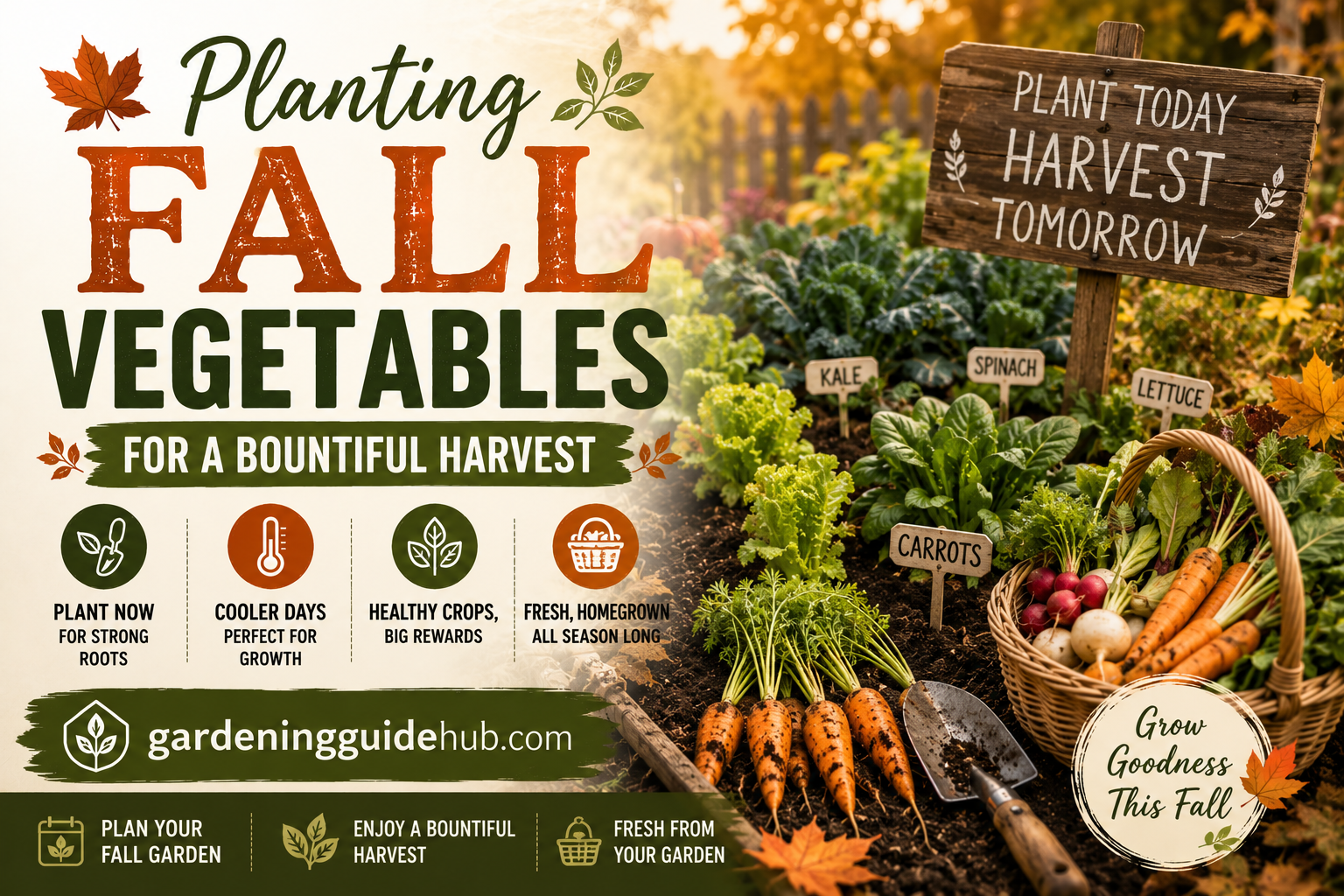
Just because summer is winding down does not mean your gardening season has to end. In fact, fall might just be one of the most rewarding times to plant vegetables, if you know which crops thrive in cooler weather and how to time everything correctly. While spring gets all the attention, a well planned fall vegetable garden can produce crisp greens, sweet root vegetables, and hearty harvests well into the cooler months.
If you have ever wondered whether it is too late in the year to plant anything worthwhile, the answer is almost certainly no. This guide will walk you through everything you need to know to plant a thriving fall vegetable garden, from choosing the right crops to timing your planting for maximum success. Let us get growing. 🌱
Why Fall Vegetable Gardening Deserves a Spot in Your Routine 💛
Fall gardening often gets overlooked, but it comes with some genuinely unique advantages that make it worth the effort.
Benefits of planting fall vegetables:
- Cooler temperatures reduce heat stress on many crops, especially leafy greens
- Fewer pests and diseases are active compared to peak summer months
- Soil retains warmth from summer, helping roots establish quickly
- Many fall vegetables actually taste sweeter after a light frost
- It extends your garden’s productivity well beyond the traditional summer harvest window
Once you experience the crisp, sweet flavor of frost kissed carrots or perfectly timed fall greens, you will understand why so many experienced gardeners consider fall their favorite planting season.
Understanding Your First Frost Date 🧊
Before choosing what to plant, you need to know your area’s average first frost date. This single piece of information shapes your entire fall planting timeline.
Why frost dates matter:
- Cold hardy crops can often be planted right up until the first frost, or even after
- Tender crops need to mature before frost arrives, so timing backward is essential
- Some vegetables, like kale and Brussels sprouts, actually improve in flavor after light frost exposure
- Knowing your frost date helps you calculate the latest safe planting window using a crop’s days to maturity
Most local extension offices or gardening apps can provide a fairly accurate average first frost date for your specific area, which becomes the anchor point for your entire fall planting schedule.
Quick Reference: Fall Vegetable Planting Categories 📊
Here is a simple table breaking down popular fall vegetables by how they generally perform and when they should typically go in the ground relative to your first frost date.
| Category | Examples | Plant Before First Frost | Frost Tolerance |
|---|---|---|---|
| Leafy greens 🥬 | Spinach, lettuce, arugula | 4 to 6 weeks | High |
| Brassicas 🥦 | Broccoli, cabbage, kale | 8 to 10 weeks | Very high |
| Root vegetables 🥕 | Carrots, beets, radishes | 6 to 8 weeks | High |
| Alliums 🧄 | Garlic, onions | 4 to 6 weeks before ground freezes | Very high |
| Peas 🌱 | Snap peas, snow peas | 6 to 8 weeks | Moderate |
| Herbs 🌿 | Cilantro, parsley | 4 to 6 weeks | Moderate |
This table gives you a general framework, but always double check specific varieties, since maturity times can vary even within the same vegetable family.
Best Fall Vegetables and How to Grow Them 🌾
Let us break down some of the most reliable, rewarding fall vegetables in more detail.
Leafy Greens: Fast and Forgiving 🥬
Leafy greens are often the easiest entry point into fall gardening, since many varieties mature quickly and tolerate cool temperatures beautifully.
Top choices:
- Spinach, which actually prefers cooler weather over summer heat
- Loose leaf lettuce, ready to harvest in as little as thirty days
- Arugula, fast growing with a peppery kick that mellows in cool weather
- Swiss chard, which can often survive light frosts and keep producing
Growing tips:
- Sow seeds directly in the ground for most leafy greens, since they generally do not love transplanting
- Keep soil consistently moist, especially during germination
- Harvest outer leaves first to encourage continued growth from the center
Brassicas: Cold Hardy Powerhouses 🥦
The brassica family, which includes broccoli, cabbage, cauliflower, and kale, thrives in fall conditions and often tastes better after a touch of frost.
Growing tips:
- Start seeds indoors in mid to late summer, then transplant seedlings once temperatures cool slightly
- Space plants generously, since many brassicas need more room than people initially expect
- Watch for cabbage worms early in the season, since pest pressure often declines as temperatures drop
- Allow kale and Brussels sprouts to experience a light frost before harvesting for improved sweetness
Root Vegetables: Sweetness Below the Surface 🥕
Root vegetables are some of the most satisfying fall crops, since cool soil temperatures often improve their flavor and texture.
Growing tips:
- Loosen soil deeply before planting to allow roots to grow straight and unobstructed
- Thin seedlings early to prevent overcrowding, which can lead to small or misshapen roots
- Mulch heavily as temperatures drop to protect roots and extend your harvest window
- Many root vegetables, like carrots and beets, can be left in the ground and harvested as needed well into cooler weather
Garlic: The Ultimate Fall Planted Crop 🧄
While most vegetables on this list are harvested in fall, garlic is unique in that it is planted in fall for a harvest the following summer.
Growing tips:
- Plant individual cloves about four to six weeks before the ground freezes solid
- Choose a sunny, well draining location
- Mulch heavily after planting to protect cloves through winter
- Resist the urge to harvest early, since garlic needs the full growing season to develop properly
Timing Your Fall Vegetable Garden 🗓️
Getting the timing right is arguably the most important part of successful fall vegetable gardening. Here is a simple approach to planning your schedule.
Steps to calculate your planting window:
- Find your area’s average first frost date
- Check the days to maturity listed on your seed packet or plant tag
- Add a buffer of one to two weeks for slower fall growth due to shorter daylight hours
- Count backward from your frost date to determine your latest safe planting date
- For frost tolerant crops, you can often push planting slightly later than tender varieties
Sample fall planting calendar for a mid autumn frost date:
| Weeks Before Frost | Task |
|---|---|
| 10 to 12 weeks 📅 | Start brassica seedlings indoors |
| 8 weeks 🌱 | Direct sow root vegetables and peas |
| 6 weeks 🧄 | Plant garlic cloves, transplant brassica seedlings |
| 4 weeks 🥬 | Direct sow fast growing leafy greens |
| 2 weeks ❄️ | Apply mulch, prepare row covers for protection |
Adjust this timeline based on your specific region and the exact crops you are planting, since some varieties mature faster or slower than others.
Soil Preparation for Fall Success 🧑🌾
Healthy soil sets the foundation for a productive fall harvest, especially since fall crops often have a shorter window to establish strong roots before cold weather arrives.
Soil prep checklist:
- Clear out any spent summer plants and add healthy debris to compost
- Loosen compacted soil to improve drainage and root penetration
- Mix in compost or aged manure to replenish nutrients used during summer growing
- Check soil moisture levels, since fall rains can be inconsistent depending on your region
- Consider a light application of balanced fertilizer to support strong initial growth
Taking a little extra time on soil prep in late summer pays off significantly once your fall crops are actively growing.
Protecting Your Fall Garden From Frost 🧊
Even cold hardy crops sometimes need a little help during unexpected early frosts or particularly harsh cold snaps.
| Protection Method | Best For | Notes |
|---|---|---|
| Row covers 🧵 | Broad coverage over rows | Lightweight, reusable each season |
| Cold frames ❄️ | Extending greens harvest | Passive solar heating |
| Mulch 🍂 | Protecting root crops and garlic | Also improves soil health over winter |
| Cloches 🔔 | Individual young plants | Easy to place over single seedlings |
| Watering before frost 💧 | Reducing cold stress | Moist soil retains heat better than dry soil |
Keeping a few of these tools on hand allows you to react quickly if the forecast suddenly shifts colder than expected.
Harvesting Tips for Maximum Flavor 🍽️
Knowing when and how to harvest your fall vegetables makes a real difference in both flavor and continued productivity.
General harvesting tips:
- Harvest leafy greens in the morning when leaves are crisp and hydrated
- Allow brassicas like kale and Brussels sprouts to experience at least one light frost before harvesting for sweeter flavor
- Check root vegetables periodically, since many can be left in the ground and harvested as needed
- Cure garlic properly after the following summer’s harvest by allowing it to dry in a well ventilated area
Many fall vegetables actually improve with a bit of patience, so resist the urge to harvest everything at once.
Common Mistakes to Avoid ⚠️
Even experienced gardeners can run into a few avoidable issues when transitioning to fall vegetable planting.
- Planting too late relative to the crop’s days to maturity and your area’s frost date
- Forgetting to account for shorter daylight hours, which slows growth compared to summer
- Skipping soil amendment simply because the main growing season feels like it is ending
- Underestimating watering needs during dry fall stretches
- Not protecting tender crops during unexpected early cold snaps
A little planning and attention during this transitional season goes a long way toward a genuinely bountiful fall harvest.
Final Thoughts 🌼
A fall vegetable garden proves that the growing season does not have to end just because summer is winding down. With the right crop choices, careful timing, and a little frost protection when needed, you can enjoy crisp greens, sweet root vegetables, and hearty harvests well into the cooler months. Garlic planted now even sets you up for a rewarding harvest next summer, making fall one of the most quietly productive seasons in the entire gardening calendar.
So do not put your tools away just yet. Grab a few seed packets, check your frost date, and get ready for one more round of bountiful, satisfying harvests before winter settles in.
Happy planting! 🥕🍂