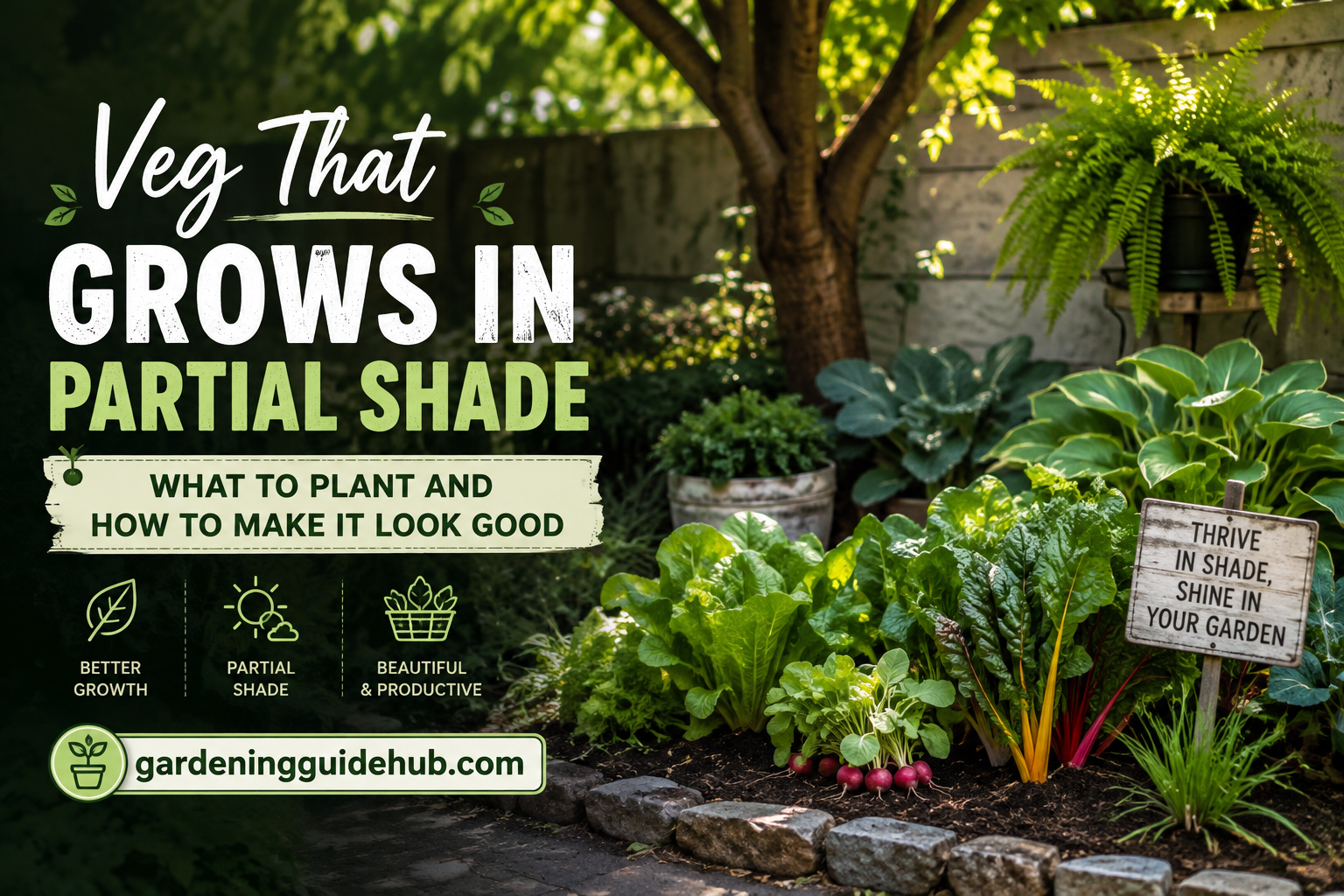
Not every garden gets six hours of blazing sun a day, and honestly, that’s okay. If you’ve got a patio tucked under a tree, a side yard that only catches morning light, or a balcony shaded by the building next door, you might think growing your own vegetables is off the table. It’s not. Plenty of vegetables actually thrive in partial shade, and with a little planning, that shady corner can become one of the prettiest, most productive spots in your whole garden.
In this guide we’ll walk through exactly what “partial shade” means for vegetable gardening, which crops genuinely love it, how to arrange them so they look intentional (not like sad leftovers), and how to keep them healthy all season long. Grab a cup of tea and let’s get into it. 🍵
What Does “Partial Shade” Actually Mean? 🤔
Before picking plants, it helps to know what you’re working with. Gardeners throw around terms like full sun, partial sun, partial shade, and full shade, and they’re not interchangeable.
Full sun means 6 or more hours of direct sunlight daily. Partial sun means 4 to 6 hours of direct sunlight, usually leaning toward the higher end. Partial shade means 3 to 4 hours of direct sunlight, often in the morning or late afternoon, with filtered or indirect light the rest of the day. Full shade means less than 3 hours of direct sun, or bright indirect light all day.
Most leafy greens and root vegetables can handle partial shade just fine because they’re not trying to produce a big, sugar heavy fruit like a tomato or a pepper. Their energy goes into leaves, stems, and roots, which need less light to develop well.
Why Grow Vegetables in Partial Shade? ☀️➡️🌤️
There’s actually an upside to shady vegetable gardening that a lot of people miss.
- Lettuce, spinach, and other greens are less likely to bolt (flower and turn bitter) when they’re protected from intense afternoon heat.
- Shaded soil retains moisture longer, so you’ll water less often.
- Cooler root zones mean less stress on plants during heat waves.
- You get to use garden space that would otherwise sit empty or become a mulch bed.
So instead of thinking of a shady spot as a limitation, think of it as its own microclimate with its own strengths.
The Best Vegetables for Partial Shade 🥕🥦
Here’s a table you can bookmark. It covers the vegetables that consistently perform well with 3 to 6 hours of light a day, along with quick notes on what they need.
| Vegetable 🌱 | Light Needed | Days to Harvest | Notes |
|---|---|---|---|
| Lettuce 🥬 | Partial shade to partial sun | 30 to 50 days | Stays sweet and crisp, less likely to bolt |
| Spinach 🍃 | Partial shade | 35 to 45 days | Loves cool, moist, shaded soil |
| Kale 🥗 | Partial sun to partial shade | 50 to 65 days | Sweeter after a light frost |
| Swiss chard 🌈 | Partial shade | 50 to 60 days | Colorful stems double as garden decor |
| Arugula 🌿 | Partial shade | 20 to 40 days | Fast growing, great for containers |
| Mustard greens 🍽️ | Partial shade | 30 to 45 days | Spicy flavor mellows in cooler light |
| Beets 🌰 | Partial sun to partial shade | 50 to 70 days | Roots may be smaller but greens are edible too |
| Carrots 🥕 | Partial sun to partial shade | 60 to 80 days | Grow slower, but still sweet |
| Radishes 🔴 | Partial shade | 20 to 30 days | Quick crop, perfect for filling gaps |
| Peas 🟢 | Partial sun to partial shade | 55 to 70 days | Climbing habit adds vertical interest |
| Broccoli 🥦 | Partial sun | 55 to 85 days | Needs a bit more light but tolerates some shade |
| Bok choy 🥬 | Partial shade | 30 to 45 days | Compact and attractive in small spaces |
| Herbs (mint, parsley, chives) 🌿 | Partial shade | Varies | Great fillers between vegetables |
| Green onions 🧅 | Partial shade | 60 to 80 days | Slim profile, easy to tuck anywhere |
A quick rule of thumb: leafy greens are the most forgiving, root vegetables come next, and fruiting vegetables like tomatoes, peppers, squash, and cucumbers really do need full sun. If you’re set on growing those, they’ll struggle in true partial shade no matter how much you baby them.
Making a Shady Vegetable Patch Look Beautiful 🎨
Here’s where a lot of gardening advice stops short. Sure, you can grow lettuce in the shade, but how do you make it look like a designed garden rather than a scattered afterthought? These tips will help.
1. Play With Color and Texture 🌈
Shade gardens can actually be more visually interesting than sunny beds because you’re not limited to the usual green on green look. Swiss chard alone comes in shades of red, pink, gold, and white. Pair it with the deep purple of red mustard greens, the ruffled texture of kale, and the soft, feathery look of dill or fennel. Mix curly leaf lettuce with smooth butterhead varieties so the eye has something to travel across.
2. Layer by Height 📏
Just like a flower border, a vegetable patch looks more intentional when it has layers.
- Tall layer: peas on a trellis, upright kale, or Swiss chard
- Middle layer: broccoli, bok choy, beets
- Low layer: lettuce, radishes, arugula, green onions
This layering trick alone can turn a flat, boring bed into something that looks like it belongs in a magazine.
3. Use Containers and Raised Beds 🪴
Shady spots are often awkward shapes, under a tree, along a fence, tucked beside a shed. Containers let you place plants exactly where the light hits best, and you can move them if the sun’s path shifts through the season. Raised beds also warm up a little faster and drain better, which matters more in shade where soil tends to stay damp.
Choose containers with a bit of personality. Terracotta, woven baskets with liners, or painted galvanized tubs all add charm without costing much.
4. Add Structure with Trellises and Edging 🧱
A simple trellis for peas or a low border of edging stones instantly makes a bed look designed rather than random. Vertical elements draw the eye upward and make the most of limited space, which is especially useful in narrow side yard gardens.
5. Underplant Trees and Shrubs 🌳
If your shade comes from a tree, you can plant shallow rooted greens like lettuce and spinach in the dappled light beneath the canopy, as long as the tree’s roots aren’t too aggressive and you keep the soil enriched with compost. This turns unused space under a tree into a productive, good looking edible groundcover.
6. Mix in Flowers 🌸
Calendula, violas, and nasturtiums all tolerate partial shade and happen to be edible too. Tucking a few in among your vegetables adds pops of color and makes the whole bed feel more like a garden and less like a farm plot.
Soil, Water, and Feeding Tips for Shade Grown Vegetables 💧🌱
Growing in partial shade isn’t just about picking the right plants, the way you manage soil and water matters too.
Improve your soil. Shaded soil is often compacted and slower to warm in spring. Mix in compost or well aged manure before planting to loosen it up and add nutrients.
Water less often, but check drainage. Shady beds hold moisture longer, so overwatering is a bigger risk than underwatering. Stick a finger an inch into the soil before watering; if it’s still moist, wait.
Mulch lightly. A thin layer of mulch (about an inch) helps retain moisture without keeping the soil too soggy or encouraging slugs, which love damp, shaded spots.
Feed regularly but gently. Since shaded plants grow a bit slower, a light monthly feeding with compost tea or a balanced organic fertilizer keeps them going without pushing too much leafy growth too fast.
Watch for pests. Slugs and snails are the most common issue in shady, moist gardens. Handpicking in the evening, or using a shallow dish of beer as a trap, keeps them in check without chemicals.
Sample Layout for a Partial Shade Vegetable Bed 🗺️
If you’re staring at a shady 4 by 8 foot bed and not sure where to start, here’s a simple, good looking layout to copy.
| Row | Plant | Purpose |
|---|---|---|
| Back row (tallest) | Peas on a trellis | Height and vertical greenery |
| Second row | Swiss chard and kale, alternating | Color contrast |
| Third row | Beets and bok choy | Mid height texture |
| Front row | Lettuce, arugula, and radishes mixed | Fast harvests, ground cover |
| Edges/corners | Chives, parsley, calendula | Soft border and pollinator appeal |
Rotate the front row every few weeks since radishes and lettuce mature quickly. This keeps the bed productive and full looking all season rather than gappy and half harvested.
Common Mistakes to Avoid 🚫
- Planting fruiting vegetables in deep shade. Tomatoes, peppers, and squash need real sun. Save them for the brightest spot you have.
- Overcrowding. Shade already slows growth a bit; cramming plants together competes for the limited light even more.
- Ignoring soil quality. Shade doesn’t excuse poor soil. If anything, enriching the soil matters more since the plants have less light energy to work with.
- Forgetting to rotate crops. Even in a small shady bed, rotating what you plant each season helps prevent soil borne diseases.
- Skipping succession planting. Fast growing greens like lettuce and radishes finish quickly. Keep sowing small batches every couple of weeks for a steady harvest instead of one big flush.
Frequently Asked Questions ❓
Can any vegetable grow in full shade? Not really. Even shade tolerant vegetables need at least a few hours of light, direct or bright indirect, to photosynthesize enough to grow. Full shade (less than 3 hours) is tough for most edibles, though herbs like mint and chives can sometimes limp along.
Will vegetables grown in shade taste different? Often they taste better. Less direct sun means less stress, and greens especially tend to stay milder and less bitter compared to ones grown in scorching, dry conditions.
How much smaller will my harvest be? Expect a modest reduction, maybe 10 to 30 percent smaller yields or slightly slower maturity, compared to the same crop grown in full sun. Leafy greens are affected the least, root vegetables a bit more.
Can I grow vegetables under a covered patio? Yes, as long as it gets bright, indirect light for most of the day. Add a grow light for extra support if the space is dim, especially in winter months.
What’s the single best vegetable to start with in partial shade? Lettuce. It’s forgiving, fast growing, and actually prefers a break from intense sun, making it the easiest win for a beginner shade gardener.
Final Thoughts 🌻
A shady garden isn’t a lesser garden, it’s a different kind of opportunity. With the right vegetables (think leafy greens, root crops, and a handful of shade tolerant herbs) and a bit of thoughtful design using height, color, and structure, that dim corner of your yard can become just as productive and just as beautiful as any sunny bed. Start small, pick two or three crops from the table above, and build out from there. Before long, you’ll be harvesting fresh greens from a spot you once thought was useless for gardening, and it’ll look good doing it. 🥗✨