
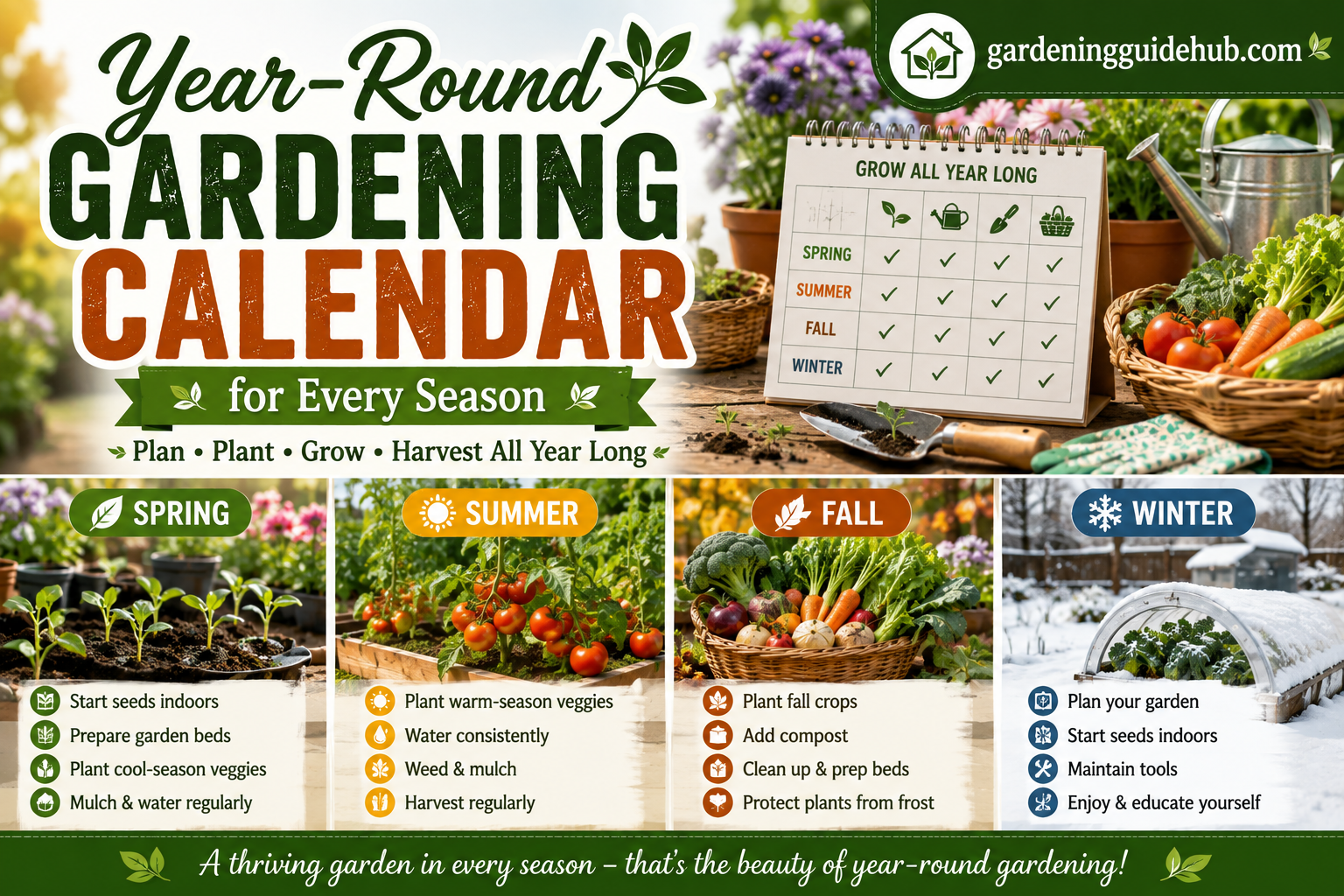
Ask any seasoned gardener what separates a thriving garden from a struggling one, and most will tell you the same thing. It is not luck. It is timing. Knowing what to plant, prune, feed, and harvest in each season turns gardening from a guessing game into a rhythm you can follow year after year.
This guide walks you through a full year round gardening calendar, broken down season by season, so you always know what your garden needs next. Whether you are growing vegetables, flowers, or a mix of both, this calendar will help you stay one step ahead of the weather instead of constantly reacting to it.
Why a Year Round Calendar Matters 🌍
Many gardeners only think in terms of spring planting and fall cleanup, but a truly productive garden benefits from attention in every single season. Winter is not a dead period. It is prep time. Summer is not just about harvesting. It is also about succession planting for fall.
Following a calendar keeps you organized, reduces wasted effort, and helps you avoid the common trap of missing a planting window simply because you were not thinking that far ahead.
| Benefit 🌟 | Why It Matters |
|---|---|
| Better timing | Plants go in when conditions actually suit them |
| Less waste | Fewer failed seedlings from poor timing |
| Continuous production | Something is always growing or being prepped |
| Healthier soil | Regular seasonal care keeps soil balanced |
| Less stress | You always know what task comes next |
Spring: The Season of New Beginnings 🌱
Spring is when most gardens truly wake up. As the soil thaws and daylight hours stretch longer, this is your window to prepare beds, start seeds, and get cool season crops into the ground.
Early Spring Tasks 🌼
- 🧹 Clear away winter debris and dead plant material
- 🪱 Test soil pH and amend with compost as needed
- ✂️ Prune dormant fruit trees and shrubs before new growth begins
- 🌾 Direct sow cool season crops like peas, spinach, and lettuce
- 🌡️ Start warm season seeds indoors under grow lights
Late Spring Tasks 🌸
- 🌻 Transplant hardened off seedlings outdoors after the last frost
- 💧 Set up or check irrigation systems before the heat arrives
- 🐝 Plant pollinator friendly flowers to support your vegetable garden
- 🍂 Apply a fresh layer of mulch to lock in moisture
| Spring Crop 🌷 | Planting Window |
|---|---|
| Peas | 4 to 6 weeks before last frost |
| Lettuce and spinach | 2 to 4 weeks before last frost |
| Carrots and radishes | 2 to 3 weeks before last frost |
| Tomato and pepper seedlings | Start indoors 6 to 8 weeks before last frost |
Summer: The Season of Growth and Harvest ☀️
Summer is where the garden hits full stride. Warm season crops take off, and your main job shifts from planting to maintaining, watering, and harvesting consistently.
Early Summer Tasks 🌽
- 🌱 Transplant warm season crops like tomatoes, peppers, and squash
- 🪴 Stake or cage tomatoes before they sprawl out of control
- 🐛 Begin regular pest inspections as warm weather pests emerge
- 💦 Deep water two to three times per week rather than daily
Midsummer Tasks 🥒
- 🧺 Harvest frequently to encourage continuous production
- 🌾 Succession plant beans, cucumbers, and quick maturing greens
- 🌿 Fertilize heavy feeding crops like tomatoes every 3 to 4 weeks
- 🌡️ Provide afternoon shade for heat sensitive crops during extreme heat waves
Late Summer Tasks 🍅
- 🍁 Begin planning your fall garden and clearing spent spring crops
- 🌻 Save seeds from your best performing plants
- 🪓 Prune back overgrown vines to redirect energy into fruit production
- 🧊 Preserve or freeze surplus harvests before they go to waste
| Summer Crop 🌞 | Planting Window |
|---|---|
| Tomatoes and peppers | After last frost, once soil warms |
| Cucumbers and squash | After last frost |
| Beans | Successive plantings every 2 to 3 weeks |
| Corn | Early to midsummer, in blocks for pollination |
Fall: The Season of Transition and Second Harvests 🍂
Fall is often underestimated, but it is one of the most productive seasons if you plan for it. Cooler temperatures return, which means many of those cool season crops from spring get a second chance to shine.
Early Fall Tasks 🎃
- 🥬 Sow a second round of lettuce, spinach, and kale
- 🧅 Plant garlic cloves for a harvest the following summer
- 🍎 Harvest and store winter squash and pumpkins before frost
- 🍂 Begin clearing out finished summer crops
Late Fall Tasks 🍁
- 🪴 Cut back perennials and remove dead foliage
- 🍁 Add a thick layer of mulch to protect roots through winter
- 🧊 Bring in any tender potted plants before the first hard freeze
- 🌾 Plant cover crops to enrich and protect soil over winter
| Fall Crop 🍂 | Planting Window |
|---|---|
| Garlic | 4 to 6 weeks before ground freezes |
| Kale and spinach | 6 to 8 weeks before first frost |
| Radishes | 4 to 6 weeks before first frost |
| Cover crops | After main harvest, before first freeze |
Winter: The Season of Rest and Planning ❄️
Winter looks quiet on the surface, but it is actually one of the most important seasons for setting up next year’s success. This is the time to rest your soil, plan your layout, and prepare tools and seeds for the season ahead.
Early Winter Tasks 🧣
- 🧰 Clean, sharpen, and store garden tools properly
- 🌾 Mulch heavily over dormant beds to protect soil life
- 📖 Review notes from the past year to see what worked and what did not
- 🌱 Order seeds early before popular varieties sell out
Late Winter Tasks 🌨️
- 🪴 Start slow growing seeds indoors, like onions and some herbs
- 🧑🌾 Plan your garden layout and crop rotation for spring
- 🛠️ Repair raised beds, trellises, or fencing before the busy season
- 🌡️ Watch for the first signs of soil thawing as spring approaches
| Winter Task 🧊 | Purpose |
|---|---|
| Tool maintenance | Prevents rust and extends tool life |
| Soil mulching | Protects beneficial organisms through cold months |
| Seed ordering | Ensures availability of preferred varieties |
| Layout planning | Sets up efficient crop rotation for spring |
Crop Rotation Across the Year 🔄
A year round calendar is also a great opportunity to think about crop rotation, which helps prevent soil borne diseases and nutrient depletion. Instead of planting the same vegetable family in the same spot every season, rotate through different plant families as the year progresses.
| Rotation Group 🌿 | Example Crops |
|---|---|
| Leafy greens | Lettuce, spinach, kale |
| Root vegetables | Carrots, radishes, beets |
| Legumes | Peas, beans |
| Nightshades | Tomatoes, peppers, eggplant |
| Alliums | Onions, garlic, leeks |
A simple approach is to follow legumes with heavy feeders like tomatoes, since legumes naturally add nitrogen back into the soil that those heavier crops need.
Building Your Own Personalized Calendar 🧑🌾
While this guide gives you a solid general framework, your actual planting dates will shift depending on your specific climate zone. The best way to personalize this calendar is to combine it with your local average frost dates.
Steps to Build Your Custom Calendar 📝
- 🌡️ Find your average last spring frost date and first fall frost date
- 📅 Count backward from those dates for each crop based on its planting window
- 🗂️ Create a simple month by month checklist based on the tasks outlined above
- 🔁 Adjust each year based on what worked and what did not in your notes
Keeping a small garden journal, even something as simple as a notebook or phone note, makes an enormous difference over time. You will start noticing patterns, like which varieties handled a heat wave better or which planting date consistently gave you the best lettuce.
Common Mistakes That Throw Off a Yearly Rhythm ⚠️
Even gardeners who follow a calendar closely can run into a few recurring pitfalls.
- Forgetting to plan fall crops until it is already too late in the season
- Letting winter pass without any soil or tool preparation
- Planting warm season crops too early out of excitement
- Skipping crop rotation and planting the same family repeatedly
- Not adjusting the calendar for unusual weather patterns each year
Frequently Asked Questions ❓
Can I really garden year round, even in a cold climate? Yes, though the type of gardening shifts by season. Winter often becomes about planning, tool care, and indoor seed starting rather than active outdoor growing, especially in colder zones.
What is the most important season to plan ahead for? Fall is frequently overlooked, but planning it in late summer allows for a valuable second harvest of many cool season crops.
How do I know my exact frost dates? Local agricultural extension offices and online frost date calculators based on your zip code or postal code are reliable resources.
Is crop rotation really necessary in a small garden? Yes, even in small spaces, rotating plant families helps prevent soil borne disease buildup and keeps nutrients balanced season after season.
Final Thoughts on Gardening Through Every Season 🌈
A garden that thrives year round is not the result of luck or a magic green thumb. It comes from understanding the rhythm of the seasons and giving your soil and plants what they need at exactly the right time. Spring planning, summer maintenance, fall transitions, and winter rest all work together to build a garden that keeps producing and improving year after year.
Start wherever you are right now, whether that is deep in summer harvests or bundled up planning for spring. Every season has a job to do, and every job you complete now sets up an easier, more abundant season ahead.
Happy gardening, all year long! 🌿