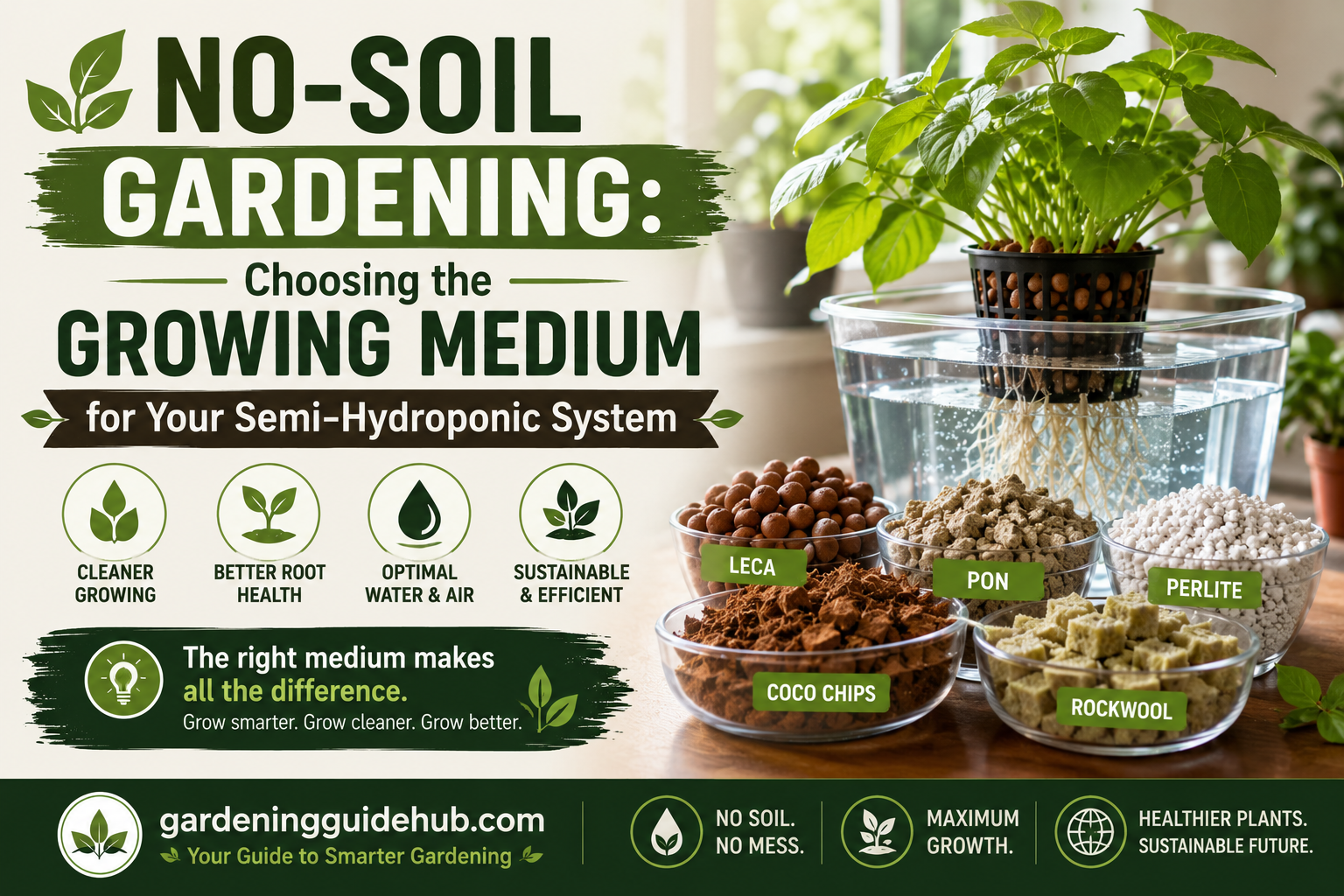
If you’ve started exploring soil free gardening, you’ve probably noticed something quickly: the water and nutrients get all the attention, but the growing medium is just as important, if not more so. It’s the material your plant’s roots actually live in, and getting that choice wrong can undermine even the most carefully balanced nutrient solution.
Whether you’re setting up your first semi hydroponic container or troubleshooting a struggling plant, understanding what different growing mediums actually do, and don’t do, will save you a lot of frustration. Let’s walk through everything you need to know to pick the right one for your setup. 🌿
🔍 What Semi Hydroponics Actually Means
Before comparing materials, it helps to understand where semi hydroponics fits in the broader world of soil free growing. Full hydroponic systems, like nutrient film technique setups, circulate a thin, continuous stream of nutrient solution past bare plant roots, with no solid medium involved at all beyond a small support at the base of the plant. These systems grow plants fast, but they depend entirely on a working pump and constant monitoring. If the pump fails, roots can dry out within hours.
Semi hydroponic systems take a gentler approach. Plants grow in an inert, solid medium inside a container, and the nutrient solution is applied periodically rather than continuously. This creates a natural cycle of wet and dry periods, giving roots time to absorb both moisture and oxygen. Because the medium itself holds a reserve of water and nutrients, semi hydroponic setups are far more forgiving. A missed feeding or a brief power outage won’t sink your plants the way it might in a pure NFT system.
This resilience is exactly why semi hydroponics has become so popular with home gardeners, houseplant enthusiasts, and anyone dipping a toe into soil free growing for the first time. And it all comes down to choosing the right medium to support that balance. 🪴
⚖️ The Key Factors That Should Guide Your Choice
Not every growing medium behaves the same way, and picking one really comes down to weighing a handful of core properties against what you’re growing and how your system works.
💧 Water holding capacity determines how much moisture the medium retains between waterings. A medium that holds too little water means constant refilling, while one that holds too much can drown roots that need oxygen.
🌬️ Aeration refers to how much of the medium’s structure remains open to air rather than saturated with water. Roots need oxygen just as much as moisture, and a medium that stays waterlogged can suffocate them over time.
🍽️ Nutrient exchange ability describes how well a medium interacts with the nutrients in your solution. Some materials are completely inert and simply hold nutrient solution in place, while others actively participate in exchanging charged particles with plant roots, which can either help or complicate your feeding schedule depending on how you manage it.
🦠 Resistance to pests and pathogens matters more than people expect. Organic mediums can sometimes harbor fungus gnats or fungal issues if kept too wet, while inorganic mediums tend to be more sterile by nature.
♻️ Reusability is worth considering too. Some mediums can be rinsed, sterilized, and used again for years, while others break down or need to be replaced after a single growing cycle.
Here’s a quick side by side look at how the most common mediums stack up across these factors. 📊
| Growing Medium 🌾 | Water Retention 💧 | Aeration 🌬️ | Reusable ♻️ | Best For 🎯 |
|---|---|---|---|---|
| LECA (clay pellets) | Low to moderate | Excellent | Yes, many years | Houseplants, self watering setups |
| Rockwool | High | Good | Limited, not eco friendly | Seed starting, cloning |
| Coconut coir | High | Moderate | Limited | General purpose, organic growers |
| Perlite | Low | Excellent | Yes | Blending with other mediums |
| Vermiculite | High | Moderate | Limited | Water loving plants, seed starting |
| Growstones | Moderate | Excellent | Yes | Flood and drain systems |
| Sand | Low | Moderate | Yes | Blended starter mixes |
| Gravel | Very low | Moderate | Yes | Drainage layers, blended mixes |
🧱 Breaking Down the Most Popular Mediums
Now let’s look more closely at what each of these materials actually brings to the table, along with the tradeoffs worth knowing before you buy a bag.
🟤 LECA (Lightweight Expanded Clay Aggregate)
These small, round, fired clay pebbles have become one of the most popular choices for semi hydroponic houseplants, and it’s easy to see why. LECA is clean, reusable almost indefinitely, and has a neutral, attractive appearance that works well in decorative pots. Its porous structure wicks water upward through capillary action, which is the basis of many popular semi hydroponic setups where a reservoir sits at the bottom of the pot and the pellets draw moisture up to the roots as needed.
The tradeoff is that LECA holds relatively little water compared to organic mediums, so consistent refilling of the reservoir matters. It also requires an adjustment period for plants being converted from soil, since the root systems need time to adapt to the very different moisture pattern.
🧵 Rockwool
Made from spun mineral fibers, rockwool has long been a favorite in commercial hydroponics, particularly for starting seeds and rooting cuttings. It holds moisture extremely well, provides solid aeration for developing roots, and creates excellent, even contact with seeds during germination.
On the downside, rockwool isn’t biodegradable, and disposal has real environmental drawbacks since used blocks generally end up in landfills. It can also hold onto more water than ideal for certain flood and drain style systems, so it’s worth checking compatibility with your specific setup before committing to it at scale.
🥥 Coconut Coir
Made from the fibrous husks of coconuts, coir has become a favorite alternative to peat moss among organic minded growers. It holds an impressive amount of water relative to its weight, offers decent aeration, and has a soil like texture that feels familiar to gardeners transitioning away from traditional potting mixes.
Quality can vary quite a bit depending on how the coir was processed and rinsed, since poorly flushed coir can carry excess salts that interfere with your nutrient balance. Many growers blend coir with perlite, often in a rough ratio of seventy percent coir to thirty percent perlite, to improve drainage and prevent the mix from staying too soggy.
⚪ Perlite
This lightweight, popcorn like volcanic material is prized almost entirely for its aeration properties. Water drains through it quickly, which is fantastic for prevent root rot but means it dries out fast and isn’t well suited to being used entirely on its own in most semi hydroponic setups.
Perlite shines as a supporting player, mixed into coir, vermiculite, or soil based blends to loosen up density and improve airflow to the root zone. It’s inexpensive, widely available, and easy to work with.
🟡 Vermiculite
Similar in origin to perlite but behaving quite differently, vermiculite holds significantly more water and is often used where consistent moisture matters more than rapid drainage. It’s frequently combined with perlite specifically to balance out perlite’s tendency to dry too fast, creating a mix that retains moisture while still offering reasonable airflow.
It tends to be pricier than some alternatives, and while cheaper than rockwool, it’s still a specialty product in most garden centers rather than something you’ll find in bulk everywhere.
🧊 Oasis Cubes and Starter Plugs
These are purpose built for germination and early root development. Made from fibrous materials designed to hold both moisture and air in careful balance, they provide excellent seed to medium contact and support young roots as they establish. Many hydroponic growers use these as a starting point before transplanting seedlings into a larger semi hydroponic system with a different primary medium.
The main caveat is shelf life. These plugs can become compacted or start breaking down within a couple of months of purchase, so it’s best to buy them close to when you actually plan to use them rather than stockpiling.
🔵 Growstones
Made from recycled glass, growstones function similarly to LECA in terms of drainage and aeration, while offering a lighter environmental footprint since they’re made from repurposed material. Their capillary action makes them well suited to wick style systems, and they hold up well as either a base layer in flood and drain setups or a top dressing for drip systems.
🌾 Rice Hulls
Cleaned rice husks offer a genuinely sustainable, low cost option, particularly useful for seed starting thanks to a small natural phosphorus content that supports early root development. They also act as a mild filter, helping trap loose debris in the water rather than letting it circulate freely through your system.
The downside is that rice hulls break down over time and can’t be reused the way inorganic mediums can, though they compost nicely once they’ve served their purpose.
🪨 Sand and Gravel
Both of these are inexpensive, widely available, and have been used in hydroponic style growing for a very long time. Their biggest weakness is poor nutrient and water retention, meaning plants grown in sand or gravel alone need frequent watering to avoid nutrient loss. They’re most useful blended with more absorbent materials, or as a drainage layer at the base of a container rather than the primary medium supporting the roots.
One extra note on sand specifically: check for limestone content before use, since it can gradually shift your nutrient solution’s pH toward alkaline over time.
🌿 Matching a Medium to Your Growing Style
With so many options, it helps to think less about which medium is “best” overall and more about which one fits your specific plants and habits.
🔹 If you’re growing houseplants in a self watering, low maintenance setup, LECA is hard to beat thanks to its reusability and clean appearance. 🔹 If you’re starting seeds or rooting cuttings, rockwool or starter plugs give you the reliable moisture and aeration balance germination needs. 🔹 If you lean toward organic, sustainable growing, coconut coir or rice hulls align well with that philosophy. 🔹 If you’re troubleshooting a mix that stays too wet or too dry, perlite and vermiculite are your adjustment tools, blend them in to shift the balance in either direction. 🔹 If budget and availability matter most, sand or gravel blended with a more absorbent material can get the job done affordably.
🧪 A Few Practical Tips Before You Commit
Testing matters more than most beginners expect. Before scaling up a whole system around one medium, try a small batch with your actual plants and see how they respond over a few weeks. Different crops genuinely do better in different mediums, and what works beautifully for a pothos might not suit a tomato seedling at all.
It’s also worth remembering that many experienced growers don’t rely on a single medium across their entire setup. Blending two or three materials, say coir for water retention with perlite for aeration, often produces better results than any single medium used alone.
Finally, pay attention to preparation. Rockwool and coir often need a pH buffering rinse before use, and LECA should be thoroughly rinsed to remove clay dust before it goes anywhere near your plants. Skipping these prep steps is a common beginner mistake that can throw off your whole nutrient balance right from the start.
❓ Common Questions About Growing Mediums
Can I mix different growing mediums together? 🧪 Yes, and many experienced growers do exactly this. Combining a moisture retentive material like coir or vermiculite with a fast draining one like perlite is a common way to get the benefits of both without the drawbacks of relying on just one.
How often should I replace my growing medium? 🔄 It depends heavily on the material. Inorganic options like LECA, growstones, and perlite can often be rinsed and reused for years. Organic mediums like coir and rice hulls typically need replacing after one or two growing cycles as they begin to break down.
Does the growing medium affect my nutrient solution’s pH? ⚗️ It can. Some materials, particularly rockwool and certain sands, may shift pH over time, which is why rinsing or buffering before use is recommended. Testing your nutrient solution’s pH periodically helps catch any drift early.
Is one medium better for beginners than the others? 🌱 LECA tends to be the most forgiving and low maintenance option for beginners, especially for houseplants, thanks to its reusability and simple wet dry cycle. Rockwool and starter plugs are excellent specifically for seed starting if you’re growing from scratch.
🛠️ Troubleshooting Common Growing Medium Problems
Even with a thoughtfully chosen medium, issues can crop up, and knowing how to read the signs helps you fix things before they affect plant health.
😞 Roots look mushy or blackened. This usually points to a medium holding too much water for too long. Consider mixing in more perlite or growstones to improve drainage, and check that your container has adequate drainage holes.
🐛 Tiny flying insects around the pot. Fungus gnats love consistently damp, organic mediums like coir. Letting the top layer dry out slightly between waterings, or switching a portion of the mix to an inorganic material like LECA, tends to solve this quickly.
🍂 Plant wilting despite regular watering. This can indicate a medium that dries out too fast, common with straight perlite or sand. Blending in a moisture retentive material like coir or vermiculite usually resolves it.
⚪ White crust forming on the surface. This is typically mineral salt buildup from fertilizer or hard water. Flushing the medium thoroughly with plain water every few weeks helps prevent this from accumulating to harmful levels.
🌍 Environmental Considerations Worth Weighing
Sustainability is becoming a bigger factor in how gardeners choose their growing medium, and it’s worth a moment of thought before you buy in bulk. Coconut coir and rice hulls are byproducts of other industries, which gives them a smaller environmental footprint compared to materials that require significant processing or mining. LECA and growstones, while manufactured, are reusable for years, which offsets their initial production impact over time. Rockwool, by contrast, tends to raise the most environmental concern since it isn’t biodegradable and typically ends up in landfill once it’s no longer usable.
None of this means you need to rule out a medium purely on environmental grounds, but it’s a reasonable factor to weigh alongside performance, especially if you’re setting up a larger system you’ll be maintaining for years to come.
🏁 Final Thoughts
Choosing a growing medium for your semi hydroponic system isn’t about finding one universally perfect material, it’s about matching the properties of the medium to the needs of your plants and the rhythm of your own care routine. Water retention, aeration, reusability, and nutrient behavior all play a role, and the right balance will look different depending on whether you’re growing a windowsill herb garden or a full setup of fruiting vegetables.
Take the time to understand what each medium actually does, experiment with small batches before committing to a large scale setup, and don’t be afraid to blend materials to get the balance just right. Once you find the combination that works for your space and your plants, soil free gardening becomes remarkably low maintenance, and remarkably rewarding. 🌿💧