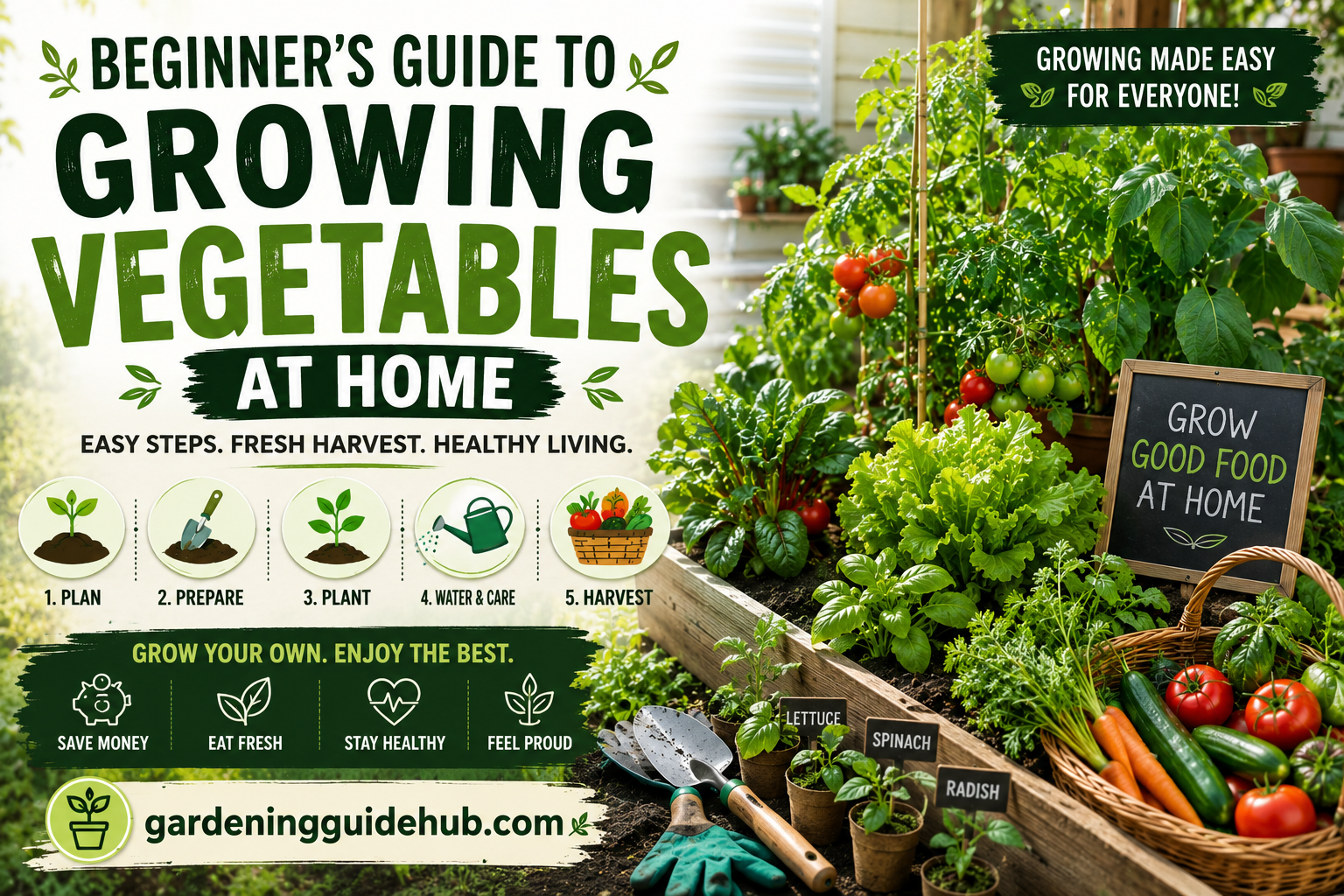
Growing your own vegetables at home is one of those things that sounds intimidating until you actually try it, and then you wonder why you waited so long. You don’t need acres of land, a farming background, or even a backyard. A sunny windowsill, a small balcony, or a modest patch of dirt by the front door is more than enough to start producing real, fresh food. This guide covers everything a beginner needs to grow vegetables successfully at home, from choosing your space to enjoying your first harvest. 🍅🥬
Why Grow Vegetables at Home? 🌟
Before jumping into the how, it’s worth pausing on the why, because it shapes how you approach the whole project.
- Freshness. Homegrown vegetables go from plant to plate in minutes, not days or weeks like store bought produce.
- Savings. Herbs and specialty greens especially can be expensive to buy but cost pennies to grow from seed.
- Control. You decide exactly what goes into your soil, no unknown chemicals or sprays.
- Satisfaction. There’s a quiet kind of pride in eating something you grew with your own hands.
- Sustainability. Growing at home cuts down on packaging waste and the environmental cost of shipping produce long distances.
Whatever your reason, the process below works whether you’re gardening on 200 square feet or a single windowsill.
Step 1: Assess Your Home Space 🏠
Not every home garden looks the same, and that’s the beauty of it. Take stock of what you actually have available.
| Space Type 📍 | Good For | Notes |
|---|---|---|
| Backyard or side yard | Full sized vegetable beds | Best for larger crops like squash, corn, or potatoes |
| Balcony or patio | Container gardening | Great for tomatoes, peppers, herbs, and leafy greens |
| Windowsill | Herbs and microgreens | Needs strong, consistent light |
| Small courtyard | Raised beds or grouped containers | Flexible layout options |
| Indoor grow shelf | Herbs, lettuce, microgreens | Ideal with a simple grow light setup |
Whatever space you’re working with, the goal is the same: enough light, decent soil or growing medium, and easy access to water.
Step 2: Understand Light Requirements ☀️
Sunlight is the single most important factor in home vegetable growing, more important than soil, containers, or even watering habits.
Full sun (6+ hours) is needed for fruiting vegetables like tomatoes, peppers, cucumbers, and squash. Partial sun (4 to 6 hours) works for many root vegetables like carrots and beets. Partial shade (3 to 4 hours) suits leafy greens like lettuce, spinach, and kale just fine.
Spend a day watching your intended growing spot, whether it’s a balcony or a patch of yard, and note how many hours of direct sun it actually gets. Many beginners overestimate their light and end up disappointed when fruiting vegetables underperform.
Step 3: Choose Your Growing Method 🪴
At home, you generally have three realistic options, and many people combine more than one.
Containers. Perfect for balconies, patios, and renters. Buckets, grow bags, and pots all work well as long as they have drainage holes.
Raised beds. Ideal for backyards with poor native soil. A raised bed gives you full control over soil quality and is easier on the back than ground level beds.
In ground beds. The most budget friendly option long term if your yard already has decent soil, though it requires more upfront prep work like clearing grass and testing soil quality.
If you’re brand new to gardening, starting with a few containers is often the least intimidating and most forgiving choice.
Step 4: Gather Basic Supplies 🧰
You really don’t need much to get started. Here’s a simple beginner supply list.
| Item 🛠️ | Purpose | Approximate Cost |
|---|---|---|
| Potting soil or garden soil | Growing medium | $10 to $15 per bag |
| Containers or raised bed materials | Where plants grow | $10 to $40 depending on size |
| Seeds or seedlings | What you’re growing | $2 to $5 per variety |
| Hand trowel | Planting and light digging | $5 to $10 |
| Watering can or hose | Keeping soil moist | $5 to $20 |
| Organic fertilizer | Feeding plants through the season | $5 to $10 |
That’s genuinely all you need to get a small home garden going. Everything else, like trellises, plant markers, or fancy tools, is optional and can be added later.
Step 5: Pick Beginner Friendly Vegetables 🥕
Some vegetables are far more forgiving than others, and choosing the right ones early builds confidence instead of frustration. Here’s a solid beginner list for home gardens.
| Vegetable 🌱 | Growing Method | Days to Harvest | Why It’s Beginner Friendly |
|---|---|---|---|
| Lettuce 🥬 | Container or bed | 30 to 50 days | Fast, forgiving, and regrows after cutting |
| Radishes 🔴 | Container or bed | 20 to 30 days | One of the quickest vegetables you can grow |
| Cherry tomatoes 🍅 | Container or bed | 60 to 75 days | More forgiving than large slicing tomatoes |
| Green beans 🫘 | Container or bed | 50 to 60 days | High yield with minimal care |
| Herbs (basil, mint, chives) 🌿 | Container or windowsill | 25 to 60 days | Nearly foolproof and useful in the kitchen daily |
| Zucchini 🥒 | Bed or large container | 45 to 55 days | One plant produces an abundant harvest |
| Green onions 🧅 | Container or bed | 60 to 80 days | Can even be regrown from kitchen scraps |
| Peas 🟢 | Container or bed | 55 to 70 days | Tolerates cooler weather, easy to grow vertically |
| Spinach 🍃 | Container or bed | 35 to 45 days | Great for partial shade or cooler spots |
| Carrots 🥕 | Bed or deep container | 60 to 80 days | Satisfying to harvest, just needs loose soil |
A great starter combo for a home garden is lettuce, radishes, cherry tomatoes, and one or two herbs. That mix gives you a fast harvest, a summer favorite, and daily kitchen ingredients without overwhelming a first timer.
Step 6: Prepare Your Soil 🌍
Healthy soil is the real engine behind a healthy garden. For containers and raised beds, a quality bagged potting mix or raised bed soil blended with compost is the easiest route. For in ground beds, mix in compost to improve texture, drainage, and nutrient content, especially if your native soil is heavy clay or very sandy.
A simple squeeze test tells you a lot. Grab a handful of moist soil and squeeze it gently. If it crumbles apart easily when poked, that’s healthy soil structure. If it stays in a dense clump or falls apart into dust, it likely needs some organic matter mixed in.
Step 7: Planting Basics 🌾
Once your space, soil, and vegetables are chosen, planting itself is simple.
- Follow the spacing guide on the seed packet, overcrowding leads to weaker, smaller harvests.
- Plant seeds roughly twice as deep as their size.
- Water thoroughly right after planting to settle the soil around seeds or roots.
- Label containers or rows since seedlings often look identical when young.
- If starting warm season crops indoors, give seedlings 6 to 8 weeks of growth before moving them outside after your last frost date.
Step 8: Ongoing Care 💧🌿
Watering. Most vegetables want roughly 1 inch of water per week. Containers dry out faster than ground soil, so check them daily in warm weather using a simple finger test an inch into the soil.
Mulching. A thin layer of mulch, straw, shredded leaves, or bark, helps retain moisture, block weeds, and regulate soil temperature, especially in ground beds.
Feeding. Fresh potting soil usually provides nutrients for 6 to 8 weeks. After that, a balanced organic fertilizer every few weeks keeps plants productive.
Weeding. Pull weeds while they’re small, before they compete with your vegetables for water, light, and nutrients.
Monitoring. Check plants every couple of days for early signs of pests or disease, yellowing leaves, holes, or wilting are all worth investigating quickly.
Step 9: Handling Common Home Garden Challenges 🐛
Every home gardener runs into a few bumps along the way. Here’s how to handle the most common ones.
| Challenge 🚧 | Likely Cause | Simple Fix |
|---|---|---|
| Yellowing leaves | Overwatering or nutrient deficiency | Check drainage and soil moisture before adding fertilizer |
| Leggy, weak seedlings | Not enough light | Move to a brighter spot or add a grow light |
| Slow growth | Poor soil or crowded roots | Refresh soil with compost, thin out crowded plants |
| Pests on leaves | Slugs, aphids, or other insects | Handpick pests, use insecticidal soap, or introduce companion plants |
| Wilting despite watering | Root rot from poor drainage | Ensure containers have drainage holes, avoid overwatering |
| Few flowers or fruit | Not enough sunlight | Move fruiting vegetables to the sunniest available spot |
Step 10: Harvesting Your Home Grown Vegetables 🧺
Harvesting at the right time makes a real difference in flavor and encourages many plants to keep producing.
- Pick lettuce and other leafy greens by taking outer leaves, allowing the plant to regrow from the center.
- Harvest radishes and carrots once the top of the root looks plump at the soil surface.
- Pick tomatoes once fully colored, or slightly early if needed, since they’ll continue ripening indoors.
- Pick beans, peas, and zucchini young and tender, this also encourages the plant to keep producing more.
Regular harvesting is one of the simplest ways to boost your total yield over the season.
Tips for Small Home Spaces 📐
If you’re working with a tiny balcony, windowsill, or courtyard, a few extra tricks help you make the most of limited room.
- Use vertical space with trellises for peas, beans, and cucumbers.
- Choose compact or dwarf varieties bred specifically for containers.
- Stack shelves or use tiered plant stands to grow more in a small footprint.
- Combine a few vegetables in one larger container, as long as their light and water needs match.
- Rotate fast growing crops like radishes and lettuce to keep containers productive all season.
A Simple First Month Checklist ✅
| Week | Task |
|---|---|
| Week 1 | Choose your space, assess sunlight, gather basic supplies |
| Week 2 | Prepare soil, plant fast growing crops like radishes and lettuce |
| Week 3 | Start warm season seeds indoors if not already transplanting seedlings |
| Week 4 | Begin regular watering and feeding routine, check for early pests |
Frequently Asked Questions ❓
Can I grow vegetables at home without a yard? Absolutely. Containers on a balcony, patio, or even a sunny windowsill can grow a surprising variety of vegetables and herbs.
What’s the easiest vegetable to start with at home? Lettuce and radishes are both excellent starting points, they’re fast, forgiving, and give beginners quick, encouraging results.
How much time does a home vegetable garden take each week? A small home garden usually takes 15 to 30 minutes a few times a week for watering, checking plants, and light maintenance.
Do I need special equipment for indoor growing? Not always. A sunny windowsill can support herbs and microgreens, though a simple grow light helps if natural light is limited.
How soon will I see results? Fast crops like radishes can be ready in as little as 20 days, while tomatoes and peppers typically take a couple of months to reach harvest.
Final Thoughts 🌻
Growing vegetables at home isn’t about having the perfect setup, it’s about starting with what you have and learning as you go. Whether that’s a single pot of basil on a windowsill or a full raised bed in the backyard, every home garden starts the same way: with a little sunlight, some decent soil, and a willingness to try. Start small, stay consistent, and before long you’ll be walking a few steps to pick fresh ingredients for dinner instead of driving to the store. 🥗🍅✨