
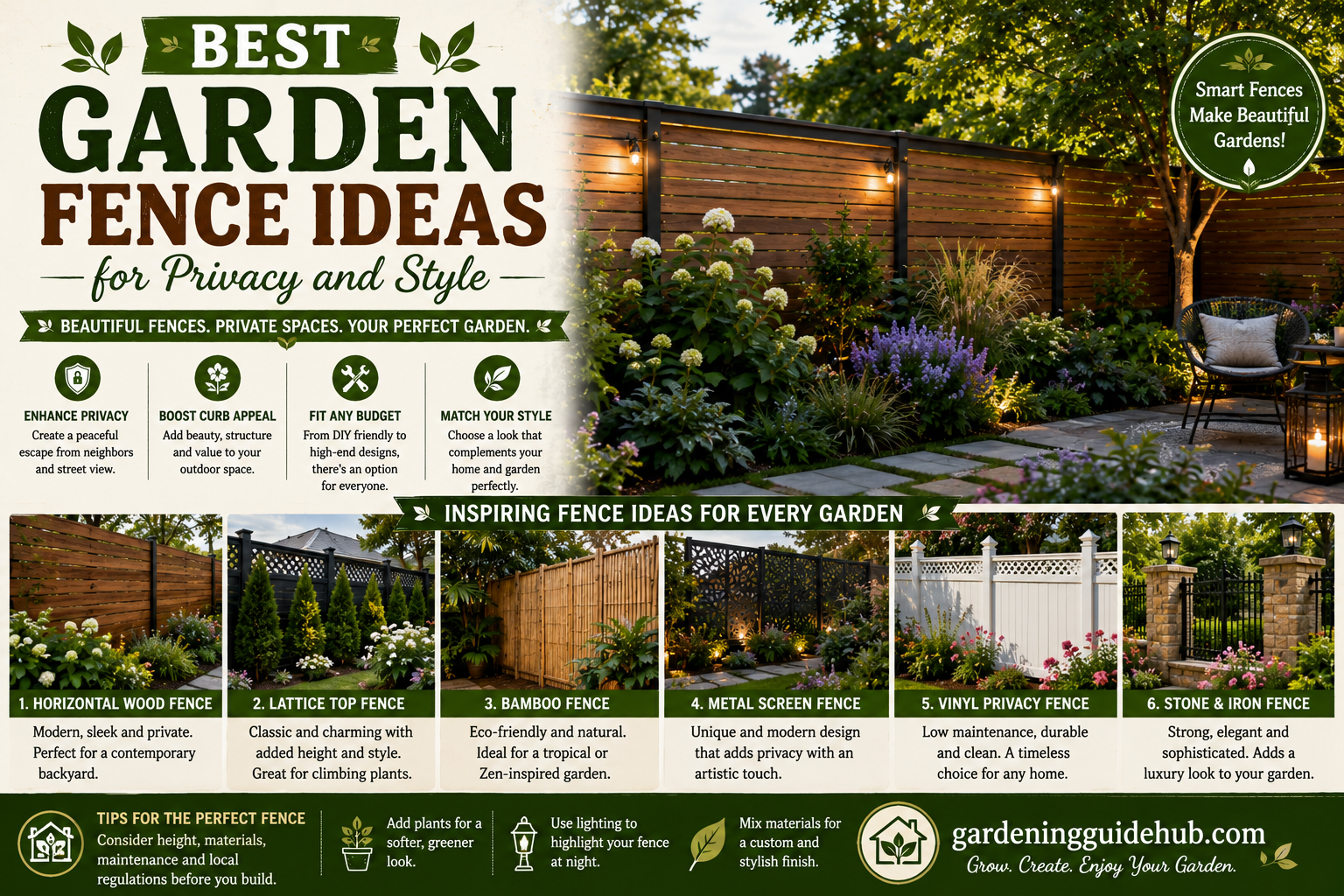
A garden fence has to pull double duty. It needs to block prying eyes, keep pets and kids safely contained, and stand up to weather year after year, but it also needs to actually look good doing it. Nobody wants a backyard that feels like a fortress, and thankfully, you do not have to choose between privacy and style anymore. Today’s fence designs prove you can have both.
Whether you are starting from scratch or looking to upgrade a tired, sagging fence line, this guide will walk you through the best fence styles, materials, and design tricks to create a backyard that feels private, polished, and completely your own. Let us build something beautiful. 🔨
Why Your Fence Deserves More Thought Than You Might Think 💛
It is easy to view a fence as purely functional, something you install once and forget about. But a well designed fence actually shapes the entire feel of your outdoor space.
Reasons to prioritize fence design:
- It frames your entire garden, acting almost like a picture frame around your landscaping
- A stylish fence significantly boosts curb appeal and property value
- Good design choices can make a small yard feel larger and more open
- Privacy allows you to actually relax and use your outdoor space without feeling exposed
- The right fence sets the tone, whether that is cozy cottage charm or sleek modern minimalism
Think of your fence as one of the biggest design opportunities in your entire yard, not just a boundary line.
Quick Comparison: Popular Fence Styles 📊
Here is a simple table comparing some of the most popular privacy fence styles to help you find the right fit for your yard and budget.
| Style | Material | Best For | Approximate Cost Per Linear Foot |
|---|---|---|---|
| Classic solid board 🪵 | Cedar, pine | Traditional privacy | $15 to $30 |
| Horizontal slat 📏 | Cedar, composite | Modern backyards | $25 to $45 |
| Board on board 🔲 | Cedar, redwood | Maximum privacy, no gaps | $20 to $35 |
| Vinyl privacy fence 🧴 | PVC | Low maintenance homes | $20 to $40 |
| Living hedge fence 🌳 | Plants, shrubs | Eco friendly, soft privacy | $10 to $30 |
| Composite fence 🔧 | Recycled wood and plastic | Durability with wood look | $30 to $50 |
| Bamboo or reed fence 🎋 | Natural bamboo panels | Tropical, casual style | $12 to $25 |
Costs vary based on region, fence height, and finish quality, so use this table as a general planning guide rather than a fixed estimate.
1. Classic Solid Board Fences: Timeless and Reliable 🪵
There is a reason the traditional solid board fence remains one of the most popular privacy options. It is straightforward, effective, and blends into nearly any garden style.
What makes this style work so well:
- Tightly spaced vertical boards block sightlines completely
- Natural wood tones pair beautifully with greenery and flower beds
- Easily customized with paint, stain, or trim details
- Widely available and generally easier to install than more complex designs
For a slightly elevated look, consider adding a decorative cap rail along the top or a lattice topper to soften the fence’s overall silhouette.
2. Horizontal Slat Fences: A Modern Favorite 📏
If your home leans contemporary, a horizontal slat fence instantly signals modern style. The clean, linear lines feel intentional and architectural rather than purely functional.
Design features to consider:
- Slats can be spaced tightly for full privacy or slightly apart for a more open, airy feel
- Pairs beautifully with black or dark stained finishes for a bold, modern contrast
- Works especially well alongside minimalist landscaping and concrete patios
- Often constructed with cedar or composite materials for durability
This style has become a favorite among homeowners renovating mid century or contemporary style homes, since the horizontal lines echo similar architectural details.
3. Board on Board Fences: Privacy Without Gaps 🔲
For homeowners who want absolutely zero visibility from either side, a board on board fence is one of the most effective options available. This design overlaps boards on alternating sides of the frame, eliminating gaps entirely.
Why this style stands out:
- Provides complete privacy from both directions, unlike standard single sided fences
- Creates visual interest with subtle shadow lines between overlapping boards
- Extremely effective at blocking wind as well as sightlines
- Works well in tight urban lots where neighbors are especially close
This is often the go to choice for homeowners in densely packed neighborhoods who want maximum privacy without sacrificing curb appeal.
4. Vinyl Privacy Fences: Low Maintenance Style 🧴
For those who want a polished look without the ongoing upkeep of wood, vinyl fencing has become an increasingly popular option.
Benefits of vinyl fencing:
- Never needs staining, painting, or sealing
- Resists rot, warping, and insect damage
- Available in a wide range of colors and textures, including realistic wood grain finishes
- Cleans easily with just soap and water
While the upfront cost can run slightly higher than basic wood fencing, many homeowners find the reduced long term maintenance well worth the investment.
5. Living Hedge Fences: Soft, Natural Privacy 🌳
For a completely different approach, a living hedge offers privacy through greenery rather than a built structure. This option feels lush, natural, and blends seamlessly into garden landscaping.
Popular plants for hedge fences:
| Plant | Growth Speed | Height Potential | Notes |
|---|---|---|---|
| Arborvitae 🌲 | Fast | 6 to 15 feet | Classic, dense privacy screen |
| Leyland cypress 🌲 | Very fast | 15 to 40 feet | Great for large properties |
| Boxwood 🌿 | Slow | 3 to 6 feet | Formal, manicured look |
| Privet 🍃 | Fast | 4 to 15 feet | Easy to shape and maintain |
| Bamboo 🎋 | Very fast | 10 to 40 feet | Requires containment to control spread |
Living fences take longer to establish full privacy compared to built structures, often a full season or two, but they offer unmatched natural beauty and environmental benefits once mature.
6. Composite Fences: Durability Meets Style 🔧
Composite fencing, made from a blend of recycled wood fibers and plastic, has grown in popularity for homeowners who want the warm look of wood without the maintenance headaches.
Why composite fencing appeals to many homeowners:
- Resists fading, warping, and insect damage far better than natural wood
- Available in a wide range of wood look finishes and colors
- Environmentally friendly due to its recycled material content
- Typically comes with longer manufacturer warranties than traditional wood fencing
The higher upfront cost is often offset by decades of reduced maintenance, making composite a smart long term investment for many homeowners.
7. Bamboo and Reed Fences: Casual Tropical Style 🎋
For a more relaxed, casual aesthetic, bamboo or reed fencing panels bring an instant tropical or coastal feel to your backyard.
Best uses for bamboo style fencing:
- Layering over an existing chain link fence for an instant privacy and style upgrade
- Creating a casual, resort like backyard atmosphere
- Pairing with tropical plantings like palms, hibiscus, or banana trees
- Budget friendly option for temporary or rental properties
This style tends to have a shorter lifespan than solid wood or vinyl options, so it works especially well as a cost effective refresh rather than a decades long permanent solution.
Combining Style and Function: Design Tricks to Try 🎨
Beyond choosing a base style, a few clever design tricks can elevate any fence from purely functional to genuinely beautiful.
Design ideas to consider:
- Add a decorative cap or trim along the top edge for a finished, polished look
- Mix materials, such as wood posts with metal panel inserts, for visual interest
- Stain or paint your fence a bold color, like deep charcoal or forest green, for a designer touch
- Incorporate lattice sections at intervals to allow some airflow and light while maintaining privacy
- Layer climbing plants or hanging planters along the fence line to soften hard edges
Quick reference table for design upgrades:
| Upgrade | Effect | Difficulty |
|---|---|---|
| Cap rail trim 📏 | Polished, finished top edge | Easy |
| Bold paint color 🎨 | Modern, designer statement | Easy |
| Mixed materials 🔧 | Custom, layered visual interest | Moderate |
| Lattice sections 🔲 | Airflow with partial privacy | Moderate |
| Climbing plants 🌸 | Softens hard lines, adds greenery | Easy to moderate |
Even a simple, budget friendly fence can look genuinely custom with just one or two of these thoughtful upgrades.
Choosing the Right Height for True Privacy 📐
Height plays a huge role in how effective your fence actually is at blocking sightlines, especially from neighboring two story homes.
General height guidelines:
- Six feet is the standard height for most residential privacy fences
- Seven to eight feet may be needed for full privacy from elevated views, such as neighboring decks or second story windows
- Check local regulations, since many areas cap residential fence height at six to eight feet without special permits
- Consider trellis toppers or lattice extensions to add height without exceeding legal limits
Always check with your local building department before finalizing height, since regulations vary significantly by city and neighborhood.
Maintenance Comparison Across Materials 🛠️
| Material | Maintenance Frequency | Typical Lifespan |
|---|---|---|
| Wood 🪵 | Staining every 1 to 3 years | 15 to 20 years |
| Vinyl 🧴 | Occasional cleaning only | 20 to 30 years |
| Composite 🔧 | Minimal, occasional cleaning | 25 to 30 years |
| Living hedge 🌳 | Regular trimming, seasonal care | Indefinite with care |
| Bamboo or reed 🎋 | Minimal, but shorter lifespan | 5 to 10 years |
Weighing long term maintenance against upfront cost helps you choose a material that truly fits your lifestyle and budget over time, not just your initial installation cost.
Common Mistakes to Avoid ⚠️
Even a well planned fence project can run into a few avoidable issues.
- Skipping a check on local height regulations and property line requirements
- Choosing a material poorly suited to your climate, such as untreated wood in a wet region
- Underestimating how much a living hedge fence will spread if left unmaintained
- Forgetting to leave a small gap at the fence base to prevent wood from sitting in soil moisture
- Overlooking gate placement and width during the planning phase
Taking time to plan thoughtfully upfront prevents costly adjustments and ensures your fence serves you well for years to come.
Final Thoughts 🌼
A garden fence does not have to be a boring, purely practical afterthought. With the right style, material, and a few thoughtful design touches, your fence can offer genuine privacy while becoming one of the most attractive features in your entire yard. Whether you are drawn to the clean lines of a horizontal slat design, the natural charm of a living hedge, or the low maintenance ease of vinyl, there is a style suited to nearly every home and budget.
Take time to consider your climate, your maintenance tolerance, and your home’s existing architecture, then choose a fence that checks both the privacy and style boxes. Your backyard will feel like a true private retreat in no time.
Happy building! 🌿🚧