
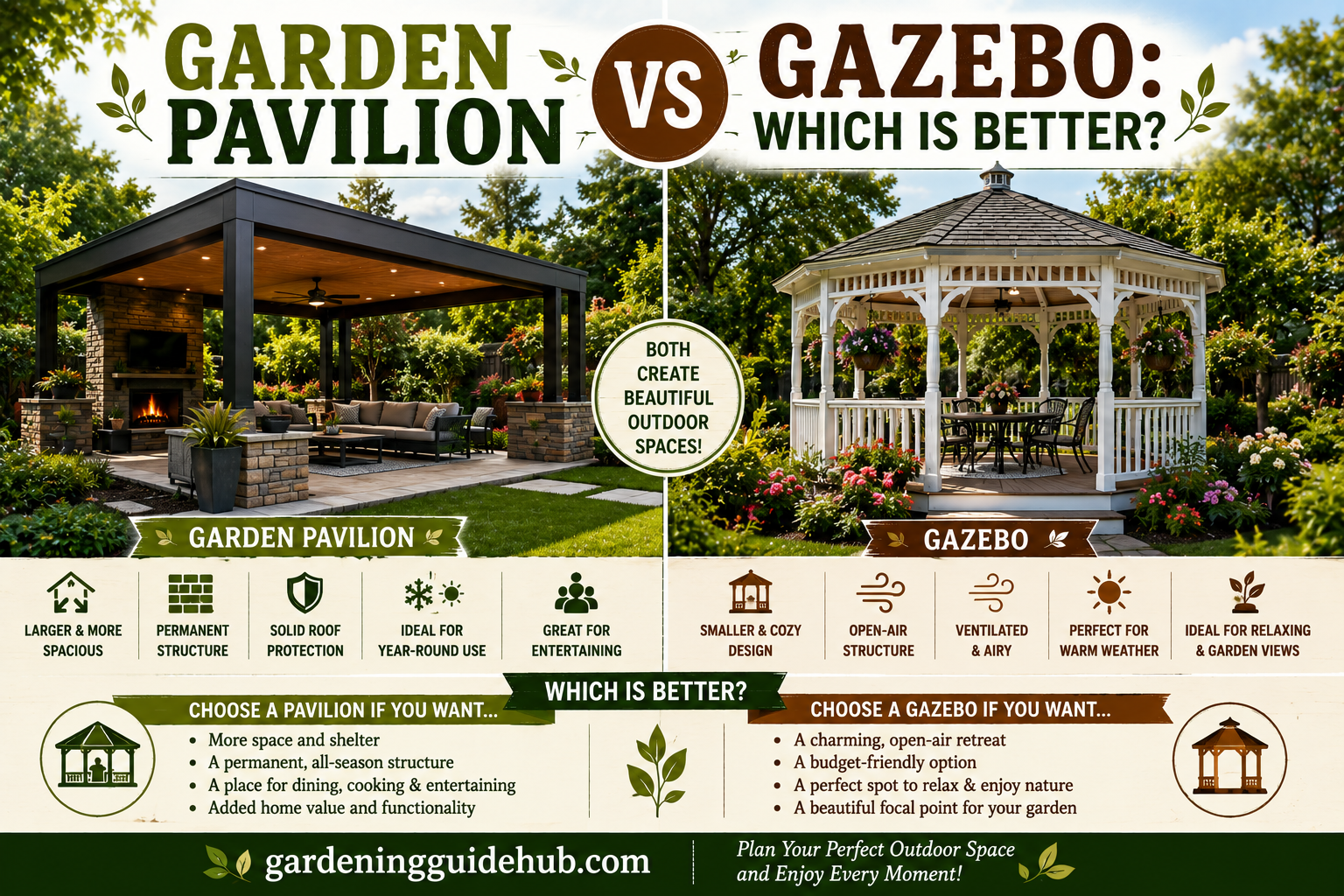
If you have started shopping for a backyard shade structure, you have probably noticed that the words pavilion and gazebo get thrown around almost interchangeably. Some retailers use them as synonyms, others draw a sharp distinction, and honestly, it is easy to end up more confused than when you started. So which one is actually right for your yard?
The truth is, both structures can create a beautiful outdoor living space, but they come with real differences in design, function, and feel. This guide breaks down exactly what separates a garden pavilion from a gazebo, the pros and cons of each, and how to decide which one deserves a spot in your backyard. Let us settle this once and for all. 🌸
What Is the Actual Difference? 🤔
At first glance, pavilions and gazebos might look similar, both are open air structures with a roof supported by posts. But a few key distinctions set them apart.
Gazebos are traditionally defined by their shape, most often octagonal or hexagonal, with a peaked or domed roof and open sides, sometimes featuring decorative railings or lattice detailing around the base.
Pavilions tend to be rectangular or square, with a simpler, more open structure, larger footprint, and a design that leans functional and modern rather than ornamental.
Quick side by side comparison:
| Feature | Gazebo | Pavilion |
|---|---|---|
| Typical shape 📐 | Octagonal or hexagonal | Rectangular or square |
| Roof style 🏠 | Peaked, domed, or curved | Flat, gabled, or simple pitched |
| Overall feel 🎨 | Ornamental, traditional | Functional, modern |
| Common railings 🚧 | Often included around the base | Usually open on all sides |
| Typical size 📏 | Smaller, cozier footprint | Larger, more open footprint |
| Best use 🍽️ | Reading nook, quiet retreat | Entertaining, dining, large gatherings |
Understanding this basic distinction is the first step toward figuring out which structure actually fits your needs, rather than just picking whichever one looks nicer in a photo.
A Closer Look at Gazebos 🌸
Gazebos have a long, storied history, often associated with romantic garden settings, wedding photos, and quiet reading nooks tucked among flower beds. Their distinctive shape and decorative details make them feel like a destination within the garden itself.
Why people love gazebos:
- Their symmetrical shape creates a naturally inviting, cozy atmosphere
- Decorative elements like lattice, railings, and trim add charm and character
- They work beautifully as a quiet retreat away from the main house
- Many styles pair wonderfully with climbing plants and surrounding flower beds
- Enclosed or screened versions offer protection from bugs and light rain
Where gazebos tend to fall short:
- Their smaller, often symmetrical footprint can limit furniture arrangement options
- Ornate detailing sometimes requires more maintenance over time
- They can feel less versatile for large scale entertaining compared to a pavilion
- Traditional styles may clash with more modern home architecture
Gazebos genuinely shine as a standalone garden feature, a peaceful spot for morning coffee, quiet conversation, or simply admiring your surrounding landscape.
A Closer Look at Pavilions 🏗️
Pavilions take a more open, functional approach. Their larger, simpler footprint makes them ideal for homeowners who want a genuine outdoor living or entertaining space rather than a decorative garden accent.
Why people love pavilions:
- Their rectangular shape makes furniture arrangement far more flexible
- Larger footprints comfortably accommodate dining sets, lounge areas, or even outdoor kitchens
- Clean, simple lines pair beautifully with modern or contemporary home styles
- Open sides maximize airflow and views of the surrounding yard
- Sturdy construction often supports additional features like ceiling fans or heaters
Where pavilions tend to fall short:
- Their larger size requires more available yard space
- The simpler design can feel less charming or romantic compared to a traditional gazebo
- Open sides offer less built in protection from wind or light rain unless curtains or screens are added
- Larger structures often come with a higher price tag
Pavilions excel as a true extension of your home’s living space, perfect for hosting dinner parties, weekend barbecues, or simply giving your family a shaded spot to gather.
Cost Comparison: What to Expect 💰
Budget is often one of the biggest deciding factors, so let us break down how these two structures typically compare.
| Structure Type | Small Size Cost | Large Size Cost | Notes |
|---|---|---|---|
| Wooden gazebo 🪵 | $3,000 to $6,000 | $8,000 to $15,000 | Price increases with detailing and screening |
| Metal or vinyl gazebo ⚙️ | $2,000 to $5,000 | $6,000 to $12,000 | Generally lower maintenance |
| Wooden pavilion 🪵 | $5,000 to $10,000 | $15,000 to $30,000 | Larger footprint drives up material cost |
| Metal pavilion ⚙️ | $6,000 to $12,000 | $18,000 to $35,000 | Often includes sturdier, heavier framing |
Generally speaking, pavilions tend to cost more than gazebos of a comparable quality level, largely due to their bigger footprint and heavier construction requirements.
Which One Fits Your Yard Size? 📏
Available space plays a huge role in determining which structure makes the most sense for your property.
Choose a gazebo if:
- Your yard is on the smaller side and cannot comfortably fit a large rectangular structure
- You want a defined, cozy focal point rather than a sprawling open space
- Your garden style leans traditional, cottage, or romantic
Choose a pavilion if:
- You have a larger yard with room for a sizable rectangular footprint
- You plan to host frequent gatherings, dinners, or large groups
- Your home’s architecture leans modern or contemporary
If you are working with a smaller urban lot, a compact gazebo often makes far more sense both visually and practically than trying to squeeze in an oversized pavilion.
Style and Aesthetic Considerations 🎨
Beyond function, the visual style of each structure plays a major role in how it fits into your overall garden design.
Gazebo style strengths:
- Naturally romantic, storybook quality
- Pairs beautifully with cottage gardens, rose arbors, and flowering vines
- Decorative trim and railings add classic architectural charm
- Works well as a striking focal point visible from multiple angles
Pavilion style strengths:
- Clean, architectural lines that feel intentional and modern
- Blends seamlessly with contemporary landscaping and minimalist gardens
- Open structure highlights surrounding views rather than competing with them
- Feels like a natural extension of a modern home’s exterior design
Think about your home’s existing architecture and your garden’s overall personality. A pavilion tends to feel most at home paired with clean, structured landscaping, while a gazebo shines surrounded by lush, layered plantings.
Functionality: What Will You Actually Use It For? 🍽️
This might be the single most important question to ask yourself before choosing between the two.
Best uses for a gazebo:
- Quiet reading or meditation spot
- Small intimate gatherings, such as tea for two or a small book club
- A romantic focal point for wedding or event photography
- Housing a hot tub or small spa feature
Best uses for a pavilion:
- Large family gatherings or backyard parties
- Outdoor dining areas with a full sized table and chairs
- Housing an outdoor kitchen or bar setup
- A shaded lounge area with multiple seating groups
Quick functionality comparison table:
| Activity | Gazebo Suitability | Pavilion Suitability |
|---|---|---|
| Quiet relaxation 🧘 | Excellent | Good |
| Large group entertaining 🎉 | Limited | Excellent |
| Outdoor dining 🍽️ | Good for small groups | Excellent for larger groups |
| Housing a hot tub 🛁 | Excellent | Good |
| Outdoor kitchen setup 🍳 | Limited | Excellent |
Matching the structure to your actual planned use, rather than just aesthetic preference, tends to lead to the most satisfying long term investment.
Maintenance Considerations 🛠️
Both structures require some ongoing care, though the specifics differ slightly based on design complexity.
| Maintenance Task | Gazebo | Pavilion |
|---|---|---|
| Staining or sealing wood 🪵 | Every 1 to 2 years | Every 1 to 2 years |
| Cleaning detailed trim 🧽 | More time consuming due to detailing | Faster due to simpler lines |
| Checking structural stability 🧱 | Once a year | Once a year |
| Roof inspection 🏠 | Depends on peaked or domed design | Generally simpler to inspect |
Gazebos, with their decorative trim and detailing, sometimes require slightly more time to clean and maintain compared to the simpler lines of a pavilion, though both structures need similar overall upkeep frequency.
Can You Combine Elements of Both? 🤝
Here is a secret many homeowners do not realize, you do not always have to choose strictly one or the other. Many modern outdoor structures blend elements of both styles to create a hybrid that offers the best of each world.
Hybrid design ideas:
- A rectangular pavilion footprint with a gazebo inspired peaked or curved roofline
- A pavilion structure with decorative railings or lattice detailing borrowed from traditional gazebo design
- A larger gazebo shape scaled up to accommodate more furniture and entertaining space
- Mixing materials, such as a modern metal frame paired with classic wood detailing
If you love the charm of a gazebo but need the functional space of a pavilion, do not be afraid to work with a builder or designer to create a custom hybrid that fits your exact needs.
Questions to Ask Before Deciding ❓
Before making your final decision, run through these key questions.
- How much yard space do I realistically have available
- What will I primarily use this structure for, relaxing, entertaining, or both
- Does my home’s architecture lean traditional or modern
- What is my realistic budget for this project
- Do I want a decorative focal point or a functional extension of my living space
- How much time am I willing to spend on ongoing maintenance
Answering these honestly will point you toward the right choice far more effectively than simply picking whichever structure looks nicer in photos.
Common Mistakes to Avoid ⚠️
Whichever structure you choose, watch out for these common pitfalls.
- Choosing a structure size that does not match your intended use or furniture plans
- Ignoring your yard’s existing architecture and landscaping style
- Underestimating maintenance requirements, especially for detailed gazebo trim
- Skipping proper foundation work, regardless of which structure you choose
- Forgetting to check local permit requirements before beginning construction
Taking time to plan thoughtfully prevents costly redos and ensures your final structure genuinely enhances your outdoor living space.
Final Thoughts 🌼
So, garden pavilion or gazebo, which one actually wins? Honestly, there is no universal right answer, it comes down entirely to your space, your style, and how you plan to use the structure. If you are dreaming of a cozy, romantic retreat tucked among flowering vines, a gazebo is likely your best match. If you are picturing large gatherings, outdoor dining, and a true extension of your home’s living space, a pavilion probably makes more sense.
Take stock of your yard, your budget, and your lifestyle, and choose the structure that genuinely fits how you want to live outdoors. Whichever you choose, you are investing in a space that will bring you outside more often, and that is always a win.
Happy building! 🌿🏡