
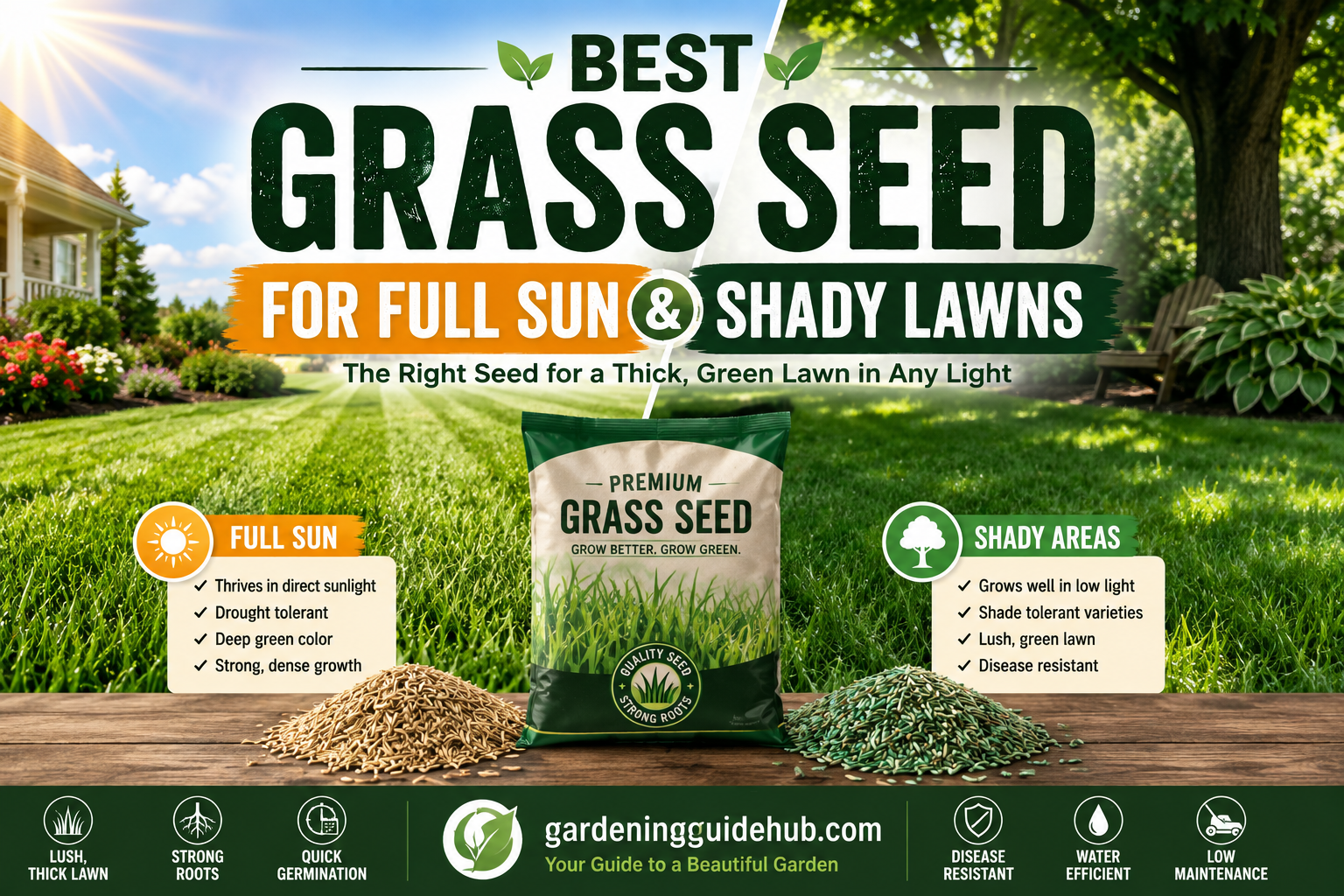
A beautiful, green lawn is the dream of almost every homeowner. But achieving that dream is not always simple, especially when your yard has both sunny patches and shaded corners. Choosing the right grass seed for these different conditions can make the difference between a patchy, struggling lawn and a thick, healthy carpet of green that you can be proud of.
In this guide, we will walk through everything you need to know about selecting the best grass seed for full sun areas and shady lawns, including top seed varieties, comparison tables, planting tips, and maintenance advice. Whether you are starting a new lawn from scratch or trying to fix bald spots under trees, this article will help you make an informed decision. 🧑🌾
Why Sunlight Matters for Grass Growth ☀️
Grass, like all plants, relies on photosynthesis to grow. Sunlight is the fuel that powers this process, so it is no surprise that different grass species have adapted to thrive under different light conditions.
- Full sun grasses need at least 6 to 8 hours of direct sunlight daily to grow thick and strong.
- Shade tolerant grasses can survive with as little as 3 to 4 hours of sunlight, often filtered through tree canopies.
- Areas with less than 3 hours of light are considered deep shade, and very few grasses can survive there long term.
Understanding how much sun your lawn receives throughout the day is the first step toward choosing the right seed. Walk your yard at different times of day, morning, midday, and late afternoon, and note which areas stay sunny and which remain shaded.
Warm Season vs Cool Season Grasses 🌡️
Before diving into specific varieties, it helps to understand the two broad categories of grass.
Cool season grasses grow best in northern climates with cold winters and mild summers. They thrive in spring and fall and can struggle during hot summer months.
Warm season grasses are suited to southern climates with hot summers and mild winters. They grow most actively from late spring through early fall and often go dormant, turning brown, during cooler months.
Knowing your climate zone will help you narrow down which grass type suits your region, in addition to matching it to your sun or shade conditions.
Table 1: Grass Types by Climate and Light Needs 📊
| Grass Type | Climate Zone | Sun Requirement | Shade Tolerance |
|---|---|---|---|
| Kentucky Bluegrass | Cool season | Full sun to light shade | Low |
| Perennial Ryegrass | Cool season | Full sun | Low to moderate |
| Fine Fescue | Cool season | Partial to full shade | High |
| Tall Fescue | Cool season / transition | Full sun to moderate shade | Moderate to high |
| Bermudagrass | Warm season | Full sun | Very low |
| Zoysiagrass | Warm season | Full sun to moderate shade | Moderate |
| St. Augustinegrass | Warm season | Full sun to moderate shade | Moderate to high |
| Centipedegrass | Warm season | Full sun | Low |
This table gives you a quick snapshot before we explore each option in more detail below.
Best Grass Seed for Full Sun Lawns 🌞
If your lawn basks in sunshine most of the day, you have plenty of excellent options. Full sun grasses tend to be hardy, fast growing, and able to handle foot traffic well, which makes them popular for front yards, sports areas, and open fields.
1. Bermudagrass 🌾
Bermudagrass is one of the most popular warm season grasses for full sun lawns. It spreads quickly through both rhizomes and stolons, filling in bare patches and recovering fast from wear and tear. It is highly drought resistant once established and can tolerate heavy foot traffic, making it ideal for athletic fields, golf courses, and family backyards.
However, Bermudagrass does not tolerate shade well at all, so it should only be used in areas that receive full, unobstructed sunlight.
2. Kentucky Bluegrass 💙
Known for its rich color and soft texture, Kentucky Bluegrass is a favorite among homeowners in cooler climates. It forms a dense, self repairing lawn thanks to its rhizome growth habit. It performs best in full sun but can handle a bit of light shade.
The main downside is that it requires more water and fertilizer compared to some other options, and it can struggle during extreme summer heat.
3. Zoysiagrass 🟢
Zoysiagrass is a warm season grass that offers a nice middle ground. It thrives in full sun but also tolerates moderate shade better than Bermudagrass. It forms a thick, carpet like lawn that resists weeds once established and needs relatively little mowing.
Its slower establishment rate is a tradeoff, as it can take longer to fill in compared to faster spreading grasses.
4. Perennial Ryegrass 🍃
Perennial Ryegrass germinates quickly, often within 5 to 10 days, making it a great choice for those who want fast results. It has a fine texture and attractive dark green color, and it is often used in seed blends to provide quick cover while slower growing grasses establish.
It performs best in full sun and struggles in shady or extremely hot conditions.
5. Bahiagrass 🌻
Popular in the southeastern United States, Bahiagrass is valued for its low maintenance needs and excellent drought tolerance. It grows well in poor, sandy soils and requires little fertilization. It is not the most visually refined grass, but it is practical and resilient for full sun properties.
Table 2: Top Full Sun Grass Seeds Compared 📋
| Grass Seed | Growth Speed | Drought Tolerance | Foot Traffic Tolerance | Maintenance Level |
|---|---|---|---|---|
| Bermudagrass 🌾 | Fast | Excellent | High | Moderate |
| Kentucky Bluegrass 💙 | Moderate | Moderate | Moderate | High |
| Zoysiagrass 🟢 | Slow | Good | High | Low |
| Perennial Ryegrass 🍃 | Very fast | Low to moderate | Moderate | Moderate |
| Bahiagrass 🌻 | Moderate | Excellent | Moderate | Low |
Best Grass Seed for Shady Lawns 🌳🌑
Shady areas present a unique challenge because most grasses simply cannot photosynthesize efficiently without adequate light. Thankfully, plant breeders have developed several shade tolerant varieties that can still form a green, healthy lawn under trees, near fences, or beside buildings.
1. Fine Fescue 🌿
Fine Fescue is often considered the gold standard for shade tolerant grass seed. This category includes creeping red fescue, chewings fescue, and hard fescue, all of which perform admirably in low light conditions. Fine Fescue has thin, needle like blades and requires less water and fertilizer than many other grasses.
It is best suited to cooler climates and does not handle heavy foot traffic or intense summer heat particularly well.
2. Tall Fescue 🌾
Tall Fescue is a workhorse grass known for its deep root system, which allows it to tolerate both moderate shade and periods of drought. It has coarser blades than fine fescue but offers excellent durability, making it a popular choice for lawns that see a mix of sun and shade throughout the day.
Many modern turf type tall fescue seed blends have been specifically developed to improve shade tolerance while maintaining a fine, attractive texture.
3. St. Augustinegrass 🌴
For warm climates, St. Augustinegrass is one of the best shade tolerant options available. It has broad, coarse blades and spreads via stolons, forming a dense, carpet like lawn. It handles humidity and salt air well, making it popular in coastal regions.
It does require more water than some warm season alternatives and is less cold hardy, so it is mainly suited to southern regions.
4. Poa Trivialis (Rough Bluegrass) 🍀
Poa Trivialis is a lesser known but highly effective shade grass, particularly suited to consistently moist, shaded areas. It has a bright green color and fine texture, though it can struggle in hot, dry conditions.
5. Shade Tolerant Zoysiagrass Varieties 🟩
While standard Zoysiagrass prefers sun, certain cultivars have been bred specifically to handle more shade, making them a good option for warm climate lawns with partial tree cover.
Table 3: Top Shady Lawn Grass Seeds Compared 📋
| Grass Seed | Minimum Sunlight Needed | Cold Tolerance | Texture | Maintenance Level |
|---|---|---|---|---|
| Fine Fescue 🌿 | 3 hours | High | Fine | Low |
| Tall Fescue 🌾 | 4 hours | Moderate to high | Coarse | Moderate |
| St. Augustinegrass 🌴 | 4 hours | Low | Coarse | Moderate to high |
| Poa Trivialis 🍀 | 3 hours | High | Fine | Moderate |
| Shade Zoysiagrass 🟩 | 4 hours | Low to moderate | Medium | Low |
What About Mixed Sun and Shade Lawns? 🌤️
Many lawns are not entirely sunny or entirely shaded. Instead, they experience a mix of both conditions throughout the day due to trees, buildings, or fences casting shadows at different times.
For these situations, seed companies often produce sun and shade mix blends that combine multiple grass species, typically a mix of tall fescue, fine fescue, and perennial ryegrass. These blends are formulated so that whichever species is best suited to a particular spot will naturally dominate and fill in that area over time.
Benefits of Sun and Shade Mixes 🌈
- One bag covers your entire lawn, eliminating the need to buy separate seed for different zones.
- The blend adapts naturally as sunlight patterns shift with the seasons, for example as deciduous trees lose their leaves in autumn.
- Improved resilience against disease and pests, since a mix of species is less vulnerable than a single variety monoculture.
Table 4: Popular Sun and Shade Mix Ingredients 🌾🌳
| Component Grass | Role in the Mix | Sun Tolerance | Shade Tolerance |
|---|---|---|---|
| Tall Fescue | Backbone grass for durability | High | Moderate |
| Fine Fescue | Shade specialist | Low to moderate | High |
| Perennial Ryegrass | Fast germinating filler | High | Low |
| Kentucky Bluegrass | Adds density and self repair | High | Low |
Key Factors to Consider Before Buying Grass Seed 🔍
Choosing the right grass seed is not only about sunlight. Several other factors should guide your decision.
Climate and Region 🌎
Always choose a grass type suited to your USDA hardiness zone or regional climate. Warm season grasses will not survive harsh northern winters, while cool season grasses often struggle in southern heat.
Soil Type 🪨
Some grasses prefer sandy, well drained soil, while others tolerate clay or compacted soil better. Testing your soil pH and composition can help you select a seed variety that will thrive in your specific yard.
Lawn Usage 🏃
Consider how the lawn will be used. Families with children or pets that play outdoors often need a durable grass with high traffic tolerance, while a purely decorative lawn can prioritize appearance over toughness.
Water Availability 💧
Drought prone regions or homeowners who want to conserve water should look toward drought tolerant grasses such as Bermudagrass, Zoysiagrass, or Bahiagrass, rather than thirstier options like Kentucky Bluegrass.
Maintenance Commitment 🛠️
Some grasses need frequent mowing, fertilizing, and watering, while others are naturally low maintenance. Be honest with yourself about how much time you can dedicate to lawn care.
Table 5: Quick Decision Guide 🧭
| Your Situation | Recommended Grass Seed |
|---|---|
| Full sun, hot climate, high traffic | Bermudagrass 🌾 |
| Full sun, cool climate, want lush appearance | Kentucky Bluegrass 💙 |
| Full sun, low maintenance preferred | Zoysiagrass 🟢 or Bahiagrass 🌻 |
| Shady lawn, cool climate | Fine Fescue 🌿 |
| Shady lawn, needs durability | Tall Fescue 🌾 |
| Shady lawn, warm humid climate | St. Augustinegrass 🌴 |
| Mixed sun and shade | Sun and Shade Seed Blend 🌤️ |
Tips for Successfully Planting Grass Seed 🌱
Selecting the right seed is only half the battle. Proper planting technique greatly influences germination success and long term lawn health.
- Prepare the soil. Remove debris, loosen compacted soil, and level the area before spreading seed. Adding compost can improve soil structure and nutrient content.
- Choose the right season. Cool season grasses establish best in early fall or spring, while warm season grasses should be planted in late spring or early summer once soil temperatures rise.
- Sow evenly. Use a broadcast spreader for even coverage and avoid clumping, which leads to patchy growth.
- Water consistently. Newly seeded areas need light, frequent watering, often twice a day, to keep the top layer of soil moist until germination occurs, typically within 1 to 4 weeks depending on the species.
- Avoid heavy foot traffic. Keep pets and children off newly seeded areas until the grass has been mowed two or three times.
- Apply starter fertilizer. A balanced starter fertilizer provides essential nutrients like phosphorus that encourage strong root development in young grass.
Maintaining Your Lawn After Germination 🧹
Once your grass seed has sprouted and established, ongoing maintenance will keep it healthy and attractive for years to come.
- Mow at the proper height for your grass species, generally never removing more than one third of the blade length at a time.
- Water deeply but infrequently to encourage deep root growth rather than shallow roots.
- Fertilize according to a schedule suited to your grass type and season.
- Aerate compacted soil annually to improve water and nutrient absorption.
- Overseed thin or bare patches each year to keep the lawn thick and resistant to weeds.
- For shaded lawns, consider trimming overhanging tree branches periodically to allow a bit more sunlight through.
Common Mistakes to Avoid ⚠️
Even well intentioned homeowners can sabotage their lawn without realizing it. Watch out for these common pitfalls.
- Planting sun loving grass in a heavily shaded area, leading to thin, weak growth.
- Overwatering or underwatering during the critical germination period.
- Mowing too short, which stresses the grass and encourages weed invasion.
- Ignoring soil pH, which can prevent grass from absorbing nutrients effectively even with proper fertilization.
- Choosing a grass variety unsuited to the local climate simply because it looked appealing in photos.
Final Thoughts 🌟
Finding the best grass seed for full sun and shady lawns comes down to understanding your yard conditions, your climate, and your lifestyle needs. Full sun areas open the door to vigorous, traffic tolerant grasses like Bermudagrass and Kentucky Bluegrass, while shaded corners call for specialized varieties such as Fine Fescue or St. Augustinegrass. For lawns with a blend of both conditions, a quality sun and shade seed mix offers the flexibility to thrive no matter where sunlight falls.
With the right seed selection, proper planting technique, and consistent maintenance, you can transform even the trickiest yard, sunny, shady, or both, into a lush, green space you will enjoy for seasons to come. 🌻🏡
Happy planting! 🌱✨