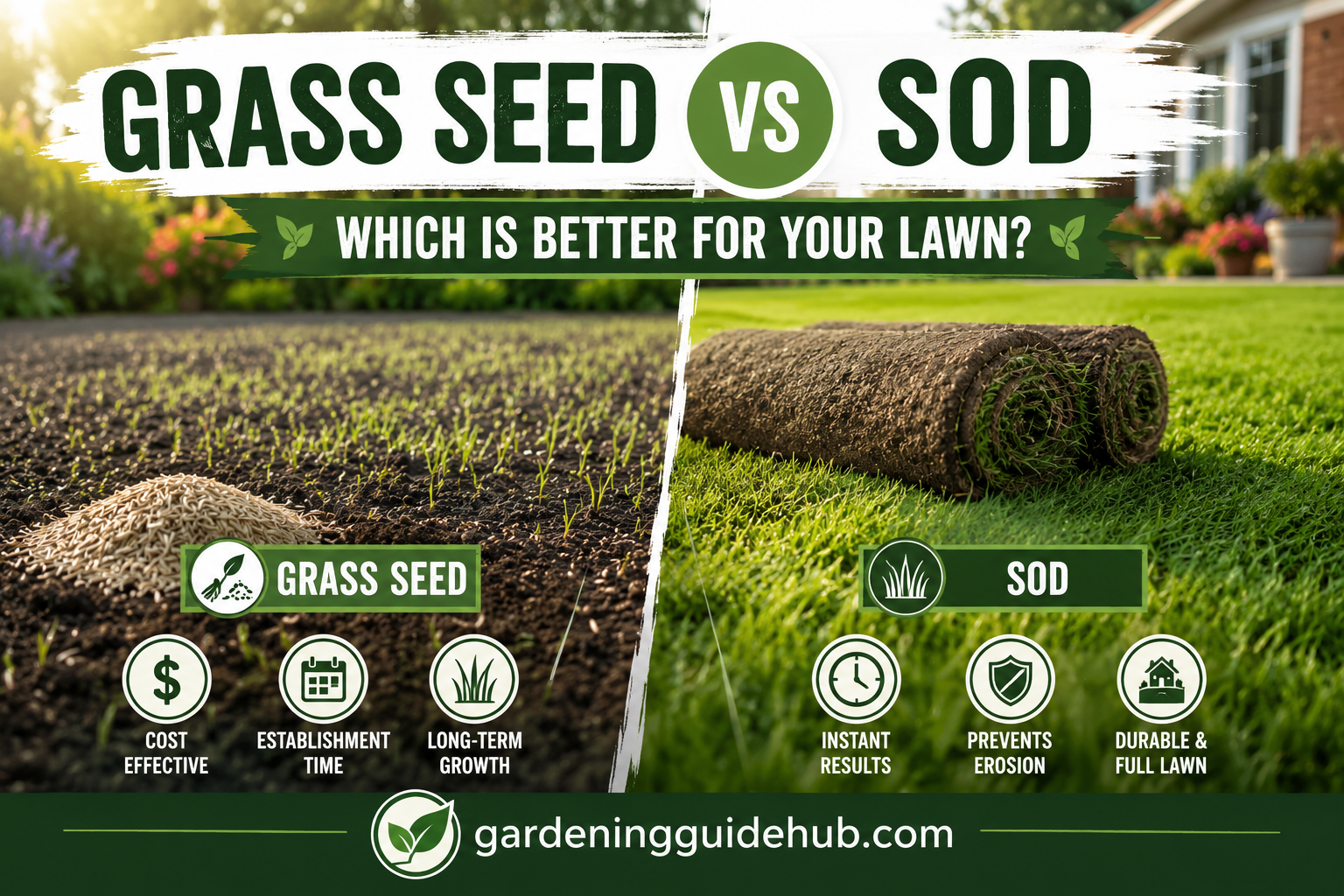
If you are staring at a patchy, bare, or brand new yard and wondering how to turn it into a lush green carpet, you have probably run into the same fork in the road that every homeowner faces: should you plant grass seed 🌾 or lay down sod 🟩? Both paths lead to the same destination, a beautiful healthy lawn, but the journey, cost, and patience required look very different depending on which one you pick.
In this guide, we will break down everything you need to know about grass seed and sod, including cost, installation time, maintenance, durability, and the pros and cons of each option, so you can make the smartest choice for your yard, your budget, and your lifestyle.
🧐 Quick Overview: What Is Grass Seed?
Grass seed is exactly what it sounds like: small seeds that you spread across bare or prepared soil, water regularly, and wait for them to germinate and grow into grass. This is the traditional, budget friendly way to establish a lawn, and it gives you the most flexibility in terms of grass type, timing, and coverage area.
Grass seed is sold in blends and mixes suited to different climates, sunlight levels, and foot traffic needs. You will find options for full sun lawns, shady yards, drought tolerant regions, and high traffic areas like backyards with kids or pets.
🧐 Quick Overview: What Is Sod?
Sod, sometimes called turf, is mature grass that has already been grown on a sod farm, cut into rolls or squares along with a thin layer of soil and roots, and then transported to your property for immediate installation. Think of it like grass carpet: you unroll it, lay it down, water it in, and within a few weeks it roots into your yard and looks like an established lawn almost right away.
Sod gives you instant curb appeal and is often the go to choice for people who need a finished look fast, such as before selling a home, hosting an event, or simply because they do not want to deal with weeks of bare dirt.
📊 Grass Seed vs Sod: Side by Side Comparison
Here is a quick snapshot comparing the two options across the factors that matter most.
| Factor 🔍 | Grass Seed 🌾 | Sod 🟩 |
|---|---|---|
| Upfront Cost 💰 | Low, typically a fraction of sod pricing | High, several times more expensive than seed |
| Installation Time ⏱️ | Quick to plant, slow to establish (weeks to months) | Fast, looks finished within a day |
| Time to Usable Lawn 🚶 | 6 to 8 weeks minimum before heavy use | 2 to 3 weeks in most cases |
| Root Strength 🌳 | Deep, strong root system over time | Shallow at first, needs time to root into native soil |
| Variety of Grass Types 🌿 | Huge selection available | Limited to what local sod farms grow |
| Erosion Control on Slopes ⛰️ | Weak until established | Strong, holds soil immediately |
| Weed Competition 🌼 | Higher risk while seedlings are young | Lower risk since sod is already dense |
| Best Season to Install 📅 | Spring or fall, cooler temperatures | Almost any season with proper watering |
| Labor Involved 💪 | Light physical work, more patience needed | Heavy physical work, less waiting |
| Water Needs During Establishment 💧 | Frequent light watering for weeks | Frequent deep watering for two to three weeks |
| Environmental Impact 🌍 | Lower, less transportation and resources used | Higher, farming and shipping involved |
| Longevity and Adaptability 🔁 | Adapts naturally to your specific soil | Grown elsewhere, may need adjustment period |
💵 Cost Comparison: Grass Seed vs Sod
Cost is usually the single biggest deciding factor for most homeowners, so let us dig deeper.
Grass Seed Costs 🌾
Grass seed is by far the cheaper option. A bag of quality seed covering several thousand square feet often costs a small fraction of what sod would cost for the same area. On top of the seed itself, you may need:
- Topsoil or soil amendments
- Starter fertilizer
- Straw or mulch to protect seedlings
- A rented or borrowed seed spreader
Even after factoring in these extras, seeding a lawn is generally the most affordable way to establish grass, especially for large properties.
Sod Costs 🟩
Sod is priced per square foot or per pallet, and the price climbs quickly for larger lawns. In addition to the material cost, you often need to budget for:
- Delivery fees, since sod is heavy and perishable
- Professional installation, since sod must be laid within a day of delivery
- Soil preparation, which is just as important as with seeding
For a small yard or a specific problem area, sod costs may feel manageable. For a full acre lawn, the price difference between seed and sod can be dramatic, sometimes five to ten times more expensive for sod.
⏳ Time and Patience: How Long Until You Have a Lawn?
This is where the two methods diverge the most.
Grass Seed Timeline 🌱➡️🌿
- Germination: Most cool season grasses sprout in 5 to 10 days, while warm season grasses can take 10 to 30 days.
- Early Growth: Over the next several weeks, seedlings develop roots and begin to fill in.
- First Mow: Typically happens around 3 to 4 weeks after planting, once grass reaches mowing height.
- Full Establishment: It can take a full growing season, sometimes up to a year, before the lawn reaches its full thickness and durability.
During this time, the lawn is fragile. Heavy foot traffic, pets, and even excessive rain can damage young grass and wash away seed if you are not careful.
Sod Timeline 🟩➡️🏡
- Installation Day: Sod is laid and watered immediately.
- Rooting Period: Within 2 to 3 weeks, roots begin anchoring into the soil beneath.
- Light Use: Many homeowners can walk on sod carefully after about 2 weeks.
- Full Establishment: Sod typically reaches full root depth and durability within 4 to 6 weeks.
If instant results matter to you, sod is the clear winner in this category.
🌳 Root Development and Long Term Health
Interestingly, grass grown from seed often develops a deeper and stronger root system over the long run compared to sod. This is because seed roots grow directly into your native soil from day one, adapting naturally to the exact conditions of your yard, including soil type, drainage, and climate quirks.
Sod, on the other hand, is grown on a completely different piece of land, often in a different type of soil, and then transplanted to your property. It takes time, sometimes a full growing season or more, for sod roots to fully integrate with the native soil underneath. Until that happens, sod can be more vulnerable to drought stress because its root system is still relatively shallow.
🐛 Weed and Pest Resistance
Newly seeded lawns are more vulnerable to weed invasion because bare soil is essentially an open invitation for weed seeds to take hold alongside your grass seedlings. Preemergent herbicides often cannot be used right away since they can also prevent your grass seed from germinating, which creates a tricky window where weeds have the upper hand.
Sod, because it arrives already thick and mature, naturally chokes out most weed competition from day one. There is far less bare soil exposed, so weed seeds have a harder time finding a foothold.
🌦️ Best Times of Year to Install Each
| Season 📅 | Grass Seed 🌾 | Sod 🟩 |
|---|---|---|
| Spring | Good, especially for cool season grass, but weed pressure is higher | Excellent, soil is workable and temperatures are mild |
| Summer | Risky due to heat stress, mainly suited for warm season grass | Possible but requires heavy watering to prevent drying out |
| Fall | Ideal season for most cool season grasses | Excellent, roots establish before winter dormancy |
| Winter | Not recommended in most climates | Generally not recommended except in mild winter regions |
🛠️ Installation Process Compared
Installing Grass Seed 🌾
- Test and prepare the soil, removing debris and loosening the top few inches.
- Add compost or topsoil if needed to improve soil quality.
- Spread seed evenly using a broadcast or drop spreader.
- Rake lightly to ensure good seed to soil contact.
- Apply a thin layer of straw mulch to retain moisture and protect seed from birds.
- Water lightly but frequently, often multiple times a day, until germination occurs.
Installing Sod 🟩
- Prepare and level the soil, removing rocks and debris.
- Add starter fertilizer to encourage quick rooting.
- Lay sod pieces in a brick like pattern, staggering the seams.
- Trim edges neatly along walkways, driveways, and garden beds.
- Roll the sod with a lawn roller to press it firmly into the soil and remove air pockets.
- Water deeply immediately after installation and continue daily watering for the first two weeks.
💧 Watering Requirements
Both methods require diligent watering early on, but the pattern looks a bit different.
Grass Seed needs light, frequent watering, sometimes two to four times per day for short bursts, to keep the top layer of soil consistently moist without washing away the seeds. As the grass matures, watering frequency decreases while the duration of each session increases.
Sod needs deep, thorough watering right after installation and daily for the first one to two weeks to help roots penetrate into the native soil. After that initial rooting period, watering can be reduced to match a normal established lawn schedule.
🌍 Environmental Considerations
Grass seed generally has a smaller environmental footprint. There is less transportation involved since seed is lightweight and shipped in small packages, and there is no need for the water intensive farming process that sod requires before it ever reaches your yard.
Sod farms use significant water resources to grow turf to a harvestable state, and then the heavy rolls must be transported, often by truck, to your property. For homeowners who prioritize sustainability, seed is typically the more eco friendly choice, though sod does offer immediate erosion control benefits that can be valuable on slopes or in areas prone to soil runoff.
🏡 Which Option Is Best for Your Situation?
Let us break this down by common scenarios so you can quickly identify which option suits you best.
🌾 Choose Grass Seed If:
- You are working with a limited budget and want the most coverage for your money
- You have time to wait several weeks to months for a fully established lawn
- You want access to a wider variety of grass species and blends
- You are seeding a large area, such as an acre or more
- You care about minimizing environmental impact
- You are comfortable with some early maintenance, including protecting seedlings from birds, pets, and foot traffic
🟩 Choose Sod If:
- You need a finished, green lawn immediately, such as before selling your home
- You are dealing with a slope or erosion prone area that needs instant stabilization
- You have pets or kids who will not stay off a newly planted area
- Your budget allows for the higher upfront cost
- You are working with a smaller yard where sod costs are more manageable
- You want to avoid the muddy, bare soil phase entirely
⚖️ Pros and Cons Summary
Grass Seed Pros ✅
- Much lower cost
- Wider variety of grass types and blends available
- Stronger, deeper root development long term
- Better for the environment
- Easier to apply yourself without professional help
Grass Seed Cons ❌
- Takes weeks to months to fully establish
- Vulnerable to weeds, erosion, and foot traffic while young
- Requires frequent watering and monitoring
- Weather dependent, with a narrower planting window
Sod Pros ✅
- Instant green lawn appearance
- Strong weed resistance from day one
- Immediate erosion and soil stabilization
- Usable much sooner than seed
- Fewer bare soil headaches
Sod Cons ❌
- Significantly more expensive
- Limited grass variety depending on local farms
- Requires quick installation once delivered, since it is perishable
- Shallow roots initially, which can mean higher water needs at first
- Heavier environmental footprint due to farming and transport
🤔 Can You Combine Both Methods?
Many homeowners do not realize that grass seed and sod are not mutually exclusive. A common hybrid approach is to use sod for high visibility areas, like the front yard or areas prone to erosion, while seeding larger, less visible areas such as the backyard. This lets you balance instant curb appeal with a lower overall budget.
Another hybrid strategy is overseeding, where grass seed is spread over an existing lawn, whether that lawn started from seed or sod, to thicken thin patches, introduce more resilient grass varieties, or repair damage over time.
🧑🌾 Tips for Success With Either Method
Regardless of which route you choose, a few universal tips will dramatically improve your results:
- Test your soil first 🧪. Knowing your soil pH and nutrient levels helps you amend it properly before planting or laying sod.
- Choose the right grass type 🌿 for your climate, sun exposure, and how the lawn will be used.
- Prepare the ground thoroughly 🪨. Remove rocks, debris, and old grass, and level any low or high spots.
- Water consistently 💧, especially during the critical establishment period, whether that is weeks for seed or the first couple of weeks for sod.
- Avoid heavy foot traffic 🚫🚶 until the lawn is fully rooted, regardless of which method you chose.
- Fertilize appropriately 🌾, using a starter fertilizer formulated for new lawns rather than a standard maintenance formula.
- Mow at the right height ✂️ once the grass reaches mowing length, and avoid cutting more than one third of the blade length at a time.
🏆 Final Verdict: Which Is Better?
There is no single universal winner between grass seed and sod, because the “better” choice depends entirely on your priorities.
If your top concerns are budget and long term root health, grass seed is the smarter investment, especially for large properties where sod costs would be difficult to justify.
If your top concerns are speed, instant appearance, and erosion control, sod is worth the extra cost, particularly for smaller yards or high visibility areas where you cannot wait months for results.
Many successful lawns actually use a mix of both, sod where it matters most visually or structurally, and seed for larger, less critical areas or ongoing maintenance through overseeding.
Whichever path you choose, the key to success is proper soil preparation, consistent watering, and patience during the establishment period. Give your lawn the care it needs in those first few critical weeks, and you will be rewarded with a healthy, green, resilient yard for years to come. 🌳🏡💚