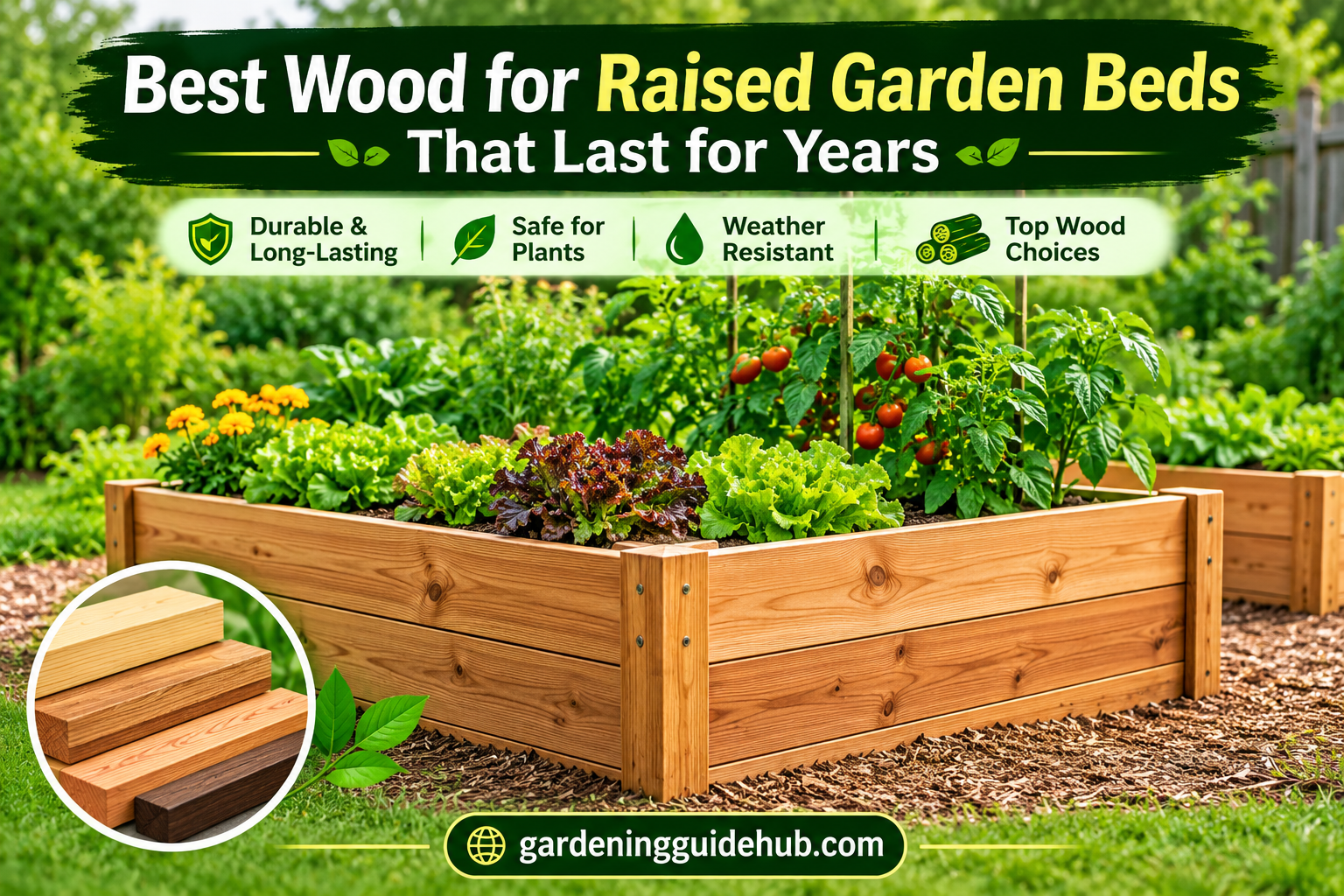
Building a raised garden bed is an investment of your time, effort, and money, so it makes sense to choose a material that will actually last. Nothing is more frustrating than spending a weekend building the perfect bed only to watch it rot, warp, or crumble apart after just two or three seasons.
The wood you choose plays a huge role in how long your raised bed survives the elements, how much maintenance it requires, and even how safe it is for growing food. In this guide, you will learn about the best wood options for raised garden beds, how they compare in cost and durability, and how to choose the right one for your specific climate and budget.
Let’s find the wood that will keep your garden standing strong for years to come. 🌳
🌲 Why Wood Choice Matters So Much
Before comparing specific types of wood, it helps to understand exactly why this decision matters so much for raised bed gardening.
- 💧 Constant moisture exposure: Raised beds hold damp soil against wood for months at a time, accelerating rot in the wrong materials
- ☀️ Sun and weather exposure: UV rays and temperature swings cause some woods to crack, warp, or fade faster than others
- 🐛 Pest vulnerability: Certain woods naturally resist insects like termites and carpenter ants, while others attract them
- 🌱 Food safety concerns: Since raised beds often grow edible vegetables, chemical treatments in some woods raise valid safety questions
- 💰 Long term value: A slightly higher upfront cost for durable wood often saves money over time by avoiding frequent rebuilds
🏆 Top Wood Options for Raised Garden Beds
🌲 Cedar
Cedar is widely considered the gold standard for raised garden beds, and it is easy to see why once you understand its natural properties.
Cedar contains natural oils and tannins that make it highly resistant to rot, decay, and insect damage without any chemical treatment. It also has a beautiful reddish tone that weathers into an attractive silvery gray over time.
Lifespan: 10 to 15 years, sometimes longer with proper care
Pros: Naturally rot resistant, attractive appearance, safe for growing food, low maintenance
Cons: Higher upfront cost compared to standard pine
🌳 Redwood
Redwood shares many of the same natural rot resistant qualities as cedar, thanks to its own set of natural oils and tannins.
Lifespan: 10 to 15 years
Pros: Naturally durable, attractive grain, resists insects well
Cons: Can be difficult to find and expensive depending on your region, since it is primarily sourced from the western United States
🌲 Untreated Pine
Untreated pine is one of the most budget friendly options available, making it a popular choice for beginners who want to try raised bed gardening without a big investment.
Lifespan: 5 to 7 years
Pros: Very affordable, widely available, easy to cut and work with
Cons: Prone to rot and warping faster than cedar or redwood, may need replacement sooner
🧱 Pressure Treated Lumber (Modern Formulations)
Older pressure treated wood contained chemicals that raised legitimate safety concerns for food gardens. However, lumber treated since 2003 in the United States uses a different process that most experts consider safe for vegetable gardens.
Lifespan: 15 to 20 years
Pros: Extremely long lasting, resists rot and insects effectively, budget friendly compared to cedar
Cons: Some gardeners still prefer to avoid it out of caution, and it is important to verify the specific treatment type used
🪵 Douglas Fir
Douglas fir is a sturdy, widely available softwood that offers a nice middle ground between the affordability of pine and the durability of cedar.
Lifespan: 7 to 10 years
Pros: More affordable than cedar, reasonably durable, easy to source
Cons: Not naturally rot resistant, benefits from a food safe sealant
🧱 Composite Lumber
Composite lumber, made from a blend of recycled wood fibers and plastic, has become increasingly popular for raised beds that need to last decades rather than years.
Lifespan: 20 plus years
Pros: Extremely durable, resists rot completely, low maintenance, consistent appearance
Cons: Higher upfront cost, less natural aesthetic than solid wood
📊 Wood Comparison Table
Here is a side by side comparison to help you quickly evaluate your options.
| Wood Type | Average Lifespan | Cost Level | Food Safety | Maintenance Needed |
|---|---|---|---|---|
| 🌲 Cedar | 10 to 15 years | High | Excellent | Low |
| 🌳 Redwood | 10 to 15 years | High | Excellent | Low |
| 🌲 Untreated pine | 5 to 7 years | Low | Excellent | Moderate |
| 🧱 Modern pressure treated | 15 to 20 years | Moderate | Considered safe | Low |
| 🪵 Douglas fir | 7 to 10 years | Moderate | Good | Moderate |
| 🧱 Composite lumber | 20 plus years | High | Excellent | Very low |
💰 Cost Breakdown by Wood Type
Understanding the price difference between wood types helps you budget realistically for your project.
| Wood Type | Estimated Cost per Board Foot |
|---|---|
| 🌲 Untreated pine | 2 to 4 dollars |
| 🪵 Douglas fir | 3 to 5 dollars |
| 🧱 Modern pressure treated | 3 to 6 dollars |
| 🌲 Cedar | 6 to 10 dollars |
| 🌳 Redwood | 7 to 12 dollars |
| 🧱 Composite lumber | 10 to 18 dollars |
While cedar and composite lumber cost significantly more upfront, their extended lifespan often means a lower cost per year of use compared to cheaper woods that need replacing every five to seven years.
🧪 Is Treated Wood Safe for Vegetable Gardens?
This is one of the most common concerns beginners have, and it deserves a clear answer.
Older pressure treated lumber, manufactured before 2003, used a chemical called chromated copper arsenate, which contained arsenic and raised valid health concerns for food gardens. Since 2003, this treatment has been phased out in most residential lumber in favor of alkaline copper quaternary, a formulation that current research generally considers safe for garden use.
That said, many gardeners still prefer to avoid any treated wood out of personal caution, opting instead for naturally rot resistant woods like cedar or adding a food safe liner between the wood and the soil for extra peace of mind.
🛡️ How to Extend the Life of Any Wood Raised Bed
Regardless of which wood you choose, a few simple practices can significantly extend how long your raised bed lasts.
- 🧴 Apply a food safe sealant: Products made specifically for garden use can add years to softer woods like pine or fir
- 🟫 Line the interior with landscape fabric: This creates a barrier between soil moisture and the wood itself
- 🌬️ Ensure proper drainage: Standing water accelerates rot faster than almost anything else
- 🔧 Reinforce corners with brackets: Reduces stress on joints, which are often the first place a bed begins to fail
- 🧹 Clear debris regularly: Leaves and plant matter piled against the wood retain moisture and speed up decay
- ☀️ Consider partial shade for very hot climates: Extreme sun exposure can cause some woods to crack and warp faster
🌎 Choosing Wood Based on Your Climate
Your local climate plays a bigger role in wood longevity than many beginners realize.
| Climate Type | Recommended Wood | Why It Works |
|---|---|---|
| 🌧️ Wet or humid climates | Cedar, redwood, or composite lumber | Naturally resist rot in constantly damp conditions |
| ☀️ Hot, dry climates | Cedar or modern pressure treated wood | Handles UV exposure and temperature swings well |
| ❄️ Cold, snowy climates | Composite lumber or cedar | Resists cracking from freeze and thaw cycles |
| 🌤️ Mild, temperate climates | Pine, fir, or cedar | Most wood types perform reasonably well in balanced conditions |
🛠️ Board Thickness and Build Quality Matter Too
Choosing the right species of wood is only part of the equation. The thickness of your boards and how well the frame is constructed also play a major role in how long your raised bed actually lasts.
- 📏 Board thickness: Boards that are 2 inches thick hold up significantly better than thin 1 inch boards, especially once soil is packed against them season after season
- 🔩 Fastener quality: Exterior grade stainless steel or galvanized screws resist rust far longer than standard interior screws
- 🧱 Corner reinforcement: Metal brackets or thick wooden stakes at each corner reduce the stress that eventually causes joints to fail
- 🪚 Grain orientation: Boards cut with the grain running lengthwise tend to resist warping better than boards cut across the grain
Even the most rot resistant cedar will fail prematurely if it is built with thin boards, cheap fasteners, and weak corner joints. Investing a little extra time and money into solid construction pays off just as much as choosing quality wood.
🧱 Non Wood Alternatives Worth Considering
While this guide focuses primarily on wood, it is worth mentioning that some gardeners choose to skip wood entirely in favor of materials that never rot at all.
| Material | Lifespan | Notes |
|---|---|---|
| 🧱 Concrete blocks | 20 plus years | No tools required, extremely durable, heavier to work with |
| 🥫 Galvanized steel | 15 to 20 years | Modern appearance, excellent durability, can heat up soil in intense sun |
| 🪨 Natural stone | 25 plus years | Beautiful and permanent, but often the most expensive option |
| 🧱 Brick | 20 plus years | Classic look, very durable, requires more labor to build |
These alternatives can be combined with wood as well, such as using a concrete block base with a wooden top rail for seating, giving you the best of both durability and a natural wood aesthetic.
🔨 Simple Joinery Techniques That Improve Longevity
How your boards connect at the corners has a real impact on how long your raised bed holds together, especially once it is filled with heavy, wet soil.
- Butt joints with brackets: The simplest method, where boards meet at a 90 degree angle and are held together with a corner bracket. Easy for beginners and reasonably durable
- Notched corner joints: Boards are cut with interlocking notches, creating a stronger connection without relying entirely on screws
- Post and panel construction: A thick corner post is used, with side boards screwed directly into the post rather than into each other, which distributes stress more evenly and often outlasts simple butt joints
For most beginners, a basic butt joint reinforced with quality brackets and screws offers plenty of strength and durability without requiring advanced woodworking skills.
🌍 Sustainability and Sourcing Considerations
For many gardeners, growing their own food is closely tied to a broader interest in sustainability, so it makes sense that where and how your wood is sourced matters too.
- 🌲 Look for FSC certified lumber: The Forest Stewardship Council certification indicates wood was harvested using responsible forestry practices
- ♻️ Consider reclaimed wood: Salvaged boards from old barns, fences, or shipping pallets can give your raised bed character while reducing demand for new lumber, as long as the wood has not been treated with unknown chemicals
- 🏡 Buy local when possible: Sourcing wood from local sawmills or lumberyards reduces transportation emissions and often supports small businesses in your community
- 🧱 Weigh composite lumber’s tradeoffs: While composite materials last far longer and reduce the need for replacement wood over time, they are manufactured using plastics, so consider your personal priorities around durability versus material sourcing
There is no single right answer here. Some gardeners prioritize natural, biodegradable materials even if it means more frequent rebuilding, while others prefer the decades long lifespan of composite lumber despite its synthetic components. Choosing what aligns with your own values is part of building a garden that feels right for you.
🧰 What to Ask Before Buying Your Lumber
Before heading to the store or placing an online order, it helps to have a short mental checklist ready so you choose the right wood the first time.
- What is my budget for this project, both upfront and over the next decade?
- How humid or wet is my climate, and will that accelerate rot in softer woods?
- Do I want a natural, rustic look or a more polished, modern appearance?
- Am I comfortable with modern pressure treated wood, or do I prefer to avoid all treated lumber?
- How long do I realistically want this bed to last before rebuilding or replacing it?
Answering these questions honestly before you buy will save you from second guessing your choice halfway through the project, and it helps ensure the wood you select actually fits your specific garden and lifestyle.
⚠️ Common Mistakes When Choosing Wood
- 🚫 Choosing the cheapest wood available without considering long term replacement costs
- 🚫 Using old pressure treated lumber without verifying the treatment type
- 🚫 Skipping a protective sealant on softer woods like pine
- 🚫 Ignoring drainage, which accelerates rot regardless of wood type
- 🚫 Not reinforcing corners, leading to premature structural failure
- 🚫 Assuming all treated wood is automatically unsafe without researching modern formulations
❓ Frequently Asked Questions
| Question | Answer |
|---|---|
| What is the best wood for a long lasting raised bed? | Cedar and composite lumber both offer excellent longevity with low maintenance |
| Is pressure treated wood safe for vegetables? | Modern formulations made since 2003 are generally considered safe |
| How long does untreated pine last in a raised bed? | Typically 5 to 7 years before needing replacement |
| Does sealing wood actually help it last longer? | Yes, a food safe sealant can meaningfully extend the lifespan of softer woods |
| Is composite lumber worth the higher price? | For many gardeners yes, since it can last 20 years or more with minimal upkeep |
🌟 Final Thoughts
Choosing the best wood for your raised garden bed comes down to balancing your budget, your climate, and how long you want the bed to last without needing repairs or replacement. Cedar remains a favorite for good reason, offering natural durability and a beautiful finish, while composite lumber appeals to gardeners who want a truly long term, low maintenance solution.
Whatever wood you choose, a few smart maintenance habits like proper drainage, corner reinforcement, and occasional sealing will help your raised bed stand strong through many seasons of growing.
Your raised bed is more than just a container for soil, it is the foundation of your garden for years to come. Choose wisely, build it well, and enjoy the harvest that follows. 🌱🍅🥕
Happy building! 🪵