
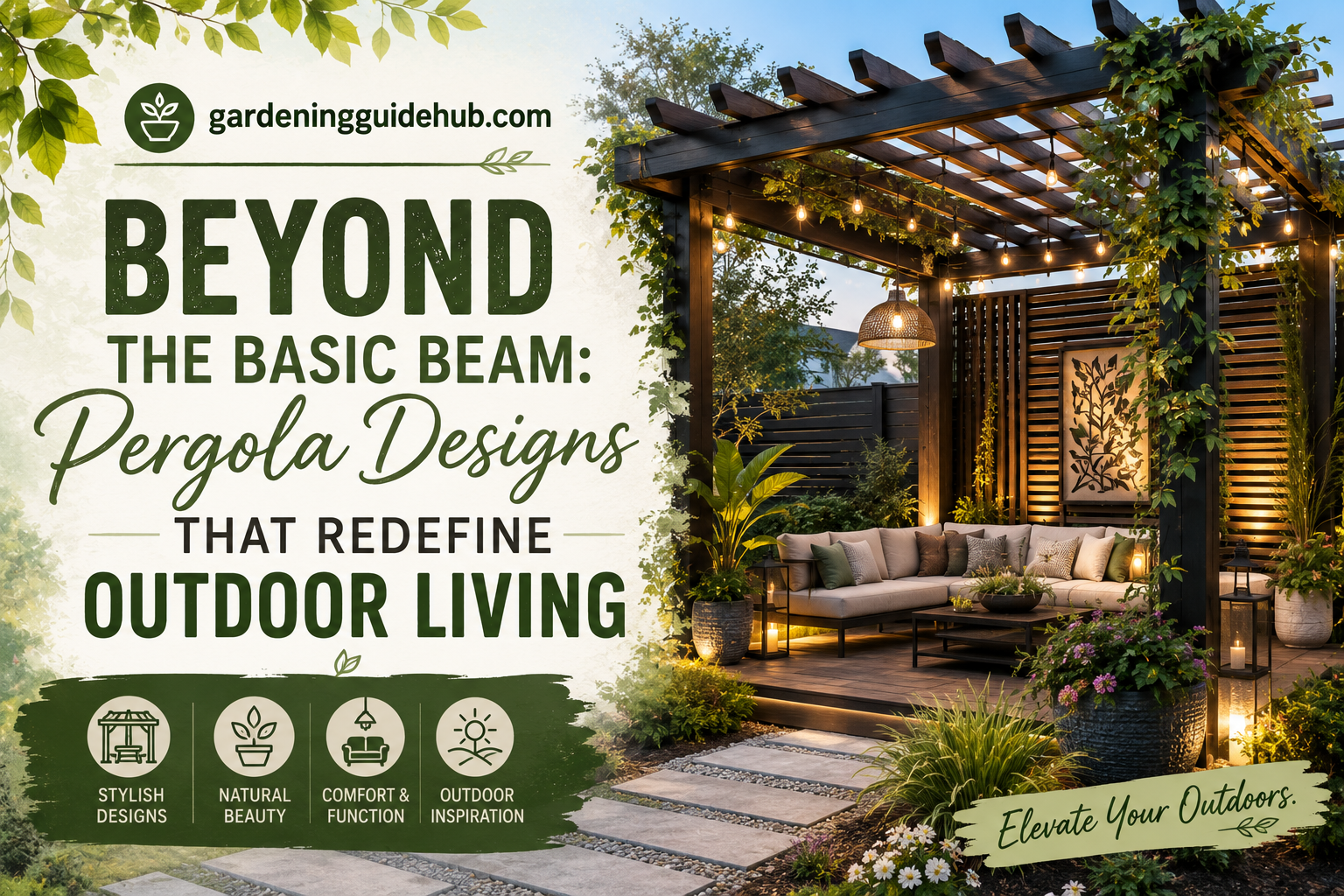
When you picture a pergola, does your mind jump straight to four wooden posts and a grid of crisscrossed beams sitting quietly in the corner of a backyard? That image is not wrong, but it is seriously outdated. Pergolas have evolved into some of the most exciting outdoor structures you can add to a home, and today’s designs go way beyond that basic beam.
Modern pergolas double as outdoor living rooms, dining halls, kitchens, and even cozy reading nooks. They can be shaded, heated, lit up at night, wrapped in vines, or built from sleek aluminum instead of timber. If you are dreaming about upgrading your backyard this year, this guide will walk you through the styles, materials, and features that are turning ordinary yards into full blown outdoor retreats.
Grab a drink, get comfortable, and let us explore what a pergola can really be. 🥤
What Exactly Makes a Pergola Different Today? 🤔
The word pergola used to describe a very specific thing: an open roof structure with evenly spaced beams, usually attached to a house or standing freestanding over a patio. That definition still holds true, but the details have changed dramatically.
Today’s pergolas often include:
- Adjustable louvered roofs that open and close like blinds
- Built in lighting, fans, heaters, and even speakers
- Motorized shade screens or retractable canopies
- Mixed materials like aluminum framing with wood accents
- Attached kitchens, fire features, or seating walls
Basically, a pergola is no longer just a frame for vines to climb. It is a fully functional extension of your home.
Quick Comparison: Popular Pergola Styles 📊
Before diving into details, here is a simple table to help you compare the most popular pergola styles side by side.
| Style | Material | Best For | Approximate Cost Range |
|---|---|---|---|
| Traditional wood 🪵 | Cedar, redwood, pine | Classic garden look | $2,000 to $8,000 |
| Modern aluminum ⚙️ | Powder coated aluminum | Low maintenance, clean lines | $4,000 to $12,000 |
| Louvered roof pergola 🌤️ | Aluminum with motorized slats | Adjustable shade and rain protection | $8,000 to $20,000 |
| Vinyl or composite 🧴 | PVC or composite boards | Humid climates, easy cleaning | $3,000 to $9,000 |
| Steel and industrial 🏗️ | Powder coated steel | Modern or minimalist homes | $5,000 to $15,000 |
| Attached to house 🏠 | Varies | Small yards, extra shade for patios | $2,500 to $10,000 |
| Freestanding gazebo style ⛺ | Wood or metal | Statement piece away from the house | $3,500 to $11,000 |
Prices vary a lot depending on size, region, and how many extra features you add, so treat this table as a general starting point rather than a strict quote.
1. The Louvered Roof Pergola: Shade on Your Terms ☀️🌧️
If there is one upgrade that has completely changed the pergola game, it is the louvered roof. Instead of a fixed lattice or solid cover, these pergolas use adjustable slats that tilt open or closed, often with the push of a button.
Why people love them:
- You get full sun when you want it and full shade when you do not
- Closed louvers can direct rainwater away through hidden gutters
- Many models pair with smart home systems and weather sensors
- They look sleek and modern, fitting almost any architectural style
This style is perfect for anyone who wants a space that works rain or shine, without the hassle of dragging out umbrellas or canopies every time the weather shifts.
2. Vine Covered Pergolas: The Romantic Classic 🌸🍇
Not every upgrade has to be high tech. There is something timeless about a pergola dripping in wisteria, climbing roses, or grapevines. This look leans into nature instead of fighting it, creating a living roof that changes with the seasons.
Best climbing plants for a pergola:
| Plant | Bloom Season | Fragrance | Growth Speed |
|---|---|---|---|
| Wisteria 💜 | Spring | Strong and sweet | Fast, needs control |
| Climbing rose 🌹 | Summer | Classic floral | Moderate |
| Grapevine 🍇 | Summer to fall | Mild, earthy | Fast |
| Clematis 🌸 | Spring to summer | Light | Moderate |
| Trumpet vine 🧡 | Summer | None | Very fast |
A vine covered pergola takes patience since most plants need a season or two to fully mature, but the payoff is a shady, fragrant hideaway that feels like something out of a storybook.
3. Outdoor Kitchen Pergolas: Cooking Meets Comfort 🍳🔥
Pergolas are increasingly becoming the anchor for full outdoor kitchens. Instead of a grill sitting alone on the patio, homeowners are building structures that include countertops, a sink, storage, and seating, all shaded under one connected roof.
Elements to consider for a kitchen pergola:
- Weatherproof cabinetry and countertops
- A built in grill or pizza oven
- Task lighting over the cooking area
- Ceiling fans to keep smoke and heat moving
- A bar top or island for casual dining
This design turns weekend barbecues into a true event and gives you a reason to spend far more time outside, even on busy weeknights.
4. Minimalist Steel and Aluminum Structures ⚙️✨
For homes with a modern or industrial aesthetic, a wood pergola can feel a little mismatched. That is where steel and aluminum designs come in. Clean lines, slim posts, and a matte black or bronze finish give these structures a sculptural quality.
Benefits of metal pergolas:
- Extremely low maintenance compared to wood
- Resistant to warping, rotting, and termites
- Pairs beautifully with concrete patios and glass railings
- Can support heavier attachments like retractable screens or heaters
If your home already leans modern, a metal pergola often blends in far more naturally than a traditional timber one.
5. Attached Pergolas for Small Backyards 🏠📏
Not everyone has a sprawling yard, and that is perfectly fine. An attached pergola, meaning one connected directly to the house, is a smart solution for smaller outdoor spaces. It extends your living area without eating up too much yard space.
Tips for small space pergolas:
- Keep the footprint narrow and let vertical elements like curtains add privacy
- Use light colored materials to keep the space feeling open
- Add built in bench seating along the edges to save floor space
- Choose a retractable canopy for flexible sun control
Even a modest eight by ten foot structure can completely change how you use a small patio.
6. Pergolas With Fire Features 🔥🪑
Pairing a pergola with a fire pit or fireplace creates one of the coziest combinations in outdoor design. The shade structure defines the space during the day, while the fire feature keeps things warm and inviting once the sun goes down.
Popular fire feature pairings:
- A built in gas fire pit table under the pergola’s edge
- A freestanding fire pit just beyond the structure’s shade line
- A stone fireplace built into an attached wall
- Fire bowls flanking a seating area for ambient light
Just make sure to check local codes and clearance requirements, since open flame features need proper ventilation and safe distances from wood framing.
7. Pergolas With Curtains and Privacy Screens 🎐🧵
If you love the idea of an outdoor room but want a bit more privacy, outdoor curtains or slatted privacy screens are an easy addition. They soften the structure visually and block wind, nosy neighbors, or harsh afternoon sun.
Why this feature is so popular:
- Sheer curtains add a resort like, breezy feel
- Heavier fabric panels block wind on cooler evenings
- Wood slat screens add privacy without fully closing off the view
- Curtains can be tied back for an open look or drawn for coziness
This small addition often makes the biggest difference in how “finished” and intentional a pergola feels.
Lighting Ideas That Set the Mood 💡🌙
No pergola design list would be complete without talking about lighting. The right lighting turns a daytime shade structure into a nighttime destination.
| Lighting Type | Best Mood | Notes |
|---|---|---|
| String lights ✨ | Casual and warm | Budget friendly, easy to install |
| Recessed beam lights 💡 | Modern and clean | Requires wiring, very sleek |
| Pendant lights 🏮 | Cozy dining feel | Great over a table |
| Solar lanterns 🕯️ | Soft ambient glow | No wiring needed |
| Fairy light curtains 🌟 | Romantic and dreamy | Pairs well with sheer curtains |
Mixing two lighting types, like recessed beam lights for general brightness plus string lights for ambiance, usually gives the most balanced result.
Choosing the Right Size for Your Space 📐
A common mistake is building a pergola that is either too small to be functional or too large for the yard. As a general rule:
- Dining area pergolas should be at least ten by twelve feet to fit a table and chairs comfortably
- Lounge style pergolas work well starting around twelve by twelve feet
- Small patio pergolas can go as compact as eight by eight feet for a cozy nook
- Leave at least two to three feet of clearance around furniture for walking space
Measuring your intended furniture layout before building is one of the smartest steps you can take, since resizing after installation is far more expensive than planning ahead.
Materials Breakdown: Pros and Cons 🪵⚙️
| Material | Pros | Cons |
|---|---|---|
| Wood 🌲 | Warm look, customizable, classic | Needs regular staining and sealing |
| Aluminum ⚙️ | Low maintenance, lightweight, durable | Higher upfront cost |
| Vinyl 🧴 | Easy to clean, resists rot | Limited color options |
| Steel 🏗️ | Extremely strong, modern look | Can rust if not properly coated |
| Composite 🔧 | Blends durability with wood look | Pricier than basic wood |
Choosing the right material often comes down to your climate, your maintenance tolerance, and the overall style of your home.
Common Mistakes to Avoid ⚠️
Even a beautiful design can fall flat if a few basics are overlooked. Watch out for these common pitfalls:
- Building a pergola without checking local permit requirements
- Choosing a roof style that offers no real rain protection in wet climates
- Skipping proper anchoring, which can lead to instability in strong wind
- Ignoring the sun’s path, resulting in a shade structure that does not actually block afternoon glare
- Overcrowding the space with too much furniture or too many features at once
A little planning upfront saves a lot of frustration, and money, down the road.
Bringing It All Together 🌼
The most memorable pergola designs usually combine two or three elements from this list rather than trying to do everything at once. A louvered roof paired with a simple fire feature. A vine covered frame with soft string lighting. A minimalist steel structure with sheer curtains for privacy. The key is choosing elements that match your climate, your home’s style, and how you actually plan to use the space.
Pergolas have officially moved beyond the basic beam. They are now full outdoor living spaces capable of hosting dinner parties, quiet mornings with coffee, or long evenings by the fire. Whichever style speaks to you, the goal is the same: create a space that pulls you outside and makes you want to stay there.
So take a look at your backyard, think about how you want to feel when you step outside, and start sketching. Your dream pergola might be closer than you think. 🌿🏡