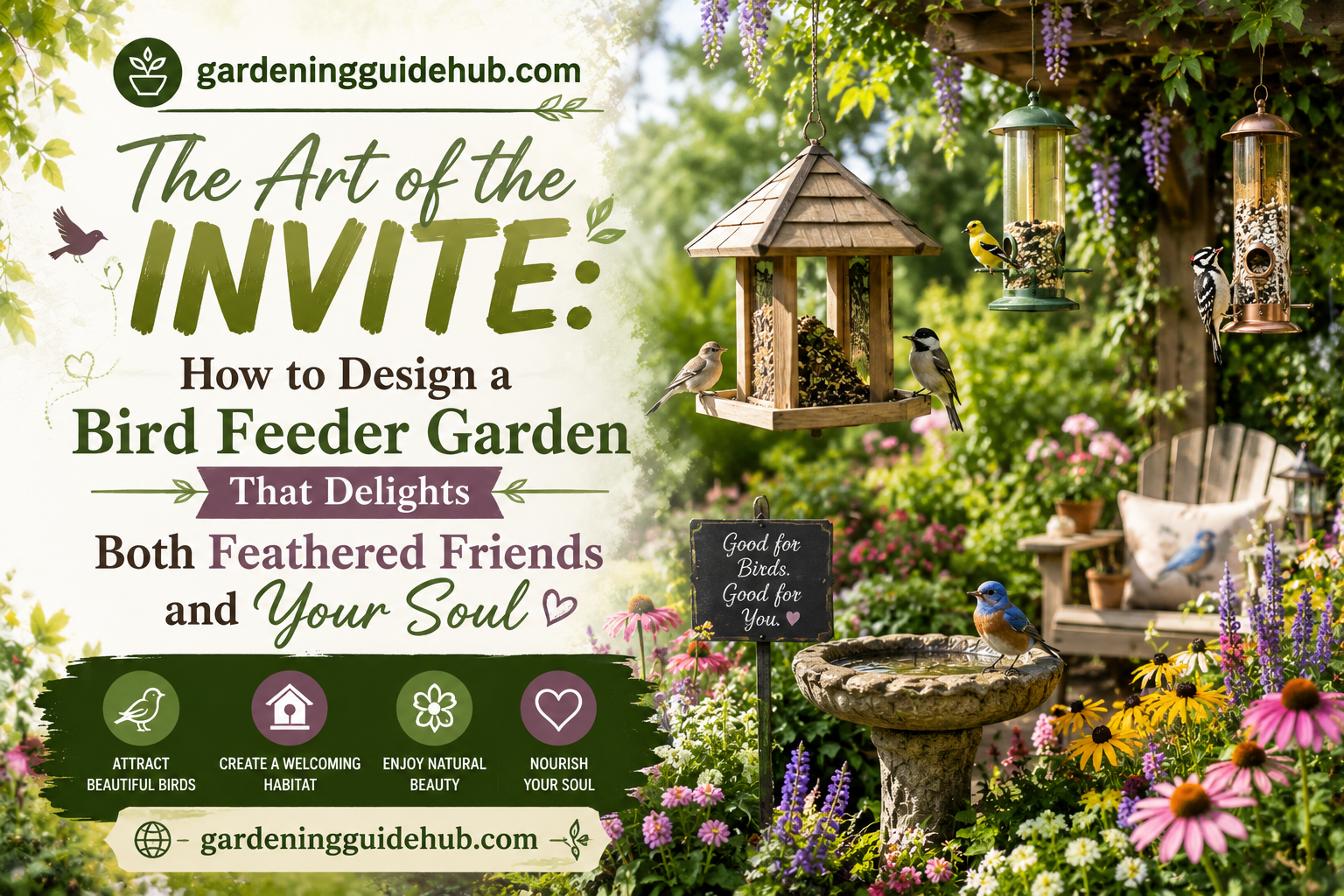
There is a particular kind of magic in sipping your morning coffee and watching a bright red cardinal land just a few feet from your window. Or catching the flutter of a goldfinch swinging on a feeder while a hummingbird zips past in a blur of green. A bird feeder garden is not just a yard feature. It is an invitation, a quiet little note to the wild world that says “you are welcome here.”
The best part is that you do not need acres of land or a professional landscaping crew to create one. With a bit of planning, the right plants, and a handful of well placed feeders, even a small backyard or modest patio can become a beloved stopover for dozens of bird species. This guide will walk you through everything you need to design a bird feeder garden that feels like a sanctuary, both for the birds and for you.
Let us get started. 🌸
Why Create a Bird Feeder Garden? 💛
Before we get into the how, let us talk about the why, because the benefits go far beyond pretty photos for your garden blog.
A thoughtfully designed bird garden can:
- Support local bird populations, especially during migration and harsh winters
- Provide natural pest control since many birds eat insects and larvae
- Add year round color, sound, and movement to your yard
- Offer a genuinely calming, meditative hobby right outside your door
- Help pollinators when paired with the right flowering plants
There is also something deeply grounding about watching wildlife go about its day. In a world that moves fast, a bird garden gives you a reason to slow down.
Step One: Understand What Birds Actually Want 🤔
Birds are not that different from us when it comes to what makes a place feel like home. They are looking for four basic things.
| Need | Why It Matters | How to Provide It |
|---|---|---|
| Food 🌻 | Fuels energy for flight and survival | Feeders, berry bushes, seed plants |
| Water 💧 | Needed for drinking and bathing | Birdbaths, small ponds, shallow dishes |
| Shelter 🌳 | Protection from predators and weather | Shrubs, trees, dense hedges |
| Nesting sites 🪺 | A safe place to raise young | Nest boxes, thick foliage, brush piles |
If you can check all four boxes, your yard stops being a place birds simply pass through and becomes a place they actually want to stay.
Step Two: Choose the Right Feeders 🍽️
Not all feeders attract the same birds, so variety is your friend here. Different species have different feeding styles, and mixing feeder types will bring in a much wider range of visitors.
Popular feeder types and who they attract:
| Feeder Type | Best Seed or Food | Attracts |
|---|---|---|
| Tube feeder 🧴 | Sunflower seed, nyjer | Finches, chickadees, titmice |
| Platform feeder 🍽️ | Mixed seed | Cardinals, jays, sparrows, doves |
| Suet feeder 🧈 | Suet cakes | Woodpeckers, nuthatches, wrens |
| Hopper feeder 🏠 | Mixed seed | Most backyard birds |
| Nectar feeder 🌺 | Sugar water | Hummingbirds, orioles |
| Ground feeder 🌾 | Cracked corn, millet | Juncos, doves, quail |
A good starting combo is one tube feeder, one suet feeder, and one nectar feeder if you live somewhere hummingbirds pass through. From there, you can expand based on what your local birds seem to enjoy most.
Step Three: Pick Plants That Do Double Duty 🌷
Feeders bring birds in fast, but plants are what turn your yard into a true habitat. The right plants offer natural food sources, shelter, and nesting material, often without you lifting a finger once they are established.
Top plants for a bird friendly garden:
- Sunflowers 🌻 for seeds loved by finches and chickadees
- Coneflowers for seed heads that attract goldfinches in late summer
- Native berry shrubs like serviceberry or elderberry for fruit eating birds
- Trumpet vine or bee balm for hummingbirds
- Ornamental grasses for shelter and nesting material
- Oak or crabapple trees for long term habitat and food
Try to choose plants native to your specific region whenever possible. Native species tend to require less water, resist pests naturally, and provide food that local birds actually recognize and need.
Step Four: Add a Reliable Water Source 💧
Food gets birds to visit, but water often gets them to stay. A simple birdbath can be just as effective as a fancy feeder, especially during hot summer months or dry spells.
Tips for a bird friendly water feature:
- Keep water no more than two to three inches deep
- Add a few flat stones so smaller birds have a safe perch
- Clean and refill the water every two to three days to prevent algae
- Consider a small solar fountain, since moving water attracts birds faster than still water
- Place the bath near shrubs so birds have a quick escape route from predators
If you want to go a step further, a small drip fountain or mister can turn your birdbath into one of the busiest spots in your entire yard.
Step Five: Design for Layout and Flow 🗺️
This is where the “art” part of the invite really comes in. A bird feeder garden should not just function well, it should feel like a cohesive, welcoming space, both for wildlife and for you.
Layout tips to keep in mind:
- Place feeders about ten feet from shrubs or trees so birds have cover but predators cannot use it to ambush
- Group feeders in odd numbered clusters for a natural, balanced look
- Keep feeders roughly five to six feet off the ground to deter most ground predators
- Position seating or a window view so you can enjoy the activity comfortably
- Use taller plants in the back and shorter ones in front so you can see the birds clearly
Think of it almost like designing a small outdoor living room, except the guests have wings and the entertainment is completely free.
A Sample Bird Garden Layout You Can Copy 📐
If you are not sure where to start, here is a simple layout that works well for an average sized backyard corner, roughly ten by ten feet.
| Zone | What to Include |
|---|---|
| Back border 🌳 | Native shrub or small tree for shelter and nesting |
| Middle layer 🌿 | Berry bush and ornamental grasses |
| Front layer 🌻 | Sunflowers, coneflowers, bee balm |
| Feeder cluster 🍽️ | Tube feeder, suet feeder, platform feeder on a shepherd’s hook |
| Water feature 💧 | Small birdbath with a solar fountain |
| Seating spot 🪑 | Bench or chair positioned to view the whole area |
This kind of layered design mimics a natural woodland edge, which is exactly the kind of habitat many backyard birds are instinctively drawn to.
Seasonal Care for Your Bird Garden 🍂❄️🌷☀️
A bird feeder garden is not a one and done project. Like any living space, it changes with the seasons, and a little seasonal upkeep keeps it thriving year round.
| Season | What to Do |
|---|---|
| Spring 🌷 | Clean feeders and baths, add nesting material like twigs and dried grass |
| Summer ☀️ | Refill water often, add nectar feeders, watch for fledglings |
| Autumn 🍂 | Leave seed heads standing for natural food, clean feeders before migration season |
| Winter ❄️ | Offer high fat suet, keep water from freezing, add extra shelter like brush piles |
Leaving some seed heads and dried stalks standing through winter instead of cutting everything back in fall is one of the easiest ways to support birds when natural food is scarce.
Common Mistakes to Avoid ⚠️
Even well meaning bird gardens can run into a few common issues. Keep these in mind as you plan.
- Placing feeders too close to windows, which can lead to collisions
- Letting seed and hulls pile up under feeders, which can attract rodents
- Using pesticides nearby, which removes the natural insect food birds rely on
- Forgetting to clean feeders regularly, which can spread disease among visiting birds
- Choosing only one feeder type, which limits the variety of species you will attract
A little regular maintenance goes a long way toward keeping your garden safe and welcoming for every visitor.
Bonus: Attracting Specific Favorites 🌟
If you have a particular bird you are hoping to see more often, here are a few targeted tips.
For hummingbirds:
- Plant tubular red or orange flowers like trumpet vine or salvia
- Hang a nectar feeder with a simple sugar water mix, no dye needed
- Clean nectar feeders every few days, especially in warm weather
For cardinals:
- Offer sunflower seeds on a platform feeder
- Plant dense shrubs nearby for cover, since cardinals prefer feeding close to shelter
For woodpeckers:
- Hang a suet feeder near a tree trunk or post
- Leave a dead tree limb standing if it is safe to do so, since woodpeckers often forage there naturally
For bluebirds:
- Install a nest box with the correct entrance hole size for your region
- Offer mealworms in a small dish feeder during nesting season
Small, targeted touches like these can make the difference between an occasional visitor and a bird that treats your yard as home.
The Soulful Side of Bird Gardening 🧘♀️
There is a reason bird watching has become such a popular, almost meditative hobby. Sitting quietly and watching birds go about their day pulls your attention out of your phone and into the present moment. It slows your breathing. It makes you notice small things, like the particular hop of a robin or the flash of blue on a jay’s wing.
Designing a bird feeder garden is as much a gift to yourself as it is to the birds. It gives you a reason to step outside every morning, a reason to linger a little longer with your coffee, and a quiet daily ritual that connects you to the changing seasons.
Final Thoughts 🌼
A bird feeder garden does not need to be complicated or expensive to be effective. Start small with one feeder and one native plant, then build from there as you learn what your local birds respond to. Add water. Add shelter. Be patient, since it can take a few weeks for word to spread among the local bird community that your yard is worth visiting.
Before long, you will have a lively, colorful corner of your yard filled with song, movement, and life, a small sanctuary that welcomes feathered friends and feeds your soul in equal measure.
Happy birding! 🐦🌻