
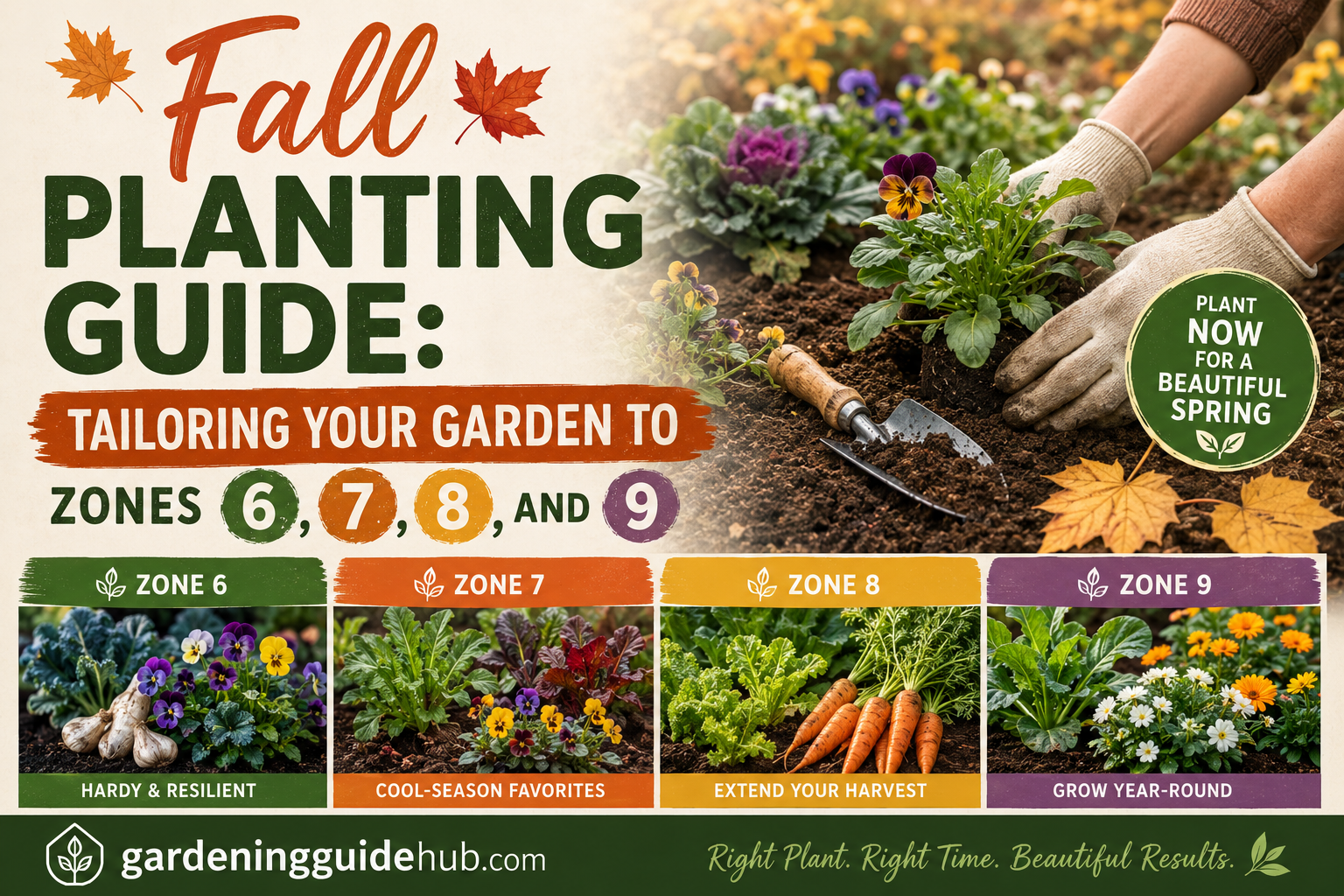
There is something quietly satisfying about fall gardening. The summer rush has calmed down, the air feels crisper, and your garden gets a second chance to shine before winter settles in. But here is the thing many gardeners get wrong: fall planting is not one size fits all. What thrives beautifully in zone 6 might struggle in zone 9, and vice versa.
If you have ever felt confused staring at a seed packet that says “plant six weeks before first frost” without any real sense of what that means for your specific region, this guide is exactly what you need. We are breaking down fall planting zone by zone, from the cooler stretches of zone 6 all the way through the mild winters of zone 9, so you can plant with confidence no matter where you garden.
Let us get your fall garden growing. 🌾
Why Fall Planting Deserves More Attention 💛
Spring tends to get all the glory in the gardening world, but fall is quietly one of the best times to plant. Cooler temperatures reduce plant stress, rainfall is often more consistent, and many pests and diseases naturally decline as the weather shifts.
Benefits of fall planting:
- Cooler air temperatures reduce transplant shock for many plants
- Soil often remains warm from summer, encouraging strong root development
- Fewer weeds compete for resources compared to the height of summer
- Many pests become less active, reducing damage to young plants
- Fall planted perennials and shrubs get a head start before spring growth begins
Understanding your specific hardiness zone is the key to making the most of this often underrated planting season.
Quick Zone Overview: What Makes 6, 7, 8, and 9 Different 📊
Before diving into specifics, here is a simple table comparing the general characteristics of each zone discussed in this guide.
| Zone | Typical Winter Low | First Frost Timing | Growing Season Length |
|---|---|---|---|
| Zone 6 ❄️ | Negative 10 to 0°F | Early to mid October | Moderate |
| Zone 7 🍂 | 0 to 10°F | Mid to late October | Moderate to long |
| Zone 8 🌤️ | 10 to 20°F | Late October to November | Long |
| Zone 9 ☀️ | 20 to 30°F | Late November to December | Very long, mild winters |
Knowing where your garden falls on this spectrum shapes nearly every decision you will make about timing, plant selection, and frost protection this fall.
Zone 6: Planning Around an Earlier Frost ❄️
Zone 6 gardeners deal with the earliest frost dates among the regions we are covering, which means timing is everything. Once that first frost hits, tender plants are done for the season, so fall planting here is all about working backward from that date.
What to plant in zone 6 this fall:
- Garlic, ideally planted four to six weeks before the ground freezes
- Cold hardy greens like kale, spinach, and Swiss chard
- Root vegetables such as carrots, beets, and turnips for a final harvest
- Spring flowering bulbs like tulips, daffodils, and crocuses
- Cover crops like clover or winter rye to protect and enrich soil over winter
Zone 6 fall planting tips:
- Use row covers or cold frames to extend the harvest window for tender greens
- Mulch heavily around perennials and shrubs before the ground freezes
- Plant spring bulbs at least six weeks before the ground freezes solid
- Water deeply before winter dormancy sets in, since dry roots are more vulnerable to cold damage
Zone 6 gardeners often find that the window for fall planting closes faster than expected, so getting an early start in late summer pays off significantly.
Zone 7: A Slightly Longer Window to Work With 🍂
Zone 7 offers a bit more breathing room than zone 6, with frost typically arriving a few weeks later. This extra time opens up more planting options and a longer harvest season for cool weather crops.
What to plant in zone 7 this fall:
- Broccoli and cauliflower transplants for a fall harvest
- Lettuce and other quick growing greens, often ready in just a few weeks
- Garlic and shallots for next summer’s harvest
- Ornamental grasses and perennials, which benefit from establishing roots before winter
- Pansies and violas for continued color through cooler months
Zone 7 fall planting tips:
- Take advantage of the extended window to succession plant greens every couple of weeks
- Divide and transplant perennials in early fall while soil is still warm
- Apply a layer of mulch to regulate soil temperature as nights grow cooler
- Watch local frost forecasts closely, since zone 7 can still see occasional early cold snaps
This zone strikes a nice balance, offering enough time for a genuine fall harvest while still requiring some planning around the eventual frost date.
Zone 8: Extended Growing With Mild Winters 🌤️
Zone 8 gardeners enjoy considerably milder winters, which means fall planting here often blends seamlessly into a longer, more relaxed growing season. Frost typically holds off until late October or November, giving plants extra time to establish.
What to plant in zone 8 this fall:
- Leafy greens like arugula, spinach, and lettuce, which often continue growing well into winter
- Brassicas such as cabbage, broccoli, and Brussels sprouts
- Herbs like cilantro and parsley, which thrive in cooler fall temperatures
- Trees and shrubs, since fall planting gives roots a strong head start before summer heat returns
- Wildflower seed mixes for a colorful spring display
Zone 8 fall planting tips:
- Take advantage of the mild climate to plant trees and shrubs, since fall is often the best time for root establishment
- Continue harvesting warm season crops into early fall before switching beds over to cool season plantings
- Monitor for occasional light frosts and use row covers as a precaution rather than a necessity
- Keep watering consistent, since fall rains can be less predictable depending on your specific region
Zone 8 gardeners often get to enjoy two full planting seasons packed into what other zones consider the tail end of the year.
Zone 9: Fall as a Second Spring ☀️
In zone 9, fall genuinely feels like a second spring. With winter lows rarely dipping below freezing for extended periods, this zone allows for an incredibly wide range of fall and winter planting options that colder zones simply cannot match.
What to plant in zone 9 this fall:
- Tomatoes and peppers in warmer pockets of zone 9, since mild winters can support a second round
- Leafy greens and root vegetables, which often thrive throughout the entire winter
- Citrus trees, since fall planting allows roots to establish before summer heat
- Native and drought tolerant perennials, taking advantage of typically increased fall rainfall
- Sweet peas and other cool season flowering annuals
Zone 9 fall planting tips:
- Treat fall as a prime planting season rather than a wind down period
- Watch for occasional light frost in cooler zone 9 pockets and protect tender plants accordingly
- Take advantage of cooler temperatures to plant trees and large shrubs with less transplant stress
- Continue monitoring soil moisture, since fall heat can still linger longer than in northern zones
For zone 9 gardeners, fall is often one of the most productive and enjoyable times of the entire gardening calendar.
Side by Side: Best Fall Crops by Zone 🥬
Here is a helpful comparison table showing which crops tend to perform best across each zone.
| Crop | Zone 6 | Zone 7 | Zone 8 | Zone 9 |
|---|---|---|---|---|
| Garlic 🧄 | Excellent | Excellent | Good | Fair |
| Leafy greens 🥬 | Good | Excellent | Excellent | Excellent |
| Broccoli and cauliflower 🥦 | Fair | Good | Excellent | Excellent |
| Root vegetables 🥕 | Good | Excellent | Excellent | Good |
| Citrus trees 🍊 | Not suitable | Not suitable | Limited | Excellent |
| Spring bulbs 🌷 | Excellent | Excellent | Good | Fair |
This table is a general guide, since microclimates within each zone can shift results, but it offers a solid starting point for planning your specific fall garden.
Preparing Your Soil for Fall Planting 🧑🌾
Regardless of your zone, healthy soil is the foundation of a successful fall garden.
Soil prep checklist:
- Clear out spent summer plants and add healthy debris to your compost pile
- Test soil pH if it has been a while, since fall is a great time to amend before winter
- Add compost or aged manure to replenish nutrients used up over summer
- Loosen compacted soil gently to improve drainage and root growth
- Apply mulch after planting to regulate temperature and retain moisture
Taking the time to refresh your soil in fall sets your garden up for success both through the cooler months and into the following spring.
Frost Protection Tips Across All Zones 🧊
No matter which zone you garden in, having a few frost protection strategies on hand is always a smart move.
| Method | Best For | Notes |
|---|---|---|
| Row covers 🧵 | Light frost protection | Lightweight and reusable |
| Cold frames ❄️ | Extending harvest for greens | Passive solar heating |
| Mulch layer 🍂 | Protecting roots and bulbs | Also improves soil health |
| Cloches 🔔 | Individual young plants | Easy to place and remove |
| Watering before frost 💧 | Reducing cold stress | Moist soil holds heat better than dry soil |
Keeping a few of these tools on hand means you can react quickly if an unexpected early frost threatens your fall garden.
Common Fall Planting Mistakes to Avoid ⚠️
Even experienced gardeners can trip up when transitioning from summer to fall planting. Watch out for these common pitfalls.
- Planting too late relative to your zone’s average first frost date
- Ignoring microclimates within your own yard, such as low lying frost pockets
- Skipping soil amendment simply because the growing season feels like it is winding down
- Forgetting that fall planted bulbs need a real chilling period to bloom properly in spring
- Underestimating how much watering is still needed during dry fall stretches
A little extra attention during this transitional season goes a long way toward a healthy, productive garden.
Final Thoughts 🌼
Fall planting is one of the most rewarding, and most underused, opportunities in the gardening calendar. Whether you are racing against an early zone 6 frost, enjoying the long mild stretch of zone 9, or somewhere in between in zones 7 or 8, understanding your specific zone transforms fall from a season of winding down into a season of genuine opportunity.
Take the time to know your frost dates, choose crops suited to your zone, and prep your soil thoughtfully, and you will find that fall can be just as productive, and just as satisfying, as any spring planting season. Your garden does not have to slow down just because summer is over.
Happy planting! 🍂🌻