Choosing the right wood for your pergola is one of the most important decisions you’ll make in the entire building process. The material you pick affects everything from how long your structure lasts, to how much maintenance it needs, to the overall look and feel of your backyard.
With so many wood species available, it can be tricky to know which one is actually worth the investment. In this guide, we’ll break down the best wood options for pergolas, compare their pros and cons, and help you choose the perfect material for your climate, budget, and style. Let’s get into it! 🧡
Why Wood Choice Matters So Much 🤔
A pergola is exposed to sun, rain, wind, and temperature swings all year round. Unlike indoor furniture, it needs to hold up against constant weather exposure without warping, rotting, or attracting pests.
The right wood will:
- 🌦️ Resist moisture and prevent rot
- 🐛 Naturally repel insects like termites
- ☀️ Hold up against UV exposure without cracking
- 💪 Provide strong structural support for years
- 🎨 Offer a beautiful natural grain and finish
Let’s look at the top wood species used for pergola construction.
1. Cedar 🌲
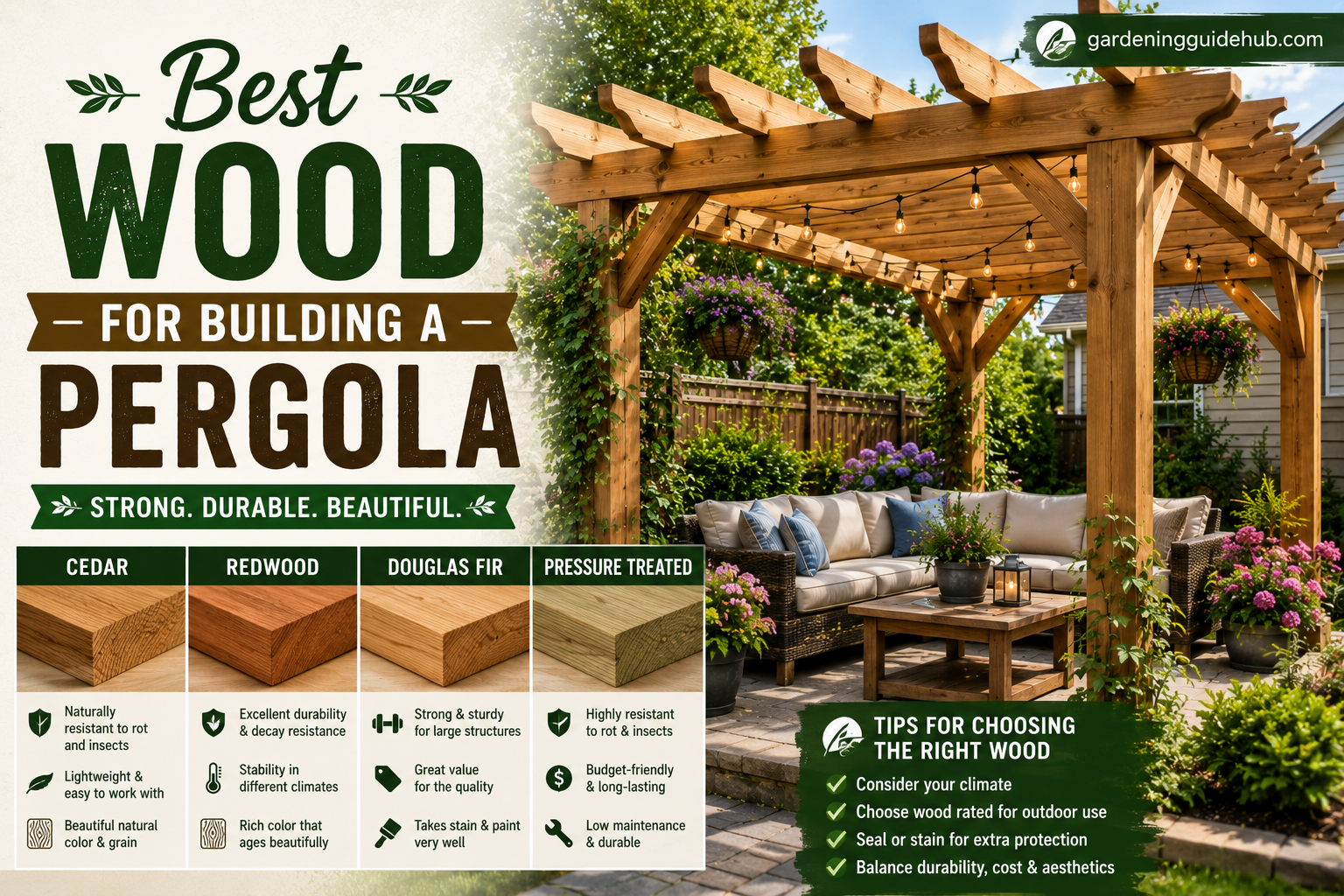
Cedar is widely considered the gold standard for outdoor structures, and for good reason. It contains natural oils that make it resistant to rot, decay, and insect damage without needing chemical treatment.
Cedar also has a beautiful reddish brown tone and a pleasant natural aroma, and it tends to age gracefully into a soft silvery gray if left unfinished, which many homeowners actually love as a rustic look.
Pros: naturally rot resistant, lightweight, beautiful grain, low shrinkage Cons: higher price point, softer wood so more prone to dents and scratches
2. Redwood 🌳
Redwood is another premium option that’s especially popular in the western United States where it’s more locally sourced. Like cedar, it contains natural tannins that protect against decay and pests.
Redwood tends to have a richer, deeper reddish hue and is known for its dimensional stability, meaning it resists warping and cracking as it ages, even through significant temperature changes.
Pros: excellent decay resistance, stunning color, very stable Cons: can be expensive and harder to find outside certain regions
3. Pressure Treated Pine 🌿
Pressure treated pine is the most budget friendly option on this list, and it’s a favorite among DIYers building their first pergola. The wood is chemically treated to resist rot, fungus, and insects, making it a durable choice despite pine’s naturally softer characteristics.
While it doesn’t have the same natural beauty as cedar or redwood, it takes stain and paint very well, so you can customize the look to match your style.
Pros: affordable, widely available, treated for durability Cons: less attractive natural grain, may contain chemicals some homeowners prefer to avoid, prone to shrinking and warping if not properly dried
4. Douglas Fir 🌲
Douglas fir is known for its impressive strength and structural integrity, making it a great choice for larger pergolas that need to support heavier loads, like retractable canopies or climbing vines.
It has a warm, straight grain pattern and is often used in more traditional or craftsman style outdoor structures.
Pros: very strong, straight grain, good workability Cons: less naturally rot resistant, typically needs sealing or treatment
5. Teak 🪑
Teak is a premium hardwood best known for outdoor furniture, but it’s also used in high end pergola construction. It’s naturally packed with oils that make it incredibly weather resistant, even without staining or sealing.
The downside is cost. Teak is one of the most expensive wood options available, so it’s typically reserved for smaller accent structures or homeowners with a bigger budget.
Pros: extremely durable, naturally weatherproof, gorgeous golden tone Cons: very expensive, can be harder to source sustainably
6. Cypress 🌳
Cypress is a lesser known but excellent choice, especially popular in the southern United States. It contains a natural preservative called cypressene, which gives it strong resistance to rot and insects.
It has a light, warm color and a straight, appealing grain, making it a solid middle ground option between budget pine and premium cedar or redwood.
Pros: naturally durable, attractive appearance, moderate pricing Cons: availability can be limited depending on your region
Wood Comparison Table 📊
Here’s a side by side breakdown to help you compare your options at a glance:
| Wood Type | Durability | Cost | Maintenance | Natural Look |
|---|---|---|---|---|
| Cedar 🌲 | High | Mid to high | Low | Reddish brown, ages to gray |
| Redwood 🌳 | High | High | Low | Deep reddish tone |
| Pressure Treated Pine 🌿 | Moderate | Low | Moderate | Pale yellow, takes stain well |
| Douglas Fir 🌲 | Moderate | Mid | Moderate to high | Warm straight grain |
| Teak 🪑 | Very high | Very high | Very low | Golden brown |
| Cypress 🌳 | High | Mid | Low | Light warm tone |
How to Choose the Right Wood for Your Climate 🌍
Your local weather plays a big role in which wood will perform best over time.
Hot and humid climates: Cedar, redwood, or teak are ideal since they naturally resist moisture related rot and mold growth.
Cold and snowy climates: Douglas fir or pressure treated pine can handle structural loads well, but make sure to apply a quality sealant to protect against freeze thaw cycles.
Coastal areas with salt air: Teak and cedar tend to hold up best against salty, corrosive air compared to untreated softwoods.
Dry, sunny climates: Redwood and cypress resist UV damage and cracking better than some softer treated woods.
Maintenance Tips to Extend the Life of Your Pergola 🧴
No matter which wood you choose, proper maintenance will significantly extend its lifespan.
- 🎨 Apply a UV protective sealant or stain every one to two years
- 🧹 Clean the surface regularly to remove dirt, mold, and debris
- 🔍 Inspect posts and joints annually for signs of rot or pest damage
- 💧 Ensure proper drainage around post bases to avoid standing water
- 🌿 Trim back climbing plants occasionally to prevent trapped moisture against the wood
Budget Considerations 💰
If cost is your primary concern, pressure treated pine offers the best value, especially if you’re comfortable with a bit more upkeep over the years. For those wanting a balance of beauty and durability without the premium price tag, cedar remains one of the most popular and practical choices among homeowners.
If budget isn’t a major constraint and you want a truly long lasting, low maintenance structure, redwood or teak are worth the investment, especially for a pergola that will become a permanent backyard feature.
Wood vs Alternative Materials 🔨
While this guide focuses on wood, it’s worth noting that materials like aluminum, vinyl, and composite are also popular pergola choices, particularly for homeowners who want minimal maintenance. However, many people still prefer real wood for its natural warmth, classic aesthetic, and the satisfaction of a genuine hands on building material.
Final Thoughts 🌼
There’s no single best wood for every pergola, it really comes down to your budget, climate, and personal style preferences. Cedar and redwood remain top favorites for their natural beauty and durability, while pressure treated pine offers an accessible entry point for first time builders. If you’re after ultimate longevity and don’t mind a higher price tag, teak is hard to beat.
Whichever wood you choose, proper sealing and regular maintenance will keep your pergola looking beautiful and standing strong for many years of backyard memories to come. 🌞🪵
Frequently Asked Questions ❓
What is the most durable wood for a pergola? Teak and redwood are among the most durable options thanks to their natural oils and resistance to rot, insects, and weather damage.
Is pressure treated wood safe for pergolas? Yes, modern pressure treated lumber uses safer preservatives than older versions and is widely used and considered safe for outdoor structures.
How long does a wooden pergola typically last? With proper maintenance, most wooden pergolas last between 15 and 25 years, though premium woods like teak can last even longer.
Does cedar need to be sealed? While cedar is naturally rot resistant, sealing it helps preserve its color and adds extra protection against UV damage and moisture over time.
Which wood is best for a budget friendly pergola? Pressure treated pine is typically the most affordable option while still offering solid durability when properly maintained.